Why It Matters
Orbital data centers promise ultra‑low latency edge computing and disaster‑resilient storage, reshaping enterprise cloud strategies and creating a new frontier for telecom and satellite firms.
Key Takeaways
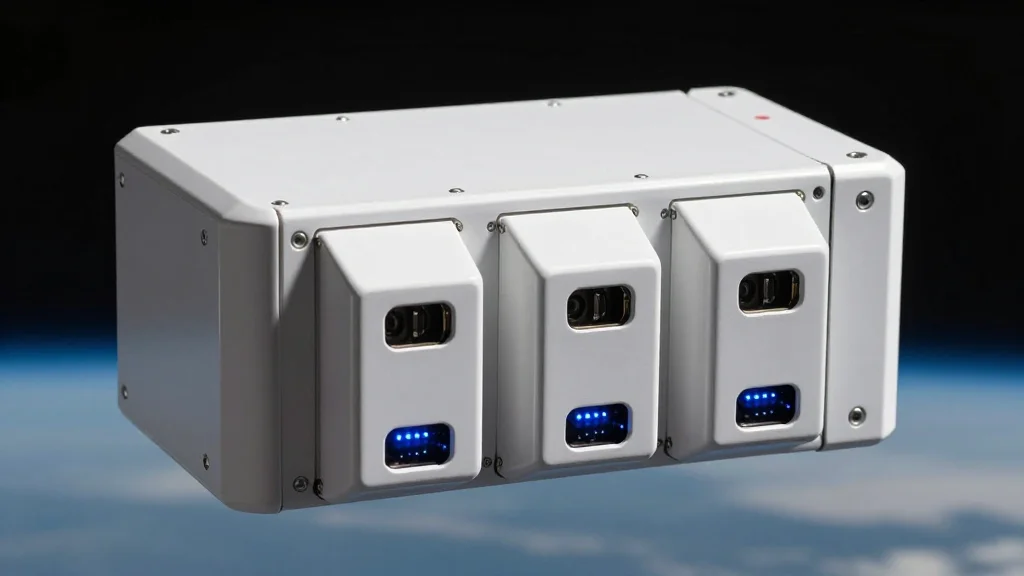
- •SpaceX leverages Starlink constellation for modular data pods
- •Amazon’s Kuiper targets integrated satellite‑ground data services
- •Google focuses on AI‑ready compute nodes in orbit
- •Radiation‑hardening drives cost premium for most providers
- •Market could surpass $15 billion in addressable revenue by 2035
Pulse Analysis
Orbital data centers are moving from speculative concept to commercial reality as satellite constellations mature. By placing storage and processing hardware in low‑Earth orbit, providers can deliver sub‑10‑millisecond latency to remote regions and create a physically distributed backup layer immune to terrestrial disasters. The report notes that the market’s growth is fueled by the surge in edge‑AI workloads, the need for resilient data pipelines, and the declining cost of launch services, which now average $2,500 per kilogram to LEO. Companies that already operate large constellations—SpaceX, Amazon, and Google—are uniquely positioned to bundle data services with connectivity, accelerating adoption among enterprises seeking real‑time analytics at the edge.
Competitive dynamics hinge on three technical pillars: launch frequency, payload density, and radiation tolerance. SpaceX’s reusable Falcon 9 rockets enable a rapid refresh cycle, allowing it to field modular data pods that can be swapped or upgraded in orbit. Amazon’s Kuiper differentiates with integrated ground stations that streamline data ingress, while Google invests heavily in radiation‑hardening to protect AI accelerators from the harsh space environment. Smaller entrants, such as Northrop Grumman’s Space‑Based Data Hub, focus on niche defense contracts and specialized secure storage, carving out value despite higher per‑gigabyte costs. Partnerships with launch providers and ground‑segment operators are becoming decisive, as they reduce time‑to‑market and spread capital risk.
For businesses, the rise of orbital data centers signals a shift in cloud strategy. Enterprises can now offload latency‑sensitive workloads to an orbital layer, reducing dependence on terrestrial fiber and mitigating regional outages. Investment analysts are watching the sector closely; the projected $15 billion market by 2035 suggests ample room for both incumbent expansion and disruptive newcomers. As regulatory frameworks evolve and standards for space‑based data security solidify, the next wave of contracts will likely focus on hybrid architectures that blend ground‑based clouds with orbital edge nodes, delivering unprecedented resilience and performance for mission‑critical applications.
Orbital Data Center Competitive Landscape
Comments
Want to join the conversation?
Loading comments...