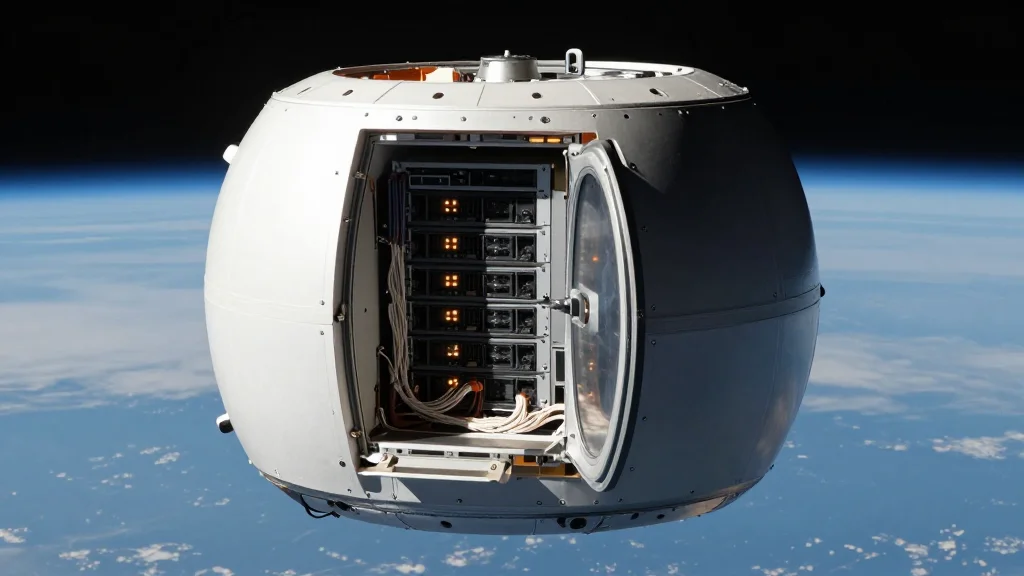
Orbital Data Centers Must Tackle Chip Lifespan, Launch Availability, and Cybersecurity Challenges
Why It Matters
Orbital data centers could reshape edge computing and satellite services, but lifespan, launch, and security issues may delay commercial viability and divert capital from other space priorities.
Key Takeaways
- •Chip lifespans shrink to two years, mismatching satellite orbital periods
- •Starship launch capacity essential for housing large orbital data center modules
- •Energy consumption doubles each processor generation, stressing satellite power budgets
- •Cybersecurity in space adds new attack surface for data center operators
- •Full‑stack players like SpaceX can offset costs, but risk diverting investment
Pulse Analysis
The concept of orbital data centers has surged alongside SpaceX’s upcoming IPO, driven by the promise of limitless solar power and proximity to low‑Earth‑orbit sensors. Proponents argue that moving compute to space could reduce latency for Earth‑observation analytics and enable new AI workloads. However, the reality hinges on developing radiation‑hardened, high‑performance silicon that can survive the harsh orbital environment, a task that traditional chip fabs are only beginning to explore. The allure of a "space‑based cloud" must be balanced against the economics of launching and maintaining such infrastructure.
Technical challenges quickly surface when the hardware lifecycle is examined. Modern AI ASICs become obsolete in roughly two years, far shorter than the typical five‑year satellite design life, forcing frequent on‑orbit replacements or early de‑commissioning—both costly and logistically complex. Power demands also double with each processor generation, straining satellite solar arrays and thermal management systems. Moreover, the need for custom cooling solutions and radiation shielding adds mass, inflating launch costs. These factors collectively raise the total cost of ownership and question whether the performance gains justify the investment.
Market implications depend heavily on launch availability and security. Dr. Oguz Karasu stresses that only SpaceX’s fully reusable Starship, with its large payload fairing, can accommodate the size of a data‑center module, making the technology’s rollout contingent on Starship’s operational success. Simultaneously, protecting data in orbit introduces a novel cyber‑risk vector, requiring encryption standards and physical safeguards unlike terrestrial facilities. While companies like SpaceX and Amazon can leverage end‑to‑end capabilities to mitigate some costs, the sector risks over‑investing at the expense of other critical space initiatives. Investors and policymakers will watch closely to see if the orbital data‑center promise translates into a sustainable, secure, and economically viable segment of the space economy.
Orbital Data Centers Must Tackle Chip Lifespan, Launch Availability, and Cybersecurity Challenges
Comments
Want to join the conversation?
Loading comments...