Orbital Data Centers: Power and Thermal Management for Scalable Architectures
Why It Matters
Effective power and cooling solutions are the linchpin for turning orbital compute from a niche experiment into a commercial reality, unlocking new low‑latency services and revenue streams for the space industry.
Key Takeaways
- •Redwire's whitepaper outlines power and thermal solutions for orbital data centers
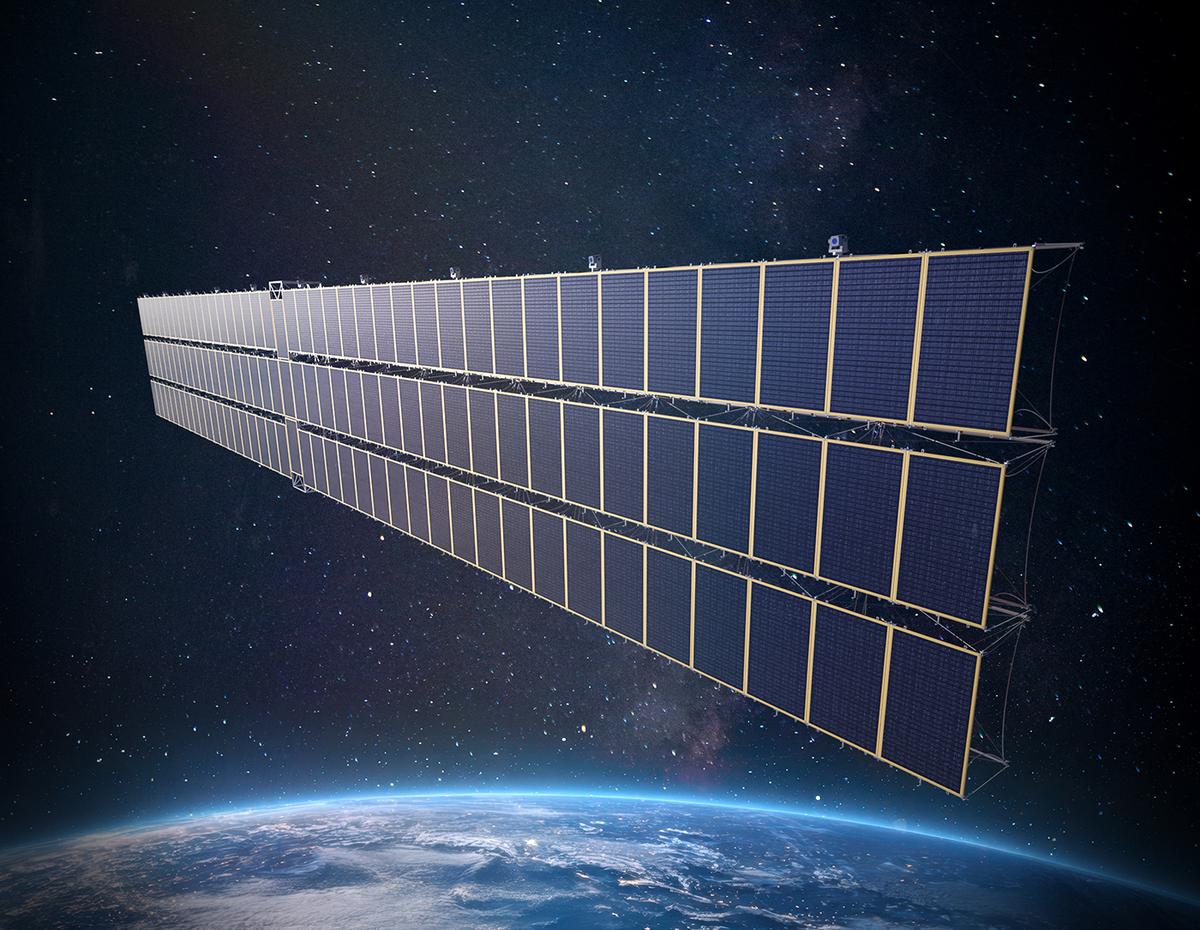
- •Deployable Roll‑Out Solar Array (ROSA) provides high‑power generation in space
- •Modular radiators enable efficient heat rejection for high‑density compute payloads
- •Integrated design ties power, distribution, compute, and cooling from concept stage
- •Flight‑proven technologies reduce risk and accelerate orbital data‑center deployment
Pulse Analysis
The surge in edge‑computing demand is pushing operators to consider space as the next frontier for low‑latency processing. By positioning satellites as data‑center analogues, providers can deliver compute services closer to end‑users, bypassing terrestrial network bottlenecks. However, the orbital environment imposes strict limits on power availability and heat dissipation, making traditional ground‑based data‑center designs unsuitable. Redwire’s whitepaper frames these constraints as design drivers, not obstacles, and showcases how existing space‑qualified hardware can be re‑engineered for continuous, high‑performance workloads.
Power generation in orbit has historically relied on rigid solar panels that cap both surface area and output. Redwire’s Roll‑Out Solar Array (ROSA) expands that envelope by unfurling large, lightweight panels that can generate several kilowatts per node without excessive mass penalties. Coupled with an advanced electrical distribution bus, ROSA enables multiple high‑density processors to run concurrently. On the thermal side, deployable radiators act like space‑borne heat sinks, shedding excess heat through radiation—a process far more efficient than convection‑based cooling on Earth. The whitepaper demonstrates a balanced architecture where solar input matches radiator capacity, ensuring thermal equilibrium even under peak compute loads.
The implications for the broader market are significant. By leveraging flight‑proven components, Redwire reduces development risk and shortens the path to commercial orbital compute services. This could accelerate the rollout of satellite‑based AI inference, real‑time Earth observation processing, and secure communications platforms. As investors seek differentiated space assets, scalable orbital data centers may become a new asset class, driving further investment in modular spacecraft platforms and associated ground‑segment infrastructure. The convergence of power, thermal, and compute engineering therefore marks a pivotal step toward a sustainable, profitable orbital data‑center ecosystem.
Orbital Data Centers: Power and Thermal Management for Scalable Architectures
Comments
Want to join the conversation?
Loading comments...