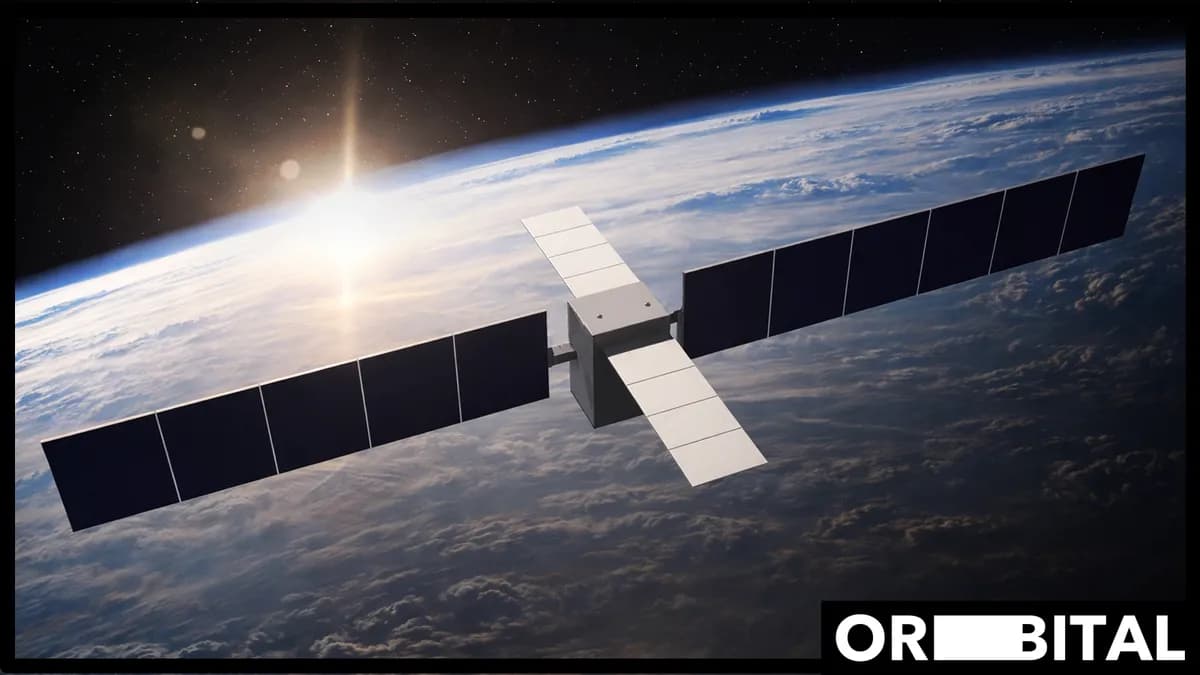
Orbital Secures $5M Pre-Seed Funding to Build Orbital Data Center Constellation
Participants


Why It Matters
Space‑based compute could alleviate the capacity crunch of terrestrial data centers as AI workloads explode, and Orbital’s low‑cost, modular approach may set the economic benchmark for the emerging ODC market.
Key Takeaways
- •Orbital targets fridge-sized satellites with 100 kW power each
- •Uses NVIDIA Space‑1 Vera Rubin GPU for AI inference
- •Plans 100,000+ satellite constellation to offload AI workloads
- •First demo mission slated for 2027, full launch 2028
- •$5M pre‑seed led by a16z Speedrun funds LA factory
Pulse Analysis
The surge in artificial‑intelligence models is stretching terrestrial data‑center capacity, prompting investors to explore space‑based alternatives. Traditional orbital‑data‑center concepts envisioned massive, football‑field satellites that are costly to launch and maintain. Orbital’s strategy flips that model by deploying a swarm of modest, fridge‑sized platforms that collectively deliver the compute power needed for AI inference. By moving processing closer to the vacuum of space, latency can be reduced and the physical limits of land‑based infrastructure sidestepped, opening a new frontier for high‑performance computing.
Orbital’s hardware design centers on NVIDIA’s Space‑1 Vera Rubin GPU, delivering teraflops of performance within a satellite the size of a household refrigerator. Each unit will generate roughly 100 kW from tennis‑court‑scale solar arrays and stay linked to peers via optical inter‑satellite links, forming a resilient mesh network. The company plans to automate production in its Los Angeles facility, aiming to churn low‑cost satellites at scale. This modular approach promises faster iteration cycles and lower launch expenses compared with monolithic space‑based data‑center proposals.
The $5 million pre‑seed round, led by a16z’s Speedrun accelerator and backed by a roster of venture firms, gives Orbital the runway to build its first demo satellite for 2027 and a full‑scale Orbital‑1 unit by 2028. While several startups chase similar timelines, Orbital’s emphasis on cost‑effective manufacturing could be a decisive advantage as the market seeks economically viable space‑based compute. If successful, the 100,000‑plus satellite constellation could reshape cloud‑service economics, spur new revenue streams for launch providers, and accelerate the broader commercialization of low‑Earth‑orbit infrastructure.
Deal Summary
LA‑based Orbital announced a $5 million pre‑seed round led by a16z’s accelerator Speedrun, with participation from Basis Set, Human Element, Wayfinder Ventures, Antler, Anti Fund, Ascent Venture Partners, Rubik Ventures, Zero Knowledge Ventures, LYVC, Feld Ventures, New Legacy, FNDR, UpHonest Capital and Asterisk. The capital will fund development of a satellite constellation for AI inference workloads and a demo mission slated for 2027.
Comments
Want to join the conversation?
Loading comments...