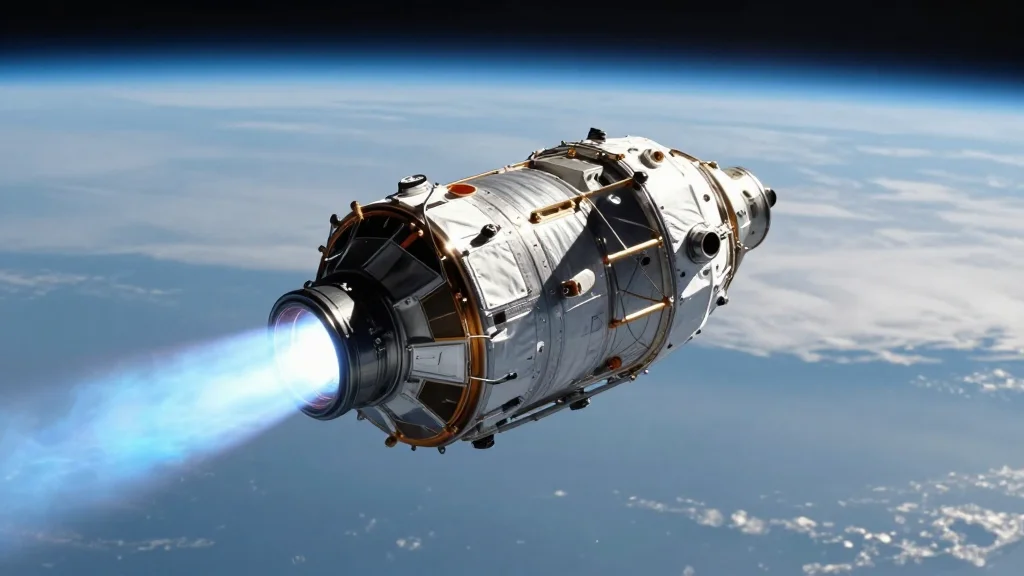
Orion Completes Small Mid-Course-Correction Engine Burn as It Prepares to Swing Around Behind the Moon
Why It Matters
The flight validates Orion’s navigation and re‑entry systems ahead of future crewed deep‑space missions, while exposing technical and budgetary challenges that could shape NASA’s lunar strategy.
Key Takeaways
- •Orion performed 17.5‑second correction burn.
- •Flyby scheduled for April 6, 2026.
- •40‑minute communications blackout behind Moon.
- •Mission tests limited new tech, seen as PR.
- •Heat shield concerns persist after 2022 test.
Pulse Analysis
The Artemis II mission marks the first crewed flight of NASA’s Orion capsule, and the recent outbound correction burn was a routine but essential maneuver. By firing its service module thrusters for just 17.5 seconds, mission control refined the spacecraft’s path to ensure a precise lunar fly‑by. This adjustment, executed at 11:03 p.m. EDT, demonstrates the reliability of Orion’s guidance, navigation, and control (GNC) suite, a cornerstone for upcoming Artemis missions that will aim for lunar orbit and surface operations.
While the fly‑by itself is largely benign—Orion will simply coast behind the Moon without entering orbit—the event carries symbolic weight. NASA is deliberately echoing Apollo 8’s historic blackout to showcase a return to deep‑space crewed flight, yet the risk profile is dramatically lower. The 40‑minute communications gap, from 6:44 p.m. to 7:25 p.m. Eastern, is a planned radio silence rather than a life‑critical contingency. Nonetheless, the mission serves as a public‑relations platform to sustain political and public support, even as industry observers note that the flight tests relatively modest new hardware.
Technical scrutiny remains focused on Orion’s heat shield, which exhibited anomalies during the 2022 Exploration Flight Test‑1. A successful re‑entry and splashdown will be the ultimate proof point for crew safety. Coupled with the high cost of the Space Launch System (SLS) and Orion, these performance metrics will influence funding decisions and the timeline for establishing a sustainable lunar presence. As commercial partners like SpaceX and Blue Origin push lower‑cost alternatives, NASA’s ability to demonstrate value and reliability with Artemis II will be pivotal for the agency’s long‑term exploration roadmap.
Orion completes small mid-course-correction engine burn as it prepares to swing around behind the Moon
Comments
Want to join the conversation?
Loading comments...