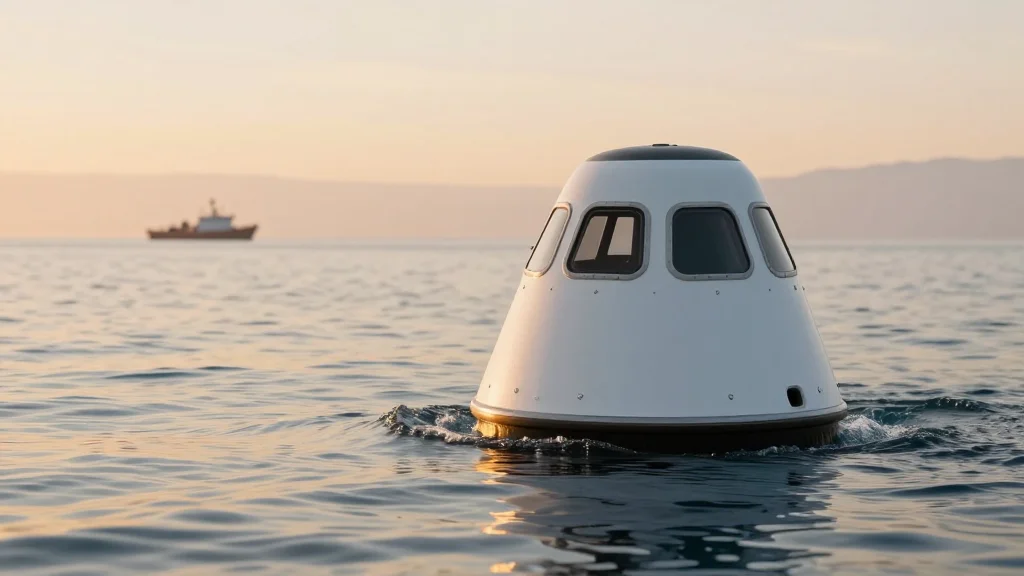
Orion Survives Re-Entry, Crew Splashes Down Safe
Why It Matters
The safe return validates Orion’s basic crew‑return capability, but the technical flaws highlight risks that could delay or reshape NASA’s lunar‑landing timetable and spur program reforms.
Key Takeaways
- •Orion splashdown successful; crew remained in capsule over an hour
- •Heat‑shield data may be irrelevant; Artemis‑3 will test new design
- •Helium tank leak and communication glitches flagged for fixes
- •Private sector poised to outpace NASA’s SLS‑Orion architecture
Pulse Analysis
The Artemis‑2 flight marked NASA’s first crewed test of the Orion capsule and the Space Launch System (SLS) rocket. After a three‑day lunar fly‑by, Orion survived a high‑energy re‑entry and splashed down off California at 20:07 UTC, with all four astronauts still inside the capsule as recovery teams approached. The successful splashdown proved that the integrated launch‑vehicle‑capsule system can bring humans back from deep‑space trajectories, a prerequisite for any future lunar landing architecture. However, the delayed recovery highlighted operational bottlenecks that NASA must streamline before commercial partners can rely on the system.
Beyond the headline‑making return, the mission exposed several engineering weak points. A helium‑tank leak in the European Service Module, intermittent communications drop‑outs, and recurring waste‑management failures all required in‑flight workarounds. Most notably, the heat‑shield tiles that endured the peak re‑entry heating will be examined, yet NASA officials already consider the data of limited value because Artemis‑3 will employ a completely new thermal‑protection system designed for a lower‑energy Earth‑orbit return. The contrast underscores a shift in design philosophy: rather than iterating on the same hardware, the agency plans to validate a fresh shield concept on the next crewed flight.
The technical hiccups have reignited debate over the cost‑effectiveness of the SLS‑Orion stack. Critics argue that the massive launch vehicle and relatively small capsule are ill‑suited for sustainable lunar or Martian settlement, especially when private firms such as SpaceX and Blue Origin are fielding reusable launchers and larger crewed spacecraft at a fraction of the price. NASA’s administrator, Jared Isaacman, is reportedly leveraging the Artemis‑2 success to push for greater private‑sector integration, a move that could reshape funding streams and accelerate the transition to commercially driven deep‑space exploration. If private solutions prove more agile, the SLS‑Orion architecture may become a niche rather than a cornerstone.
Orion survives re-entry, crew splashes down safe
Comments
Want to join the conversation?
Loading comments...