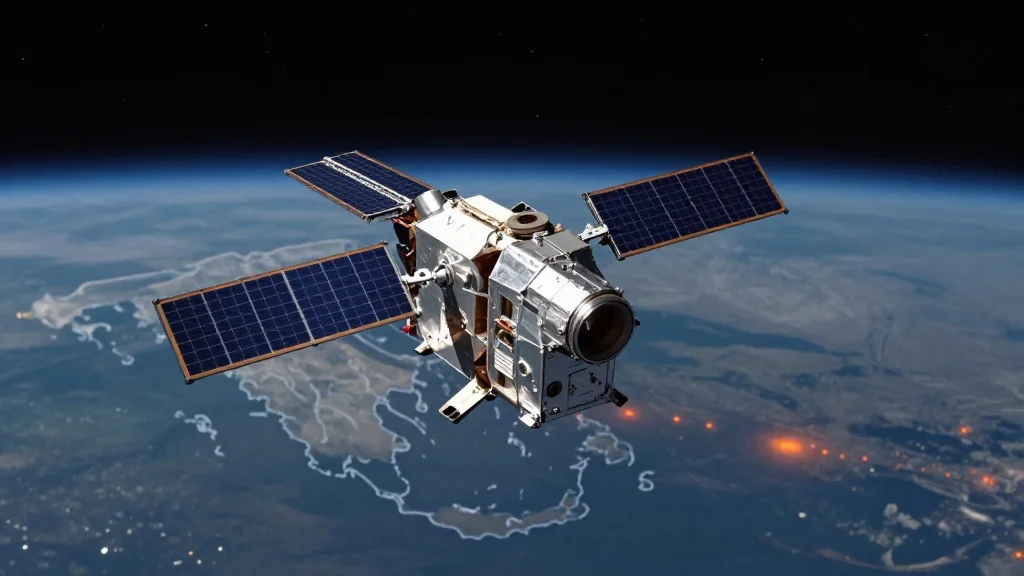
OroraTech Launches Greece’s First National Wildfire‑Monitoring Satellite Constellation

Companies Mentioned
Why It Matters
The constellation demonstrates that a small‑sat, commercial‑led approach can deliver national‑scale, mission‑critical services traditionally reserved for large, government‑run programs. By providing minute‑level detection across an entire country, Greece can dramatically reduce response times, limiting fire spread, protecting lives, and preserving ecosystems. The project also signals a shift in European space policy: leveraging ESA’s technical expertise and EU recovery funds to catalyze sovereign capabilities, while fostering a market for private firms that can supply end‑to‑end solutions. If replicated across other high‑risk regions, such dedicated constellations could reshape global wildfire management, creating a new revenue stream for small‑sat manufacturers and data‑service providers. The success of the Hellenic Fire System may accelerate policy discussions on funding mechanisms, data‑sharing standards, and cross‑border cooperation for disaster‑resilient space infrastructure.
Key Takeaways
- •Four OroraTech Forest satellites (Forest‑16 to Forest‑19) launched on May 3, 2026 via SpaceX Falcon 9
- •Satellites placed in a 590 km sun‑synchronous orbit, delivering 1‑2 minute detection latency
- •Hotspot resolution of 4 m × 4 m, covering 100 % of Greek territory in near‑real‑time
- •Developed for the Greek Ministry of Digital Governance, Hellenic Space Center, and ESA; funded by EU’s Recovery and Resilience Facility
- •First sovereign national constellation dedicated solely to wildfire detection, setting a template for other nations
Pulse Analysis
OroraTech’s deployment is a watershed for the commercial small‑sat sector, proving that a boutique firm can design, build, launch, and operate a full‑stack, mission‑critical constellation on a national scale. Historically, wildfire monitoring has relied on legacy, multi‑purpose sensors like MODIS or GOES, which suffer from coarse spatial resolution and long revisit times. By contrast, the Hellenic Fire System offers a bespoke solution that aligns sensor capabilities directly with emergency‑response workflows, a model that could become the industry standard for other high‑risk applications such as flood forecasting or volcanic ash tracking.
The partnership also illustrates how European space policy is evolving from a purely research‑driven framework to one that actively funds operational services. The EU’s RRF financing, channeled through the Greek National Satellite Space Project, reduces the fiscal barrier for nations to acquire sovereign capabilities while still leveraging ESA’s technical pool. This hybrid public‑private approach may encourage other EU members to pursue similar projects, potentially creating a pan‑European market for specialized constellations.
From a competitive standpoint, OroraTech’s end‑to‑end offering—satellite hardware, ground infrastructure, and AI‑driven analytics—places it ahead of firms that only supply one piece of the puzzle. As governments prioritize rapid, localized data for climate resilience, the demand for turnkey solutions will rise. OroraTech’s success in Greece could attract follow‑on contracts from neighboring countries, especially in the Mediterranean where wildfire risk is acute. The next frontier will be scaling the architecture to incorporate additional sensors (e.g., hyperspectral, SAR) and expanding the service portfolio to multi‑hazard monitoring, turning space‑based intelligence into a cornerstone of national security and environmental stewardship.
OroraTech Launches Greece’s First National Wildfire‑Monitoring Satellite Constellation
Comments
Want to join the conversation?
Loading comments...