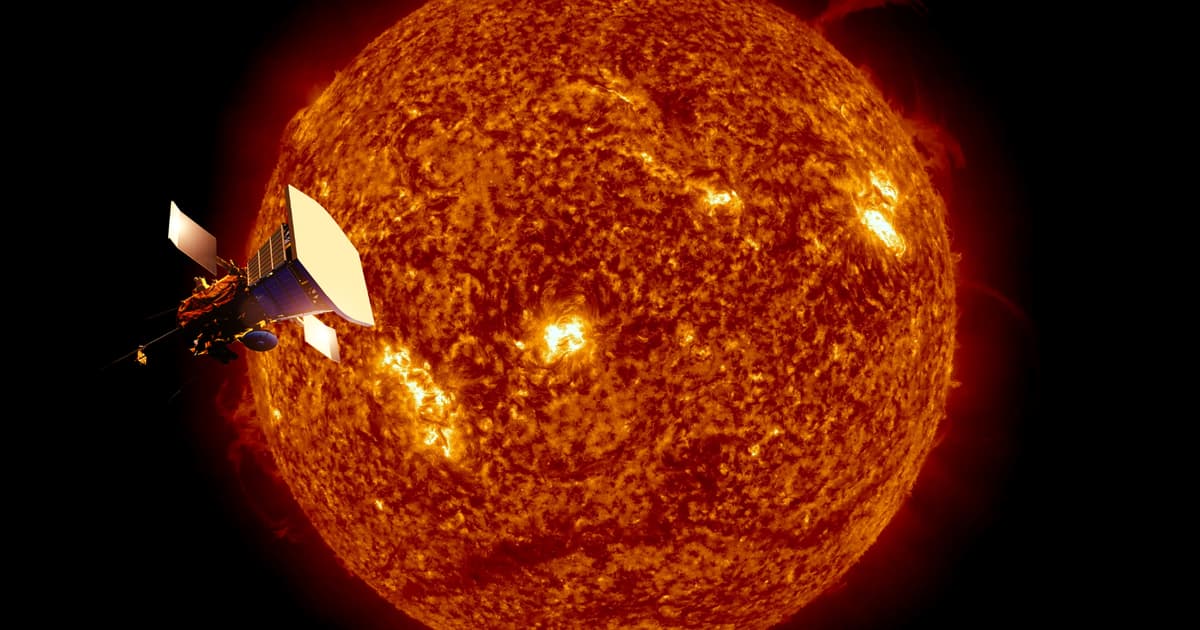
Parker Solar Probe Has Flown Through the Sun’s Outer Atmosphere, the Corona, Where Temperatures Soar Into the Millions of Degrees Even Though the Visible Surface Below Is Far Cooler — One of the Strangest Long-Running Puzzles in Solar Physics.
Why It Matters
Understanding how the Sun’s corona reaches extreme temperatures is critical for predicting space‑weather events that can disrupt satellites, power grids, and communications, making Parker’s data vital for both scientific and commercial stakeholders.
Key Takeaways
- •Probe reached 6.1 million km from Sun, fastest human-made object.
- •Direct measurements inside corona reveal plasma density, magnetic field, temperature.
- •Switchbacks abundant in solar wind but absent inside corona, per 2024 study.
- •Data supports both wave heating and nanoflare theories, no clear winner.
- •Ongoing passes during solar cycle will test competing coronal heating models.
Pulse Analysis
The Parker Solar Probe’s December 2024 flyby marked a milestone in heliophysics, bringing a spacecraft within 6.1 million km of the Sun’s photosphere—closer than any prior mission. Traveling at roughly 692,000 km/h, the probe endured the corona’s scorching million‑degree environment thanks to an 11‑centimetre carbon‑composite shield designed to keep its instruments near room temperature. This unprecedented proximity allowed scientists to collect in‑situ data on plasma density, temperature, and magnetic fields, providing a direct window into the Sun’s outer atmosphere that had previously been accessible only via remote sensing.
The core puzzle Parker aims to solve is the coronal‑heating problem: why the Sun’s outer atmosphere is hundreds of times hotter than its visible surface. Two dominant hypotheses—wave heating, where magnetic waves dissipate energy aloft, and nanoflares, tiny magnetic reconnection events—have vied for decades. Recent analyses of Parker’s measurements reveal abundant magnetic "switchbacks" in the young solar wind but a surprising absence of these structures within the corona itself, suggesting that while the wind may amplify such reversals, the initial energy deposition occurs elsewhere. This nuance refines, rather than settles, the debate, indicating that both mechanisms may operate in tandem across different solar regions.
Looking ahead, Parker’s repeated perihelion passes during the Sun’s active phase of its eleven‑year cycle will amass a richer dataset, enabling researchers to differentiate the relative contributions of wave heating versus nanoflares. Resolving this will improve models of solar‑wind acceleration and space‑weather forecasting, directly benefiting satellite operators, power‑grid managers, and the broader aerospace industry. The mission’s next phase, under NASA review, promises to keep the probe at the forefront of solar research well beyond 2026, cementing its role as a critical asset for both scientific discovery and commercial risk mitigation.
Parker Solar Probe has flown through the Sun’s outer atmosphere, the corona, where temperatures soar into the millions of degrees even though the visible surface below is far cooler — one of the strangest long-running puzzles in solar physics.
Comments
Want to join the conversation?
Loading comments...