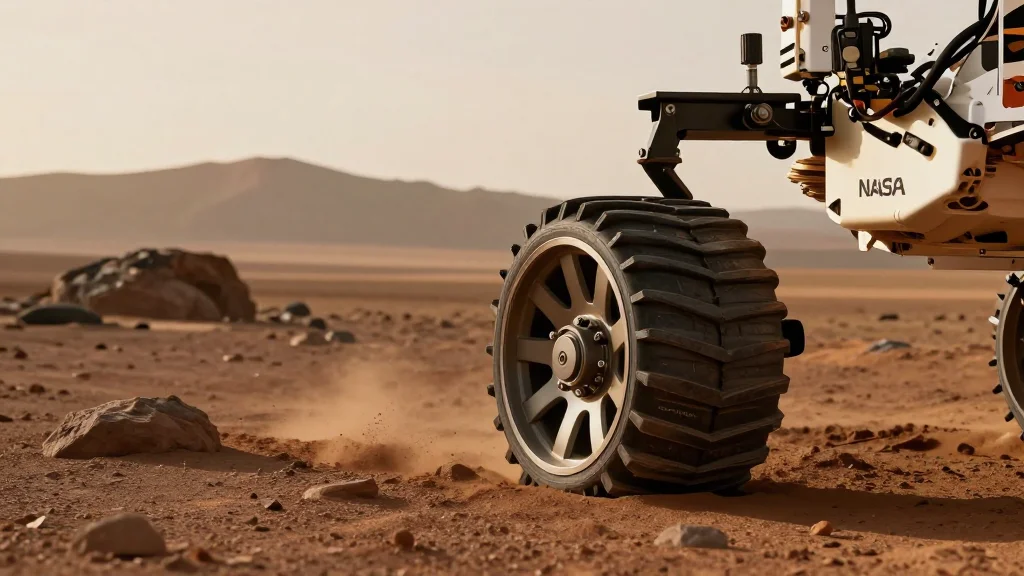
Perseverance and Curiosity Panoramas Reveal Dual Sides of Mars
Why It Matters
The dual panoramas provide unprecedented context for Mars’ geological history, guiding sample‑return priorities and deepening our understanding of the planet’s past habitability.
Key Takeaways
- •Curiosity stitched 1,031 images into a 1.5‑billion‑pixel panorama.
- •Perseverance’s “Lac de Charmes” panorama used 980 images of Jezero rim.
- •Curiosity detected 21 carbon molecules, seven new to Mars.
- •Perseverance recorded dust‑devil electrical sparks and surface auroras.
- •Both rovers map Mars’ geological timeline from ancient to younger terrains.
Pulse Analysis
The latest 360‑degree panoramas from Curiosity and Perseverance showcase how far imaging technology has advanced on Mars. Curiosity’s boxwork formation view, assembled from more than a thousand shots, offers a crystal‑clear look at groundwater‑carved ridges that once hardened into erosion‑resistant structures. Perseverance’s “Lac de Charmes” panorama, built from 980 images, frames the rim of Jezero Crater where some of the planet’s oldest sedimentary rocks reside. Together, these stitched mosaics provide a side‑by‑side visual of terrains that span billions of years, helping scientists correlate stratigraphic layers across a distance equivalent to a cross‑country flight.
Beyond the stunning visuals, the missions continue to deliver chemistry that reshapes our view of Mars’ habitability. Curiosity’s recent analysis revealed 21 distinct carbon‑containing molecules, including seven never before seen on the Red Planet, while carbonate minerals like siderite suggest ancient atmospheric carbon sequestration. Perseverance’s instruments captured the first electrical sparks in dust devils and even surface auroras, confirming long‑theorized atmospheric phenomena. These findings reinforce the idea that Mars once hosted liquid water, a thicker atmosphere, and the chemical precursors necessary for life, making the planet a prime target for deeper exploration.
Looking ahead, the panoramic data are more than scientific curiosities; they are critical inputs for the upcoming Mars Sample Return campaign. High‑resolution, wide‑angle views help pinpoint optimal drilling sites and assess terrain safety for future landers. By linking Curiosity’s younger mountain layers with Perseverance’s ancient crater deposits, researchers can construct a continuous geological timeline that informs where the most pristine, potentially biosignature‑rich samples may lie. This integrated approach not only accelerates the path to bringing Martian rocks back to Earth but also fuels commercial interest in in‑situ resource utilization and future human habitats on the Red Planet.
Perseverance and Curiosity panoramas reveal dual sides of Mars
Comments
Want to join the conversation?
Loading comments...