Pilot Photonics Secures €1M ESA Contract to Advance Space Photonics
Why It Matters
The contract accelerates deployment of photonic technology that can replace bulky RF hardware, lowering satellite cost and expanding bandwidth for massive LEO constellations. It also reinforces Europe’s strategic autonomy in the space communications supply chain.
Key Takeaways
- •ESA awards Pilot Photonics €1 M (~$1.09 M) for space photonics
- •Optical Frequency Generator spans 8‑220 GHz with low noise, high efficiency
- •Integrated module cuts satellite size, weight, power, and cost
- •Contract includes space‑environment validation and early in‑orbit demonstration
- •Boosts European strategic autonomy in high‑frequency satellite communications
Pulse Analysis
The satellite communications market is at a tipping point as data‑intensive services—from remote work to augmented reality—drive demand for higher frequency bands and flexible payloads. Traditional radio‑frequency hardware struggles with spectrum congestion and bulky form factors, prompting operators to explore optical solutions that can deliver broader bandwidths with lower power consumption. Integrated photonics, once confined to laboratory settings, is now emerging as a viable alternative for next‑generation space platforms, offering the scalability needed for thousands of low‑Earth‑orbit satellites.
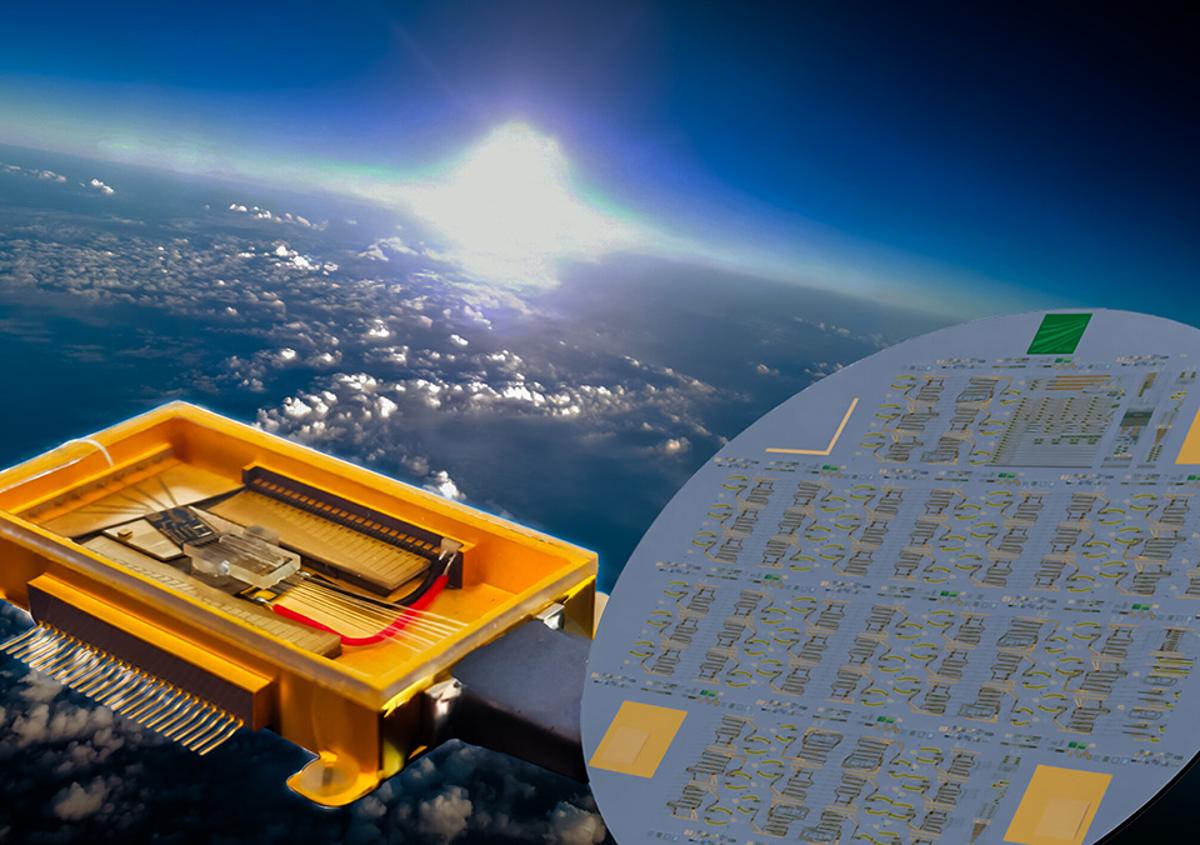
Pilot Photonics’ Optical Frequency Generator Unit (OFGU) embodies this shift. By converting signal generation to the optical domain, the OFGU achieves a continuous frequency range from 8 GHz up to 220 GHz, maintaining low phase noise and high power efficiency in a single, compact module. The ESA‑funded €1 million (≈$1.09 million) contract will fund rigorous space‑environment testing, ensuring the hardware can survive radiation, thermal cycling, and vibration. Successful validation will pave the way for early in‑orbit demos, demonstrating how integrated photonic engines can slash size, weight, power, and cost (SWaP‑C) metrics that have traditionally limited satellite design.
Beyond the technical gains, the initiative strengthens Europe’s strategic autonomy in a sector dominated by a few global players. By nurturing home‑grown photonic suppliers, the European Space Agency aims to secure an independent supply chain for high‑frequency communications, reducing reliance on external vendors. This aligns with broader policy goals of building sovereign constellations capable of resilient, secure data links. As the contract progresses, it could catalyze further investments across the EU’s deep‑tech ecosystem, positioning Europe as a leader in space‑qualified integrated photonics and reshaping the competitive landscape of global satellite communications.
Pilot Photonics Secures €1M ESA Contract to Advance Space Photonics
Comments
Want to join the conversation?
Loading comments...