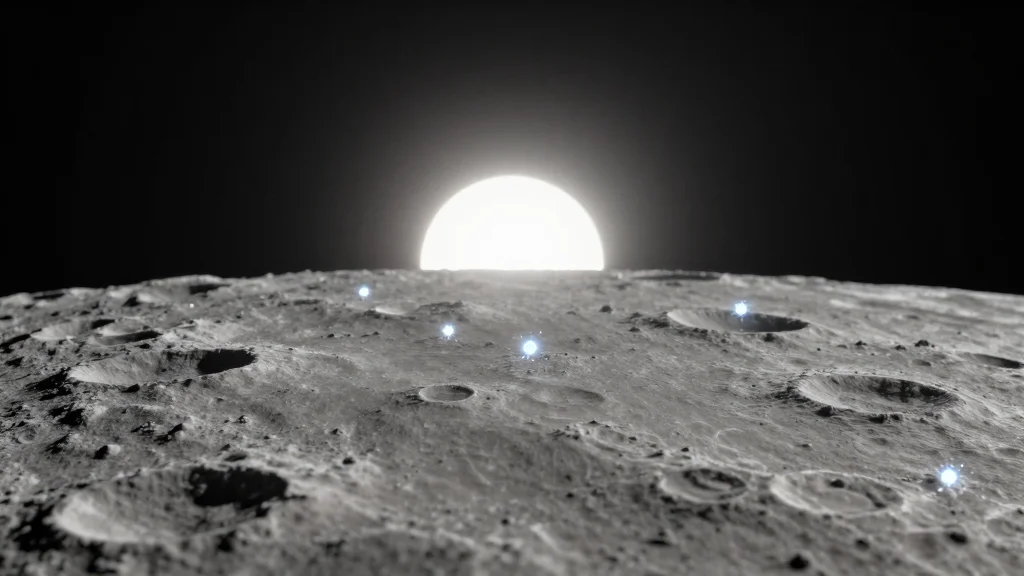
'Pinprick of Light': Artemis Crew Witnesses Meteorite Impacts on Moon
Why It Matters
The observations provide real‑time insight into the Moon’s meteoroid environment, a critical factor for designing safe, long‑duration lunar habitats and future surface operations.
Key Takeaways
- •Astronauts observed six meteorite impact flashes during Artemis II lunar flyby
- •Impacts lasted milliseconds, appearing white to bluish‑white against dark background
- •Observations occurred mainly during a solar eclipse, enhancing visibility
- •Data will help assess meteoroid flux for future lunar habitats
Pulse Analysis
Artemis II’s lunar flyby delivered more than a historic return to deep space; it also gave astronauts a front‑row seat to a rarely seen natural spectacle. While circling the Moon at roughly 250,000 miles from Earth, the crew reported six distinct impact flashes, each a millisecond‑long burst of white‑to‑bluish light. The timing coincided with a solar eclipse, when the Sun’s glare was blocked and the darkened lunar surface acted as a perfect screen for these fleeting events. Such observations have been limited to ground‑based telescopes and orbital sensors, making the crew’s eyewitness account a valuable supplement to existing datasets.
Scientists are now eager to translate these visual cues into quantitative metrics. By matching the crew’s reports with data from lunar orbiters, researchers can estimate the size distribution and frequency of meteoroids striking the Moon—information that is scarce compared with Earth’s well‑studied atmosphere‑burned debris. Preliminary analysis suggests the impacting bodies are larger than dust but far smaller than meter‑scale boulders, likely ranging from a few centimeters to decimeters. Understanding this “daily flux” is essential for assessing erosion rates, surface contamination, and the risk to equipment and habitats that lack Earth’s protective atmosphere.
The implications for future lunar infrastructure are profound. As agencies and private firms plan permanent bases, accurate meteoroid risk models will inform shielding requirements, site selection, and real‑time monitoring systems. NASA may deploy dedicated impact‑detection cameras or acoustic sensors on the surface to complement crew observations. Ultimately, Artemis II’s serendipitous sightings underscore the need for continuous, high‑resolution surveillance of the Moon’s impact environment, turning a moment of awe into actionable science for the next generation of explorers.
'Pinprick of light': Artemis crew witnesses meteorite impacts on moon
Comments
Want to join the conversation?
Loading comments...