Pioneering High-Pressure Cold Spray Transforms Manufacturing of Complex Copper Rocket Nozzles
Why It Matters
By slashing production cycles and material waste, the technology can accelerate rocket engine development and lower costs, while offering a versatile manufacturing tool for other high‑value sectors.
Key Takeaways
- •Cold spray deposits copper at up to 10 kg per hour.
- •Lead times drop from months to days for large nozzles.
- •Solid‑state process avoids thermal distortion and material degradation.
- •Technology applicable to aerospace, energy and shipbuilding sectors.
Pulse Analysis
The aerospace industry has long wrestled with the difficulty of fabricating copper rocket nozzles that contain complex internal cooling channels. Traditional machining and additive methods such as powder‑bed fusion are either too slow, limited in build size, or introduce thermal stresses that compromise material integrity. Copper’s high thermal conductivity makes it ideal for heat‑shielding, yet its reflective nature and low melting point have rendered conventional processes inefficient, driving up costs and extending development timelines for launch vehicles.
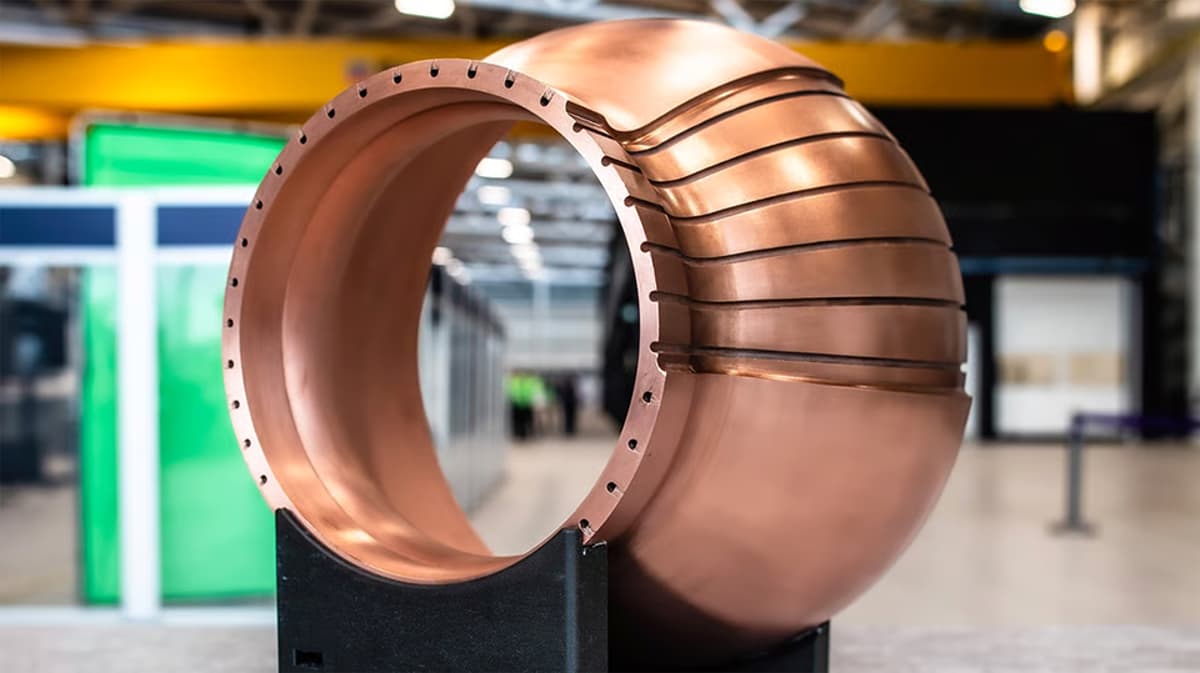
High‑pressure cold spray offers a disruptive alternative by propelling solid copper particles at supersonic speeds onto a substrate, where they plastically deform and bond without melting. This solid‑state deposition achieves rates of up to ten kilograms per hour, dramatically reducing the time required to construct large, intricate structures. Because the material never enters a molten state, the process sidesteps thermal distortion, preserves copper’s intrinsic properties, and minimizes post‑process machining waste. The resulting nozzle prototype demonstrates that complex geometries, including fine cooling passages, can be produced in a single, continuous operation, potentially shrinking lead times from several months to a few days.
Beyond propulsion, the implications extend to any sector that relies on high‑performance, corrosion‑resistant metals. Aerospace components, power‑generation turbines, and marine vessels could benefit from rapid, low‑waste fabrication or on‑site repair of copper‑based parts. The technology aligns with sustainability goals by cutting material scrap and energy consumption associated with melting processes. Moreover, the UK’s successful demonstration bolsters its strategic position in advanced manufacturing, signaling to investors and partners that the nation can deliver next‑generation production capabilities across multiple high‑value industries.
Pioneering High-Pressure Cold Spray Transforms Manufacturing of Complex Copper Rocket Nozzles
Comments
Want to join the conversation?
Loading comments...