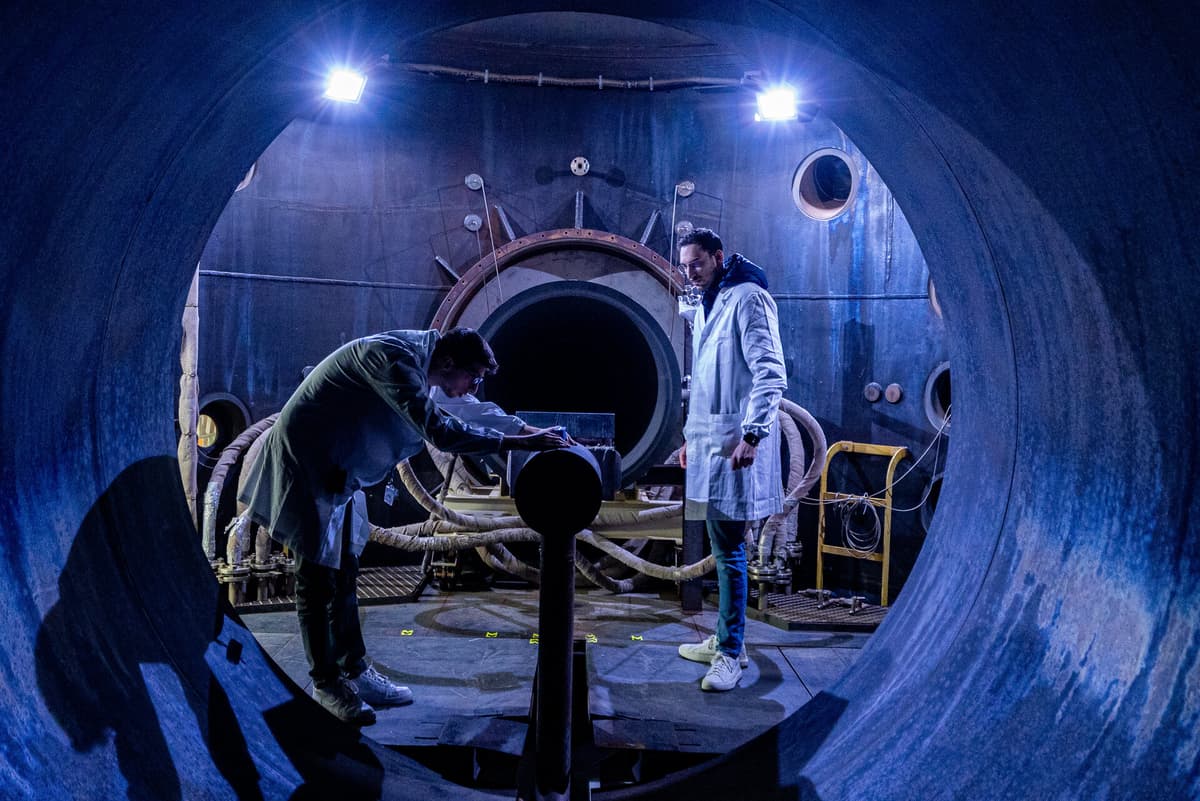
Plasma-Hot Space Rider Tests for Belly and Flaps
Why It Matters
Successful validation of Space Rider’s heat‑shield and aerodynamic control systems paves the way for Europe’s autonomous, cost‑effective access to low‑Earth orbit and strengthens its competitive position in the emerging reusable‑space market.
Key Takeaways
- •Space Rider uses 21 reusable ISiComp ceramic tiles for heat protection
- •Tiles endured 200 kN shaker vibration test on Vega‑C rocket
- •Two 10 kg ceramic flaps steer 3,000 kg module during hypersonic re‑entry
- •Flaps survived arc‑jet wind tunnel at Mach 10, confirming lift control
- •Damage‑tolerant tile survived simulated micrometeorite impact
Pulse Analysis
Europe’s Space Rider program marks a strategic shift toward autonomous, reusable spacecraft that can conduct scientific experiments and return valuable payloads without crew. By combining a low‑cost parafoil landing system with a robust thermal‑protection architecture, ESA aims to reduce turnaround times and launch expenses, positioning the continent to compete with private U.S. and Asian providers. The vehicle’s two‑month orbital window and modular cargo bay also open new commercial opportunities for microgravity research, in‑orbit manufacturing, and technology demonstrations.
The heart of Space Rider’s re‑entry resilience lies in its ISiComp ceramic tiles, a lightweight composite developed by CIRA and Petroceramics. These tiles endured a 200 kN shaker test that mimics the intense vibrations of a Vega‑C launch, proving they can survive the mechanical stresses of ascent. Moreover, a deliberately damaged tile withstood plasma exposure, demonstrating damage tolerance against micrometeorite impacts—a critical safety feature for long‑duration missions. This rigorous validation reduces the risk profile for future flights and showcases Europe’s capability to produce reusable heat‑shield materials at scale.
Equally innovative are the vehicle’s steering flaps, which replace conventional wings with ceramic surfaces supported by 3‑D‑printed titanium‑alloy brackets. Tested in the world’s largest plasma wind tunnel at Mach 10, the flaps proved they can generate precise lift and control for a 3‑tonne module during hypersonic descent. The integration of additive manufacturing and high‑temperature ceramics not only cuts weight but also streamlines production cycles. As Space Rider moves toward operational status, these technologies could be adapted for larger reusable capsules, bolstering Europe’s launch cadence and offering a home‑grown alternative to the growing market for reusable spaceflight services.
Plasma-hot Space Rider tests for belly and flaps
Comments
Want to join the conversation?
Loading comments...