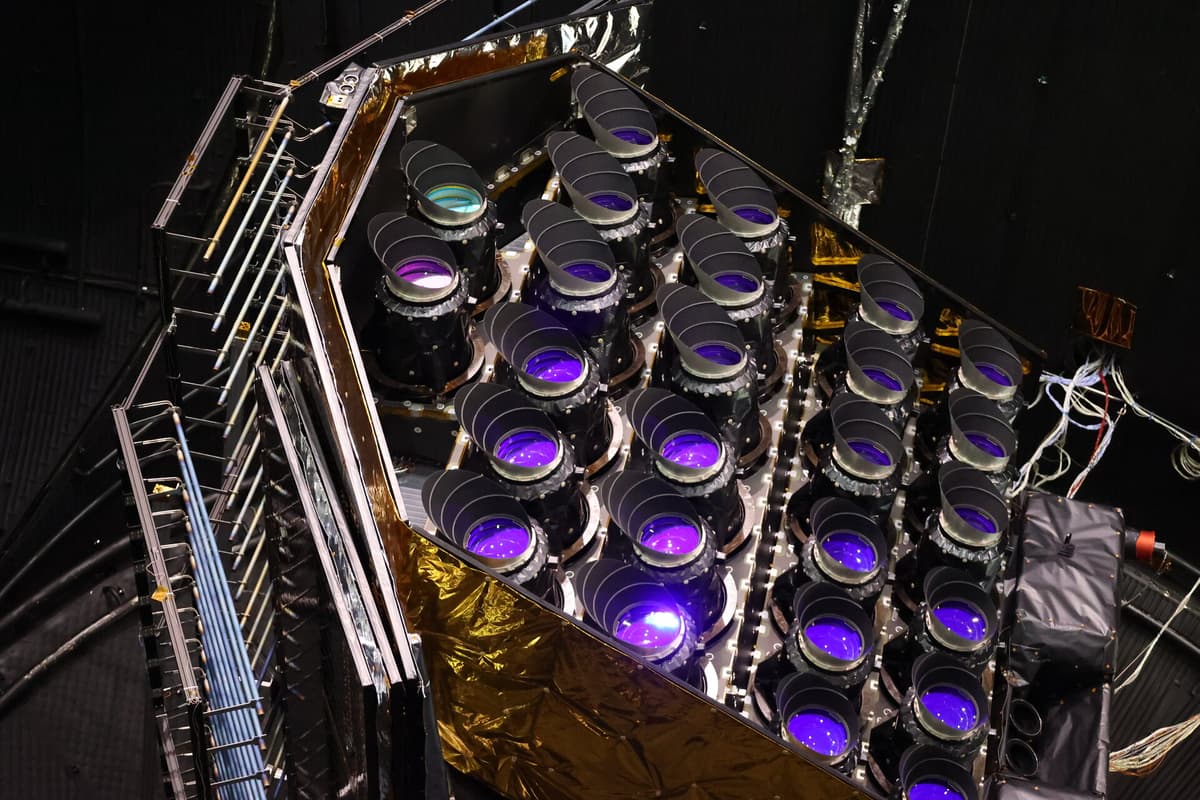
Plato Aces Space-Like Tests
Companies Mentioned

Why It Matters
Successful testing de‑risks the hardware, guaranteeing the photometric precision required to spot terrestrial exoplanets and keeping ESA’s 2027 launch timetable intact. It also reinforces Europe’s leadership in space‑based planet hunting under the Cosmic Vision programme.
Key Takeaways
- •PLATO passed thermal vacuum tests simulating space extremes
- •26 ultra‑sensitive cameras validated for 80 ppm photometric precision
- •Hot phase reached 150 °C; cameras stayed –70 °C to –90 °C
- •Launch slated for January 2027 on Ariane 6
Pulse Analysis
The PLAnetary Transits and Oscillations of stars (PLATO) mission represents ESA’s most ambitious exoplanet survey to date, targeting Earth‑size worlds orbiting Sun‑like stars. By deploying a constellation of 26 high‑precision cameras, PLATO will monitor stellar brightness for the minute dips that signal a planetary transit, aiming for detection thresholds below 80 parts per million. This capability places the mission alongside NASA’s Kepler and TESS programs, but with a broader field of view and a focus on bright, nearby stars that are prime candidates for follow‑up spectroscopy.
Achieving that level of photometric fidelity required exhaustive thermal‑vacuum testing at ESA’s Large Space Simulator. Engineers subjected the spacecraft to a vacuum a billion times thinner than Earth’s atmosphere, cycled temperatures from a scorching 150 °C on the solar‑panel side to a frigid –90 °C on the camera optics, and verified that thermal control loops could keep the detectors within the narrow –70 °C to –90 °C band. The tests also stressed the full power budget, confirming that the spacecraft’s power, data handling, and attitude control subsystems operate reliably under worst‑case thermal loads. Results will feed refined thermal models, reducing uncertainty in on‑orbit performance and ensuring that the cameras remain sharply focused throughout the mission.
With validation complete, PLATO is on track for an Ariane 6 launch in January 2027, marking a critical milestone for ESA’s Cosmic Vision medium‑class portfolio. The mission’s success will not only expand the catalog of potentially habitable worlds but also stimulate European aerospace firms—OHB, Thales Alenia Space, and Beyond Gravity—by showcasing their ability to deliver cutting‑edge scientific hardware. As the exoplanet market matures, PLATO’s data will feed next‑generation telescopes and commercial ventures seeking to characterize atmospheres, reinforcing Europe’s strategic position in the burgeoning space science economy.
Plato aces space-like tests
Comments
Want to join the conversation?
Loading comments...