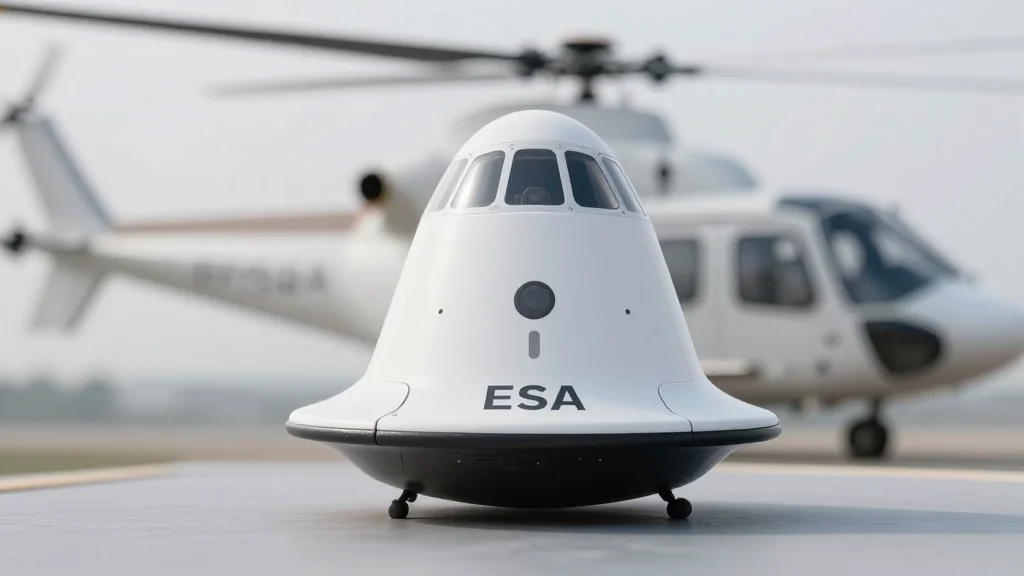
Problems During First Drop Tests of Europe’s Space Rider Prototype
Companies Mentioned
Why It Matters
The postponement underscores ESA’s difficulty keeping up with fast‑moving private-sector reusable spacecraft, threatening the program’s relevance and future funding.
Key Takeaways
- •May 2026 captive ascent anomaly halted Space Rider drop‑test campaign
- •Full‑scale helicopter drop test rescheduled for late 2026, no firm date
- •ESA’s Space Rider development delayed over a decade since 2015
- •Private firms may outpace ESA, risking program cancellation
Pulse Analysis
Europe’s Space Rider was conceived as a low‑cost, reusable orbital capsule that could return experiments and small payloads from the International Space Station. The program, launched in 2015 with a budget of roughly €100 million (about $108 million), promised a commercial debut by 2025. Early milestones included parachute and guidance‑system tests in 2023, followed by a series of helicopter‑lifted “brain” drop tests last summer. However, the transition to a full‑scale mock‑up has been hampered by technical setbacks and a development cadence that lags behind its original timetable.
In early May 2026, ESA’s drop‑test campaign was interrupted when an undisclosed anomaly occurred during the captive ascent phase, when a CH‑47 Chinook raised the mock‑up to drop altitude. The incident forced an immediate abort of the final test sequence and left the agency unable to disclose the root cause. While ESA has not provided details, the delay pushes the next full‑scale drop test to the latter half of the year, underscoring the program’s vulnerability to schedule slips. By contrast, private operators such as SpaceX, Blue Origin, and emerging European startups are rapidly fielding reusable capsules and have already demonstrated multiple successful re‑entries.
The postponement raises strategic questions for ESA. If the Space Rider cannot achieve a flight‑ready status within the next five years, it risks becoming obsolete as commercial providers dominate the market for cargo return services and private space‑station logistics. A prolonged timeline may also strain the program’s €100 million budget, prompting European policymakers to reassess funding priorities. To remain competitive, ESA may need to accelerate testing, increase transparency around anomalies, or consider partnerships with private firms that can supply proven reusable‑capsule technology.
Problems during first drop tests of Europe’s Space Rider prototype
Comments
Want to join the conversation?
Loading comments...