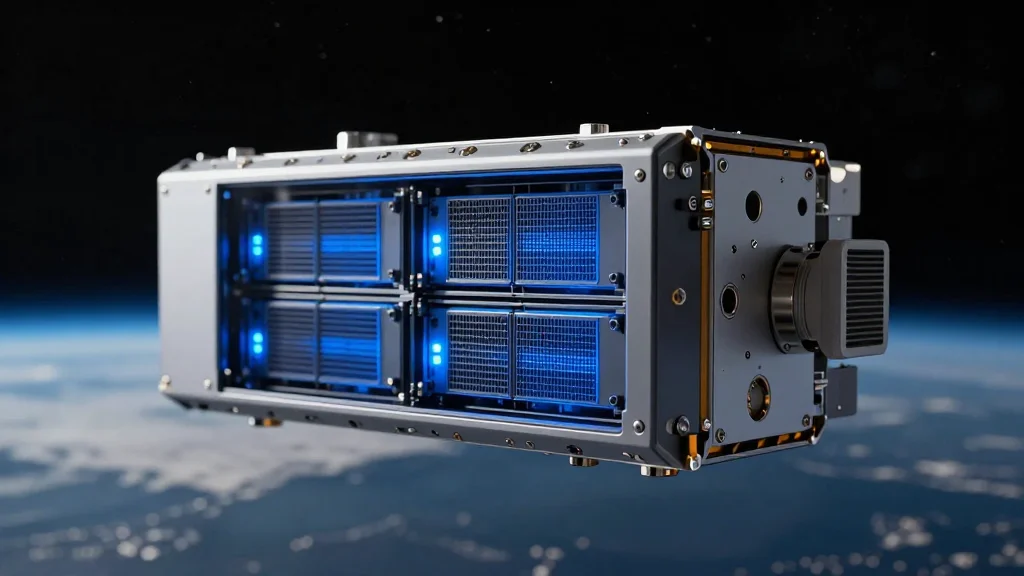
Report: Data Centers in Space – Key Takeaways
Why It Matters
Space‑based data centers promise resource savings for an AI‑intensive world, but unresolved cooling and orbital‑debris challenges could delay commercial adoption and reshape infrastructure investment strategies.
Key Takeaways
- •Space data centers could cut terrestrial land, power, and water usage
- •Cooling hardware in vacuum remains a major engineering hurdle
- •Orbital congestion raises collision risk and debris management concerns
- •GAO report highlights cost, regulatory, and technology barriers to deployment
Pulse Analysis
The allure of space‑based data centers stems from the relentless growth of artificial‑intelligence workloads, which strain existing terrestrial facilities. By relocating compute clusters to orbit, operators could theoretically free up valuable real‑estate, reduce grid demand, and sidestep water‑intensive cooling systems. This vision dovetails with broader trends toward edge computing and satellite‑enabled services, positioning space as a potential extension of the cloud ecosystem. Yet the promise hinges on overcoming the physics of heat removal in a vacuum, where traditional air‑cooled designs fail and radiative cooling demands innovative materials and architecture.
Technical obstacles dominate the feasibility debate. Launch costs, while falling thanks to reusable rockets, still add a premium to every kilogram of hardware sent aloft. Once in orbit, servers must endure radiation exposure, micro‑gravity effects, and the absence of a convective medium to carry away waste heat. Engineers are exploring high‑efficiency heat‑pipe networks and deployable radiators, but prototypes remain experimental. Moreover, the need for reliable power—whether via solar arrays or nuclear sources—introduces additional safety and regulatory layers. These challenges inflate capital expenditures and extend development timelines, tempering investor enthusiasm.
Regulatory and market dynamics further complicate the path forward. The burgeoning constellation of satellites already strains orbital slots and raises debris mitigation concerns; adding data‑center modules could exacerbate collision risks and trigger stricter licensing requirements. The GAO report underscores that without coordinated policy frameworks and clear liability standards, commercial players may face prohibitive compliance costs. Nonetheless, niche applications—such as low‑latency processing for remote sensing or secure government workloads—could serve as early adopters, gradually proving the model’s viability before broader enterprise uptake. In the meantime, the industry watches closely, balancing the lure of off‑planet compute against the practicalities of engineering and governance.
Report: Data Centers in Space – Key Takeaways
Comments
Want to join the conversation?
Loading comments...