Researchers Call for Regulations to Protect Low Earth Orbit Environment
Why It Matters
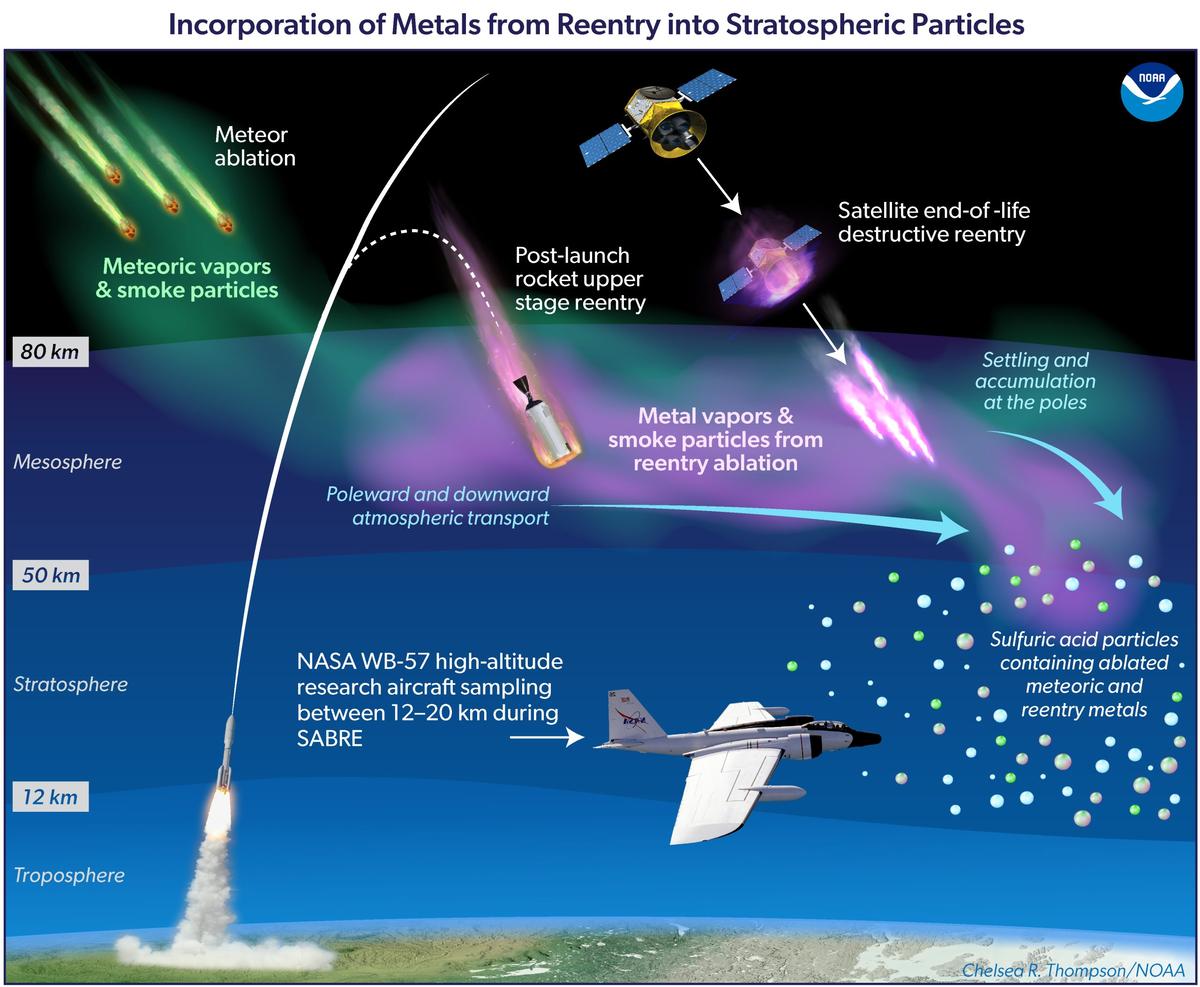
Unregulated debris and material emissions threaten atmospheric chemistry and climate, creating a global risk that transcends national borders and could impair satellite operations and ground‑based observations.
Key Takeaways
- •Exotic re‑entry materials deposit metals into upper atmosphere.
- •Megaconstellations accelerate debris influx, raising atmospheric contamination risk.
- •Researchers lack transparent data on spacecraft material composition.
- •Proposed in‑orbit mass spectrometers could monitor debris particle signatures.
- •EU’s CAIRT mission aims to map aluminum‑oxide aerosol layers globally.
Pulse Analysis
The rapid expansion of satellite megaconstellations has turned low‑Earth orbit into a bustling highway of hardware, and each launch or uncontrolled re‑entry releases exotic materials—primarily metal oxides—into the stratosphere. Atmospheric chemists worry that these particles can act as nucleation sites for cloud formation or alter radiative balance, potentially influencing climate patterns. While the phenomenon has been largely theoretical, recent laser‑based measurements from the Leibniz Institute of Atmospheric Physics have begun to detect trace metals, confirming that space debris is no longer confined to orbit but is becoming an atmospheric pollutant.
To move from detection to mitigation, scientists are championing new measurement platforms. In‑orbit mass spectrometers, still in the proposal stage, would sample micro‑particles directly, providing real‑time composition data that ground‑based lidar cannot capture. Complementing this, the European Space Agency’s CAIRT (Changing‑Atmosphere Infra‑Red Tomography) concept envisions a limb‑imaging satellite capable of delivering the first global, vertically resolved maps of aluminum‑oxide aerosols stemming from re‑entry events. Such datasets would enable climate models to incorporate space‑derived aerosols, refining predictions and informing policy decisions.
Despite the emerging scientific toolkit, regulatory frameworks lag behind industry growth. Companies guard material specifications as competitive secrets, and no international treaty currently mandates disclosure or limits on atmospheric emissions from space hardware. Panels at the EGU conference and upcoming National Academies meetings are calling for coordinated policy that balances innovation with planetary stewardship. Establishing transparent reporting standards, coupled with enforcement mechanisms—potentially through the United Nations Committee on the Peaceful Uses of Outer Space—could curb unchecked debris generation and safeguard both the orbital environment and the Earth's atmosphere for future generations.
Researchers call for regulations to protect low Earth orbit environment
Comments
Want to join the conversation?
Loading comments...