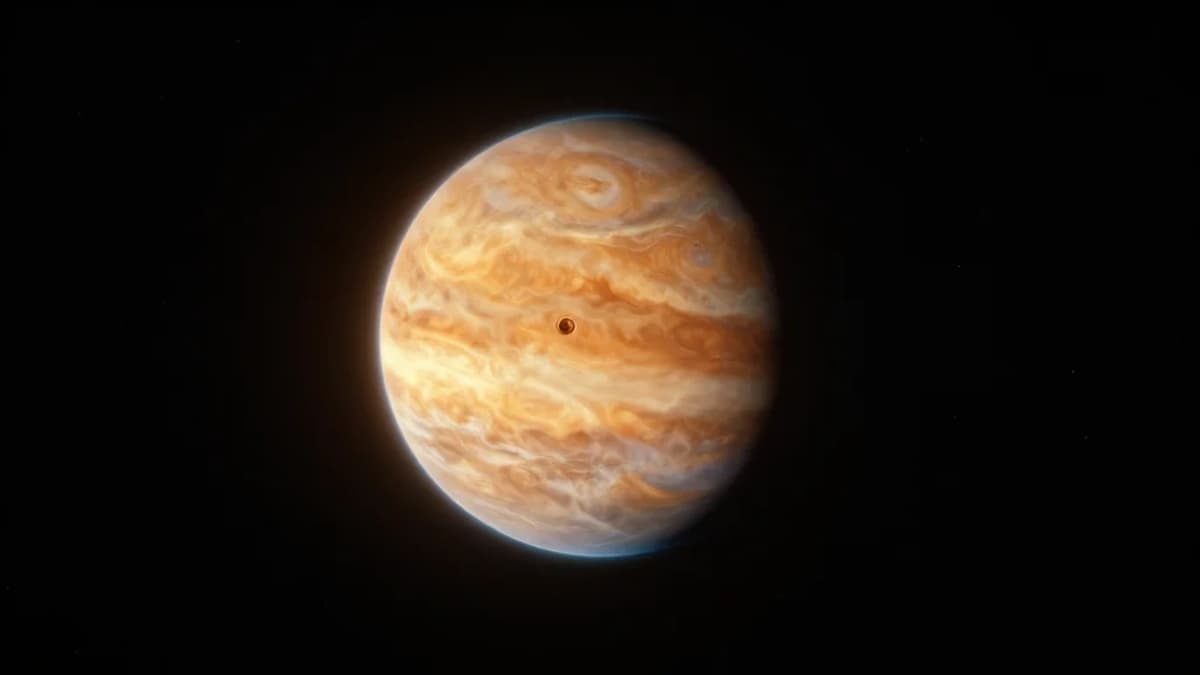
Rethinking Where Life Could Exist Beyond Earth
•January 22, 2026
0
Why It Matters
By widening both inner and outer habitability limits, the study multiplies viable exoplanet targets, reshaping astrobiology priorities and guiding future telescope missions.
Key Takeaways
- •Tidally locked planets may host night‑side liquid water.
- •Habitable zone extends closer to M‑ and K‑dwarfs.
- •Subglacial lakes could exist beyond traditional outer edge.
- •JWST water detections align with expanded habitability models.
- •Exoplanet surveys may need revised target criteria.
Pulse Analysis
The conventional "habitable zone" has long guided exoplanet hunting, but its reliance on Earth‑like insolation ignores the diversity of planetary climates. Wandel’s analytical climate model challenges that paradigm by quantifying heat transport on tidally locked worlds. By demonstrating that atmospheric circulation can keep night‑side temperatures above freezing, the study reveals a hidden niche for surface liquid water around cool dwarf stars, a regime previously dismissed as too hostile.
Observationally, the expanded inner edge dovetails with recent James Webb Space Telescope findings of water vapor in the atmospheres of warm super‑Earths orbiting M‑dwarfs. Those planets, once classified as too close to their stars, now fit within a revised habitability framework, prompting a reassessment of target lists for biosignature searches. Simultaneously, the paper’s emphasis on subglacial reservoirs mirrors solar‑system analogues such as Europa and Enceladus, suggesting that icy exoplanets far beyond the classic outer edge could harbor liquid habitats beneath thick ice shells.
For the broader astrobiology community, these insights demand updated climate models and mission designs that account for both extreme day‑night dichotomies and hidden subsurface oceans. Future telescopes like the Habitable Worlds Observatory may prioritize spectroscopic signatures of heat redistribution and ice‑covered worlds, dramatically expanding the catalog of candidates. In turn, funding agencies and research programs are likely to allocate resources toward exploring this enlarged parameter space, accelerating the search for life beyond Earth.
Rethinking where life could exist beyond Earth
0
Comments
Want to join the conversation?
Loading comments...