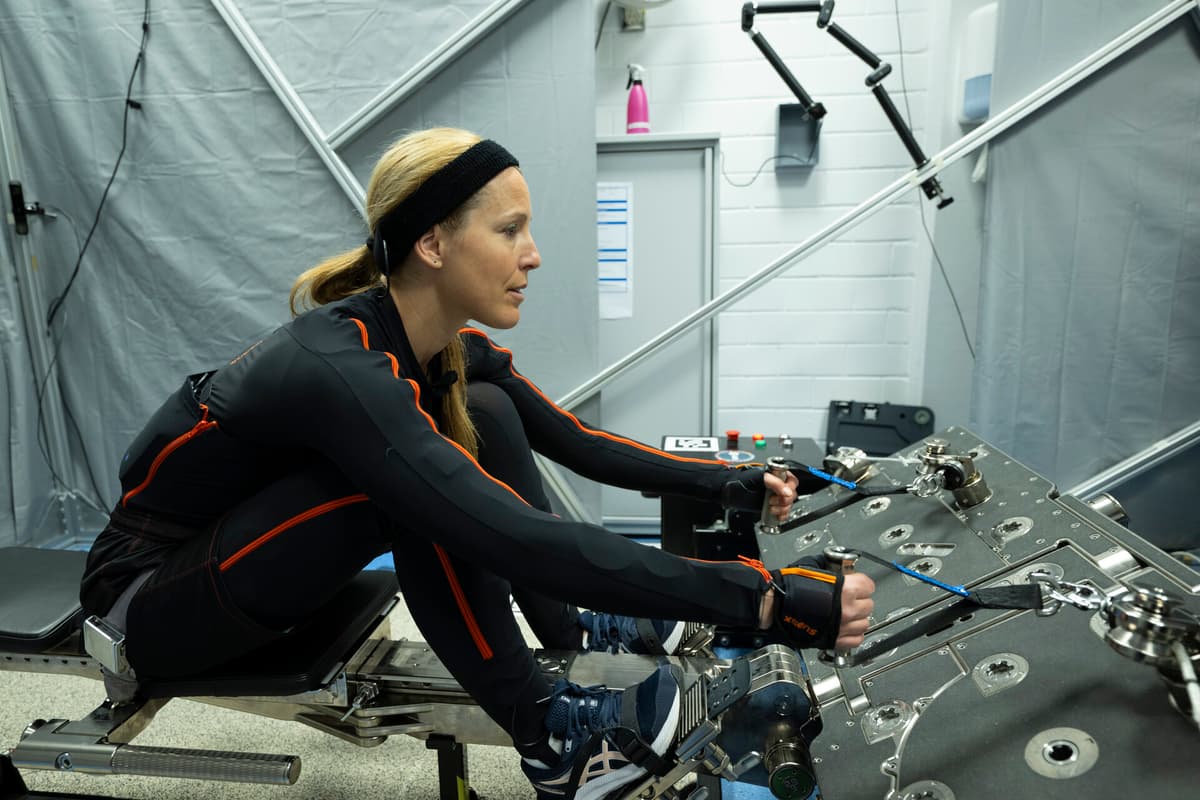
Revolutionising Astronaut Fitness for Deep Space Missions
•January 16, 2026
0
Companies Mentioned

Why It Matters
E4D addresses the critical muscle, bone and cardiovascular degradation that threatens crew performance on deep‑space missions, while its compact footprint fits the tighter constraints of future lunar habitats.
Key Takeaways
- •E4D supports 30+ strength exercises, 100 variations.
- •Loads up to 270 kg, adaptable resistance.
- •Integrated motion capture provides real‑time posture feedback.
- •Compact design fits Lunar Gateway constraints.
- •First flight on ISS April 2026 for εpsilon mission.
Pulse Analysis
The introduction of ESA’s European Enhanced Exploration Exercise Device marks a pivotal shift in how space agencies mitigate the physiological toll of microgravity. Traditional ISS treadmills and resistance machines are bulky and limited in exercise variety, often requiring extensive crew time and ground oversight. E4D’s modular architecture consolidates four training modalities—resistive, cycling, rowing, and rope pulling—into a single footprint, delivering up to 270 kg of resistance. By offering over 30 distinct strength exercises and 100 variations, it expands the repertoire of in‑flight conditioning, directly targeting muscle atrophy and bone demineralisation that jeopardize mission safety.
Beyond raw performance, E4D’s built‑in motion‑capture system leverages four strategically placed cameras to generate real‑time biomechanical data. Astronauts view an avatar on a tablet, enabling instant posture correction and reducing injury risk without constant telemetry from Earth. This autonomous feedback loop not only frees up mission control bandwidth but also creates a rich dataset for researchers comparing space‑based and terrestrial exercise outcomes. The integration of AI‑driven analysis paves the way for future enhancements such as virtual‑reality coaching and predictive injury modeling.
Strategically, E4D aligns with the upcoming Lunar Gateway’s volume constraints, offering a lighter, more adaptable solution than legacy equipment. Its scheduled deployment on the ISS during the εpsilon mission will serve as a technology demonstrator, informing the design of next‑generation exercise platforms for Artemis and Mars expeditions. By coupling health preservation with scientific insight, E4D strengthens crew readiness and accelerates the development of sustainable human presence beyond low Earth orbit.
Revolutionising astronaut fitness for deep space missions
0
Comments
Want to join the conversation?
Loading comments...