Rhea Space Activity Raises $6 Million to Develop GPS-Free Spacecraft Navigation
Companies Mentioned
Why It Matters
GPS‑free navigation reduces reliance on vulnerable satellite constellations, enhancing mission resilience for both government and commercial space operations.
Key Takeaways
- •$6M Series A backs GPS‑free visual navigation development.
- •AutoNav uses optical sensors to locate spacecraft via celestial imaging.
- •Originated from NASA JPL, now commercialized by Rhea Space Activity.
- •First test slated on Varda’s re‑entry capsule launched March 30.
- •Enables autonomy in GPS‑denied or contested space environments.
Pulse Analysis
Satellite‑based positioning has become the backbone of modern aerospace operations, but its dependence on a global constellation makes missions vulnerable to jamming, signal loss, or geopolitical restrictions. In response, investors are increasingly backing technologies that can operate independently of GPS. Rhea Space Activity’s recent $6 million Series A round reflects this shift, positioning the Washington, D.C. startup to commercialize a navigation solution originally conceived at NASA’s Jet Propulsion Laboratory. The capital infusion will accelerate software development, hardware integration, and field testing, signaling strong market confidence in GPS‑free autonomy.
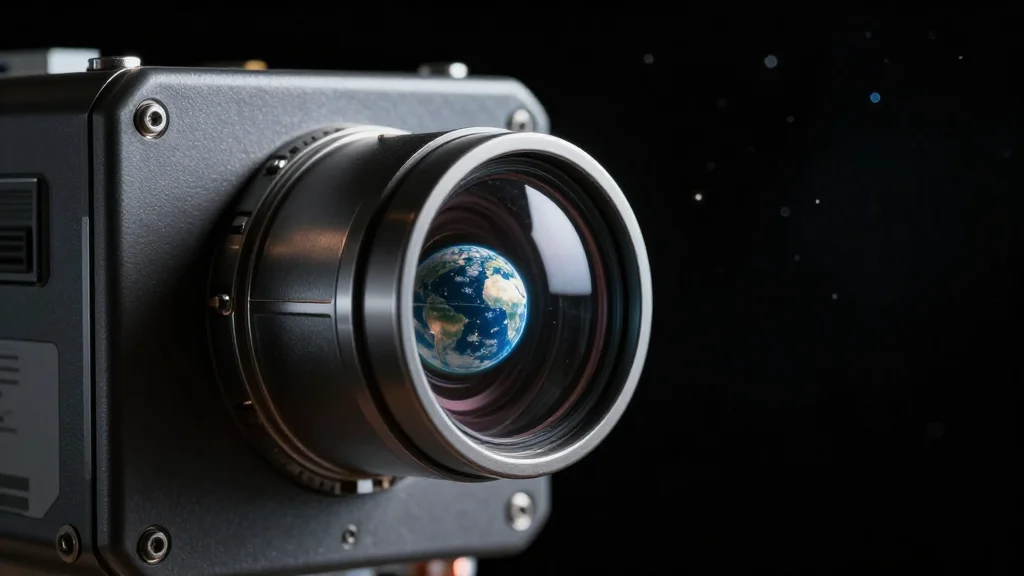
The core of Rhea’s offering, AutoNav, leverages high‑resolution optical sensors to capture images of surrounding celestial bodies—planets, moons, asteroids, and even other spacecraft. By matching these pictures against an onboard star catalog, the system computes precise position and velocity vectors without external signals. This visual‑based approach, proven in laboratory simulations at JPL, reduces the need for continuous ground contact and mitigates the risk of navigation failures during critical phases such as atmospheric re‑entry or deep‑space cruise. Its software‑centric design also allows rapid updates and scalability across different vehicle architectures.
Rhea plans to demonstrate AutoNav on Varda Space Industries’ re‑entry capsule, which entered orbit on March 30, providing a real‑world proving ground for the technology. Successful validation could open doors to a new class of autonomous spacecraft, from low‑Earth‑orbit satellites operating in contested spectra to interplanetary probes venturing beyond Earth’s GPS reach. As commercial and defense customers seek resilient navigation solutions, the market for optical navigation is poised for rapid growth, potentially reshaping mission design, reducing reliance on costly ground infrastructure, and enhancing overall space security.
Rhea Space Activity raises $6 million to develop GPS-free spacecraft navigation
Comments
Want to join the conversation?
Loading comments...