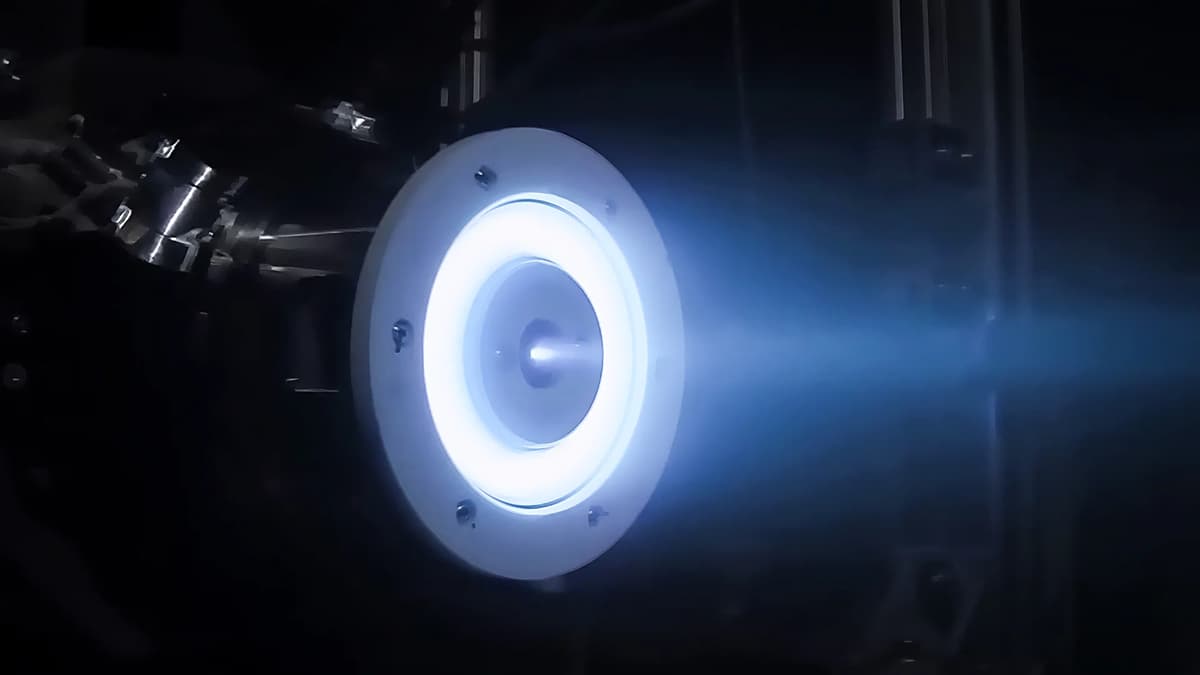
Rocket Lab Enters the Thruster Market with Gauss
Companies Mentioned
Why It Matters
By producing thrusters in‑house, Rocket Lab reduces supply‑chain risk and taps a growing market where demand outpaces supply, potentially reshaping the economics of satellite operations. The strategy also broadens its revenue base beyond launch services, aligning with industry trends toward integrated space solutions.
Key Takeaways
- •Rocket Lab launches Gauss Hall‑effect electric thruster for in‑orbit maneuvers.
- •Thruster aims to fill industry shortage of scalable propulsion solutions.
- •Acquisition of Mynaric adds optical‑terminal capability to Rocket Lab’s portfolio.
- •Company positions itself as a full‑service space firm, not just launch provider.
- •VC backing helps Rocket Lab overcome scaling barriers faced by smaller suppliers.
Pulse Analysis
The satellite propulsion market is tightening as commercial constellations and government missions demand reliable, high‑efficiency thrusters for station‑keeping and orbital transfers. Hall‑effect electric thrusters like Gauss offer low‑thrust, high‑specific‑impulse performance ideal for these tasks, yet many providers struggle to scale production to meet the burgeoning order backlog. Rocket Lab’s entry signals confidence that its manufacturing expertise can bridge the gap between prototype and volume, potentially easing the current supply‑chain bottleneck.
Rocket Lab’s vertical integration strategy gains momentum with the recent acquisition of German optics firm Mynaric. By adding laser‑communication terminals to its portfolio, the company creates a one‑stop shop for small‑satellite customers seeking both propulsion and high‑bandwidth data links. This synergy reduces reliance on external vendors, shortens development cycles, and leverages the firm’s VC‑backed capital to invest in tooling and test facilities that smaller thruster startups lack. The combined offering strengthens Rocket Lab’s value proposition in a market where end‑to‑end solutions are increasingly prized.
Strategically, the move repositions Rocket Lab from a launch‑only provider to a comprehensive space services company. As launch capacity becomes commoditized, revenue growth will hinge on ancillary markets such as on‑orbit servicing, debris removal, and inter‑satellite networking—areas where in‑house thrusters and optical links are essential. By controlling both the ride to orbit and the means to maneuver once there, Rocket Lab can capture a larger slice of the total addressable market, set pricing benchmarks, and influence industry standards for integrated space architectures.
Rocket Lab Enters the Thruster Market with Gauss
Comments
Want to join the conversation?
Loading comments...