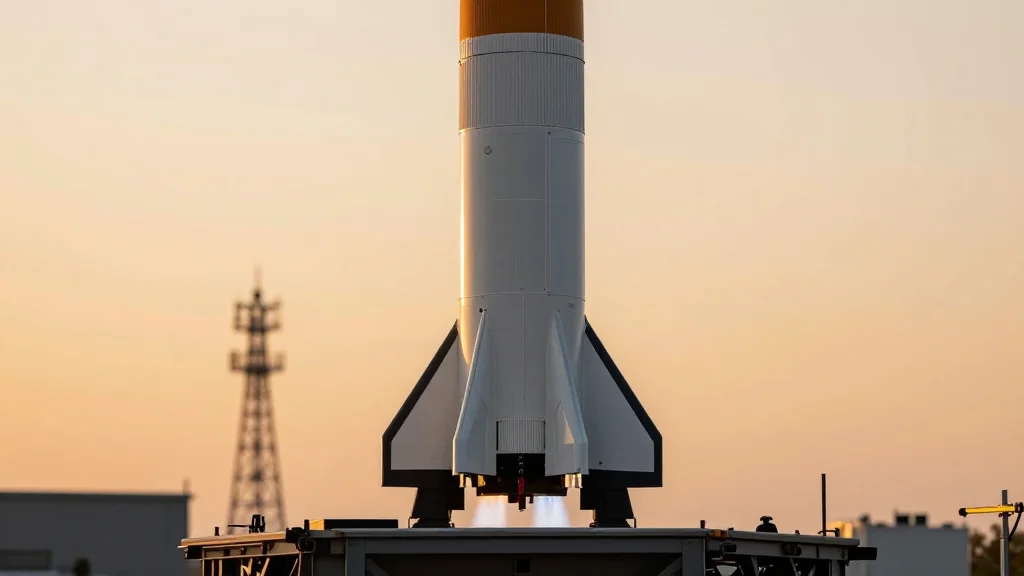
Rocket Lab Posts Record $200M Q1 Revenue, Secures $190M US Defense Contract

Companies Mentioned

Why It Matters
Rocket Lab’s record‑breaking quarter signals a pivotal shift in the commercial‑defense launch ecosystem. By securing a $190 million U.S. defense contract and expanding its HASTE hypersonic test‑flight portfolio, the company is embedding itself in the United States’ emerging missile‑defence architecture, a market projected to grow into the tens of billions of dollars over the next decade. Simultaneously, its growing backlog and acquisition of robotics expertise position Rocket Lab to compete for more complex, higher‑value missions, from lunar landers to national‑security payloads, challenging incumbents such as SpaceX and United Launch Alliance. The financial strength demonstrated by a $2 billion liquidity cushion and a $2.2 billion backlog provides Rocket Lab with the runway to accelerate Neutron development, broaden its European presence, and potentially capture a larger share of the medium‑lift market. For investors and policymakers, the company’s trajectory underscores the increasing commercialization of defense space services and the strategic importance of versatile launch providers that can serve both commercial customers and government defense programs.
Key Takeaways
- •Q1 revenue of $200 million, up 63% YoY
- •Secured a $190 million U.S. Department of War hypersonic test‑flight contract
- •Backlog grew to $2.2 billion covering 70+ launch contracts
- •Signed 31 new launch agreements, including five dedicated Neutron contracts
- •Acquired Motiv Space Systems to add Mars‑proven robotics capability
Pulse Analysis
Rocket Lab’s latest earnings beat and defense wins illustrate how a focused launch provider can leverage niche capabilities to punch above its size in a market dominated by a few heavyweight players. The $190 million Department of War contract not only adds a high‑margin revenue stream but also cements Rocket Lab’s role in the U.S. missile‑defence ecosystem, a sector that is likely to receive sustained funding regardless of broader fiscal pressures. This partnership with Raytheon on the Golden Dome program could serve as a gateway to additional classified contracts, especially as the Pentagon seeks rapid‑response, low‑cost launch options for hypersonic and space‑based interceptors.
From a commercial perspective, the company’s aggressive backlog growth and the upcoming Neutron debut signal a strategic pivot toward medium‑lift services, a segment currently underserved by dedicated small‑sat launchers. If Neutron can deliver on its promise of higher payload capacity and reusability, Rocket Lab could capture a slice of the burgeoning constellation market that is currently split between SpaceX’s Falcon 9 and emerging European providers. The Motiv acquisition further differentiates Rocket Lab by internalizing critical robotics technology, reducing reliance on external suppliers, and opening new revenue streams in planetary exploration contracts.
However, the path to profitability remains steep. Despite record revenue, the firm posted a $45 million net loss, reflecting the capital intensity of launch vehicle development and the timing lag between contract signing and cash realization. Investors will be watching the Q2 earnings call for signs that the company can tighten margins, accelerate Neutron’s schedule, and translate its robust order book into sustainable cash flow. In a landscape where launch cadence, cost per kilogram, and government relationships are paramount, Rocket Lab’s ability to balance rapid commercial growth with deepening defense ties will determine whether it evolves from a niche player into a true contender for the next generation of space infrastructure.
Rocket Lab Posts Record $200M Q1 Revenue, Secures $190M US Defense Contract
Comments
Want to join the conversation?
Loading comments...