Rocket Lab Secures $1 Bn Defense Contracts, Targets Space‑Based Interceptor Market

Companies Mentioned
Why It Matters
Rocket Lab’s entry into the missile‑defense arena signals a broader shift where commercial launch providers are becoming integral to national security architectures. Space‑based interceptors could provide faster, more flexible response times than ground‑based systems, reshaping how the United States counters emerging hypersonic threats. The contracts also diversify Rocket Lab’s revenue away from purely commercial launch services, reducing its exposure to market cycles in satellite constellations. If successful, Rocket Lab’s interceptor platform could lower the cost per launch for defense payloads, enable rapid replenishment of defensive constellations, and spur competition that drives innovation across the entire space‑defense supply chain. The move may also prompt other commercial players to pursue similar defense partnerships, accelerating the militarization of low‑Earth orbit.
Key Takeaways
- •Rocket Lab wins $816 million SDA contract for 18 missile‑defense satellites
- •Additional $190 million hypersonic test‑flight deal signed in Q1 2026
- •Aerospace/defense revenue jumps 65.4% YoY, missile sales exceed $45 million
- •Backlog climbs to roughly $2.3 billion, supporting multi‑year interceptor plans
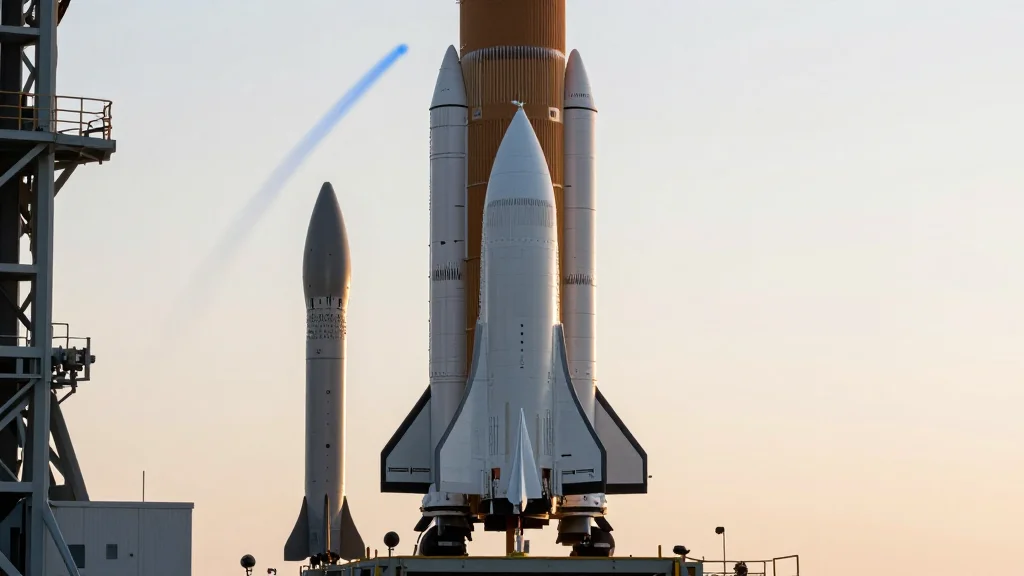
- •Neutron rocket and Photon spacecraft slated for first interceptor prototype launch in late 2026
Pulse Analysis
Rocket Lab’s defense contracts represent a strategic pivot that could redefine the competitive landscape of space‑based missile defense. Historically, the domain has been dominated by legacy aerospace giants with deep government ties. Rocket Lab’s lean, vertically integrated model—combining rapid‑turnaround launch capability with in‑house satellite bus development—offers a cost‑effective alternative that aligns with the Pentagon’s push for agile, proliferated systems. This agility is especially critical as adversaries field hypersonic weapons that compress decision cycles and demand near‑instantaneous intercept solutions.
Financially, the contracts provide a higher‑margin revenue stream that may shorten Rocket Lab’s path to profitability. The company’s free‑cash‑flow burn has already improved, and the defense backlog now cushions it against the volatility of commercial launch demand. However, execution risk remains: delivering a functional space‑based interceptor will require mastering on‑orbit servicing, precision targeting, and integration with existing command‑and‑control networks—capabilities that are still nascent for a commercial firm. Success will hinge on the upcoming Neutron‑derived prototype and the integration of Motiv Space’s robotics technology.
In the broader market, Rocket Lab’s move could catalyze a wave of commercial‑defense collaborations, prompting investors to reassess the valuation metrics for space companies. Firms that can demonstrate both launch reliability and payload integration for defense applications may command premium multiples, while pure‑play launch providers could feel pressure to diversify. As the U.S. allocates record funding to space‑based missile defense, Rocket Lab’s early foothold positions it to capture a growing slice of a multi‑billion‑dollar defense spend.
Rocket Lab Secures $1 bn Defense Contracts, Targets Space‑Based Interceptor Market
Comments
Want to join the conversation?
Loading comments...