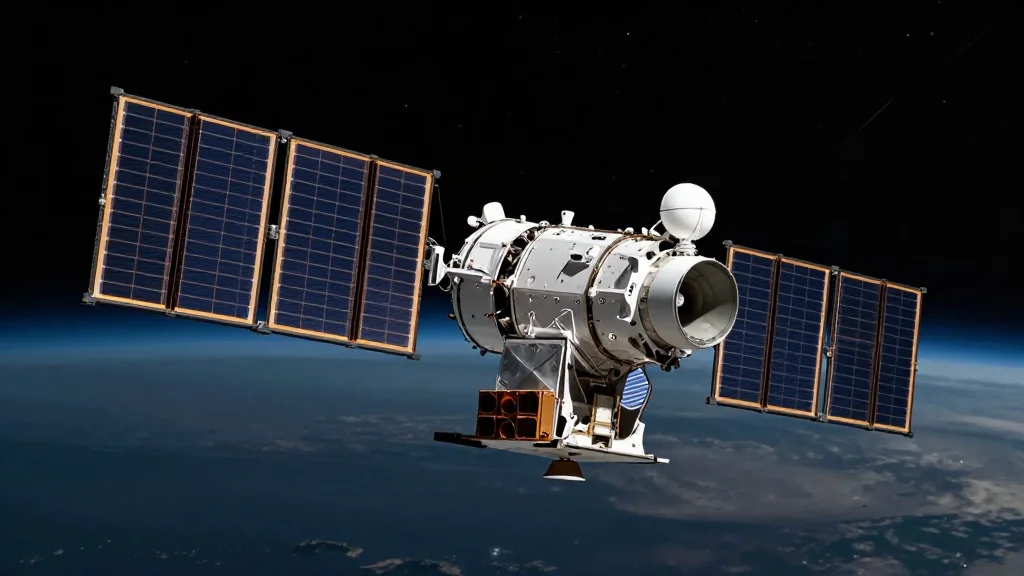
Rocket Lab Secures $90 Million U.S. Space Force Contract for GEO SDA Satellites

Companies Mentioned
Why It Matters
The contract expands the U.S. Space Force’s ability to monitor the increasingly congested geostationary belt, a region critical for communications, weather, and intelligence satellites. By entrusting a commercial firm with GEO satellite production, the Department of Defense signals a shift toward leveraging private‑sector agility and cost efficiencies for national‑security missions. For Rocket Lab, the win validates its Lightning bus platform and opens a new revenue stream that could diversify its business beyond launch services. In the broader SpaceTech ecosystem, the deal highlights the growing convergence of commercial and defense markets. As more private companies demonstrate the capability to build and operate high‑orbit assets, traditional defense contractors may face heightened competition, potentially driving down costs and accelerating innovation in space‑domain awareness technologies.
Key Takeaways
- •Rocket Lab awarded $90 M by U.S. Space Force SSC for two GEO satellites
- •Satellites will host the Heimdall SDA optical payload developed by Rocket Lab Optical Systems
- •Lightning bus adapted for GEO thermal, radiation and station‑keeping demands
- •Contract marks Rocket Lab’s first GEO satellite production program
- •Launch integration will use a government‑furnished launch vehicle; on‑orbit ops for up to five years
Pulse Analysis
Rocket Lab’s entry into GEO satellite manufacturing represents a strategic inflection point for both the company and the defense procurement community. Historically, GEO platforms have been the domain of legacy aerospace giants with deep heritage in high‑orbit engineering. Rocket Lab’s success in adapting its Lightning bus—originally conceived for low‑Earth‑orbit missions—to meet GEO’s stringent requirements demonstrates the scalability of its vertically integrated model. This scalability could compress development cycles and reduce unit costs, a compelling proposition for a budget‑constrained defense sector.
The partnership also reflects a broader policy trend encouraging commercial participation in national‑security programs. By awarding a relatively modest $90 million contract, the Space Force tests the waters of commercial GEO delivery without committing to a massive, high‑risk program. If Rocket Lab delivers on schedule and performance, it could pave the way for larger, multi‑satellite contracts that might include more sophisticated payloads such as electronic‑signals intelligence or high‑throughput communications. Competitors like Northrop Grumman and Lockheed Martin will likely respond by accelerating their own commercial GEO initiatives, intensifying competition and potentially driving further cost reductions.
Looking forward, the real test will be operational performance. GEO SDA demands precise station‑keeping and long‑duration reliability; any shortfall could erode confidence in commercial providers for critical defense missions. Conversely, a successful rollout would reinforce the viability of a hybrid industrial base where private firms handle design, production and operations while the government supplies launch services and mission oversight. This model could become the template for future space‑security endeavors, from lunar logistics to low‑Earth‑orbit debris removal, reshaping the economics and architecture of the U.S. space enterprise.
Rocket Lab Secures $90 Million U.S. Space Force Contract for GEO SDA Satellites
Comments
Want to join the conversation?
Loading comments...