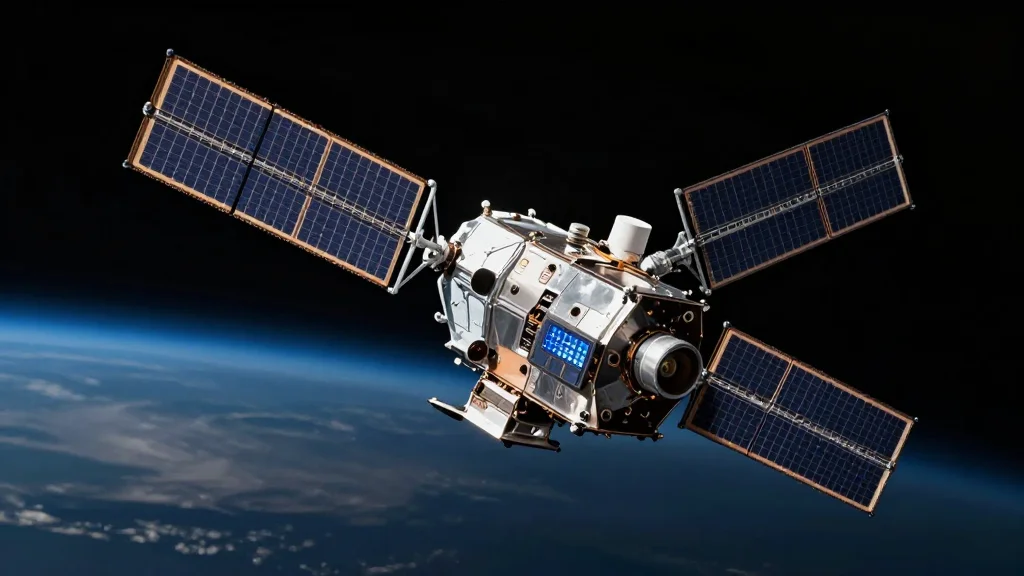
Rocket Lab Wins $90 Million U.S. Space Force Contract to Build First GEO Satellites

Companies Mentioned
Why It Matters
The contract underscores a strategic shift in the U.S. defense space ecosystem, where commercial firms are increasingly trusted to deliver critical national‑security payloads in high‑value orbits. By moving beyond low‑Earth‑orbit launch services into GEO satellite manufacturing, Rocket Lab demonstrates the viability of a vertically integrated model that can reduce schedule risk and cost overruns. For the broader SpaceTech industry, the deal highlights the expanding market for GEO‑based services such as space‑domain‑awareness, on‑orbit servicing and high‑throughput communications. As more nations and commercial operators crowd the GEO belt, the need for dedicated monitoring assets will grow, creating new revenue streams for companies that can combine bus expertise with advanced optical payloads.
Key Takeaways
- •Rocket Lab awarded a $90 million contract by the U.S. Space Force’s Space Systems Command.
- •First GEO satellite production program for Rocket Lab, using the Lightning bus platform.
- •Two satellites will host the Heimdall space‑domain‑awareness optical payload.
- •Contract includes design, manufacture, integration, launch‑vehicle interface and five‑year on‑orbit operations.
- •Acquisition of GEOST in 2025 provides in‑house optical payload capability.
Pulse Analysis
Rocket Lab’s win marks a decisive evolution from a launch‑only provider to a full‑service satellite manufacturer. The company’s Lightning bus, originally conceived for medium‑Earth‑orbit missions, now proves adaptable to the harsher GEO environment, suggesting that modular bus architectures can be repurposed across orbital regimes with modest redesign. This flexibility could become a competitive advantage as defense customers seek rapid, cost‑effective fielding of new capabilities.
Historically, GEO satellite contracts have been the domain of aerospace giants such as Lockheed Martin and Northrop Grumman, whose large‑scale programs often involve lengthy development cycles and high overhead. Rocket Lab’s vertically integrated approach—combining bus production, payload integration and mission operations under one roof—offers a leaner alternative that may compress timelines and lower unit costs. If the upcoming launch proceeds on schedule, it could set a benchmark for future defense procurements, prompting the Space Force to consider more commercial‑centric acquisition strategies.
Looking ahead, the success of the Heimdall‑equipped GEO satellites could open doors to a suite of follow‑on contracts, including larger constellations for persistent surveillance or even on‑orbit servicing missions. However, Rocket Lab must navigate technical challenges inherent to GEO, such as long‑duration station‑keeping and radiation hardening, while scaling its production capacity. The company’s ability to meet these hurdles will determine whether this contract is a one‑off milestone or the foundation of a sustained GEO business line.
Rocket Lab Wins $90 Million U.S. Space Force Contract to Build First GEO Satellites
Comments
Want to join the conversation?
Loading comments...