Rocket Lab's Backlog Climbs to $1.85 Billion, Sharpening Revenue Outlook

Companies Mentioned

Why It Matters
The backlog increase signals that demand for small‑satellite launch services and integrated space‑systems is outpacing supply, a trend that could reshape the economics of the commercial space market. By securing multi‑year contracts with the U.S. defense establishment, Rocket Lab is positioning itself as a critical supplier for national security space initiatives, potentially locking in a steady revenue stream that insulates it from cyclical launch demand. If Rocket Lab can deliver on its backlog, it will validate a business model that blends launch operations with spacecraft development—a hybrid approach that may become a template for other emerging players. Conversely, failure to meet delivery timelines could erode investor confidence and slow capital inflows into the broader SpaceTech sector, which is currently experiencing a surge of public and private funding.
Key Takeaways
- •Backlog reached $1.85 billion at end‑2025, up 73% from the prior year
- •Backlog includes a $816 million Space Development Agency contract for 18 satellites
- •Rocket Lab's shares have risen more than 350% year‑to‑date
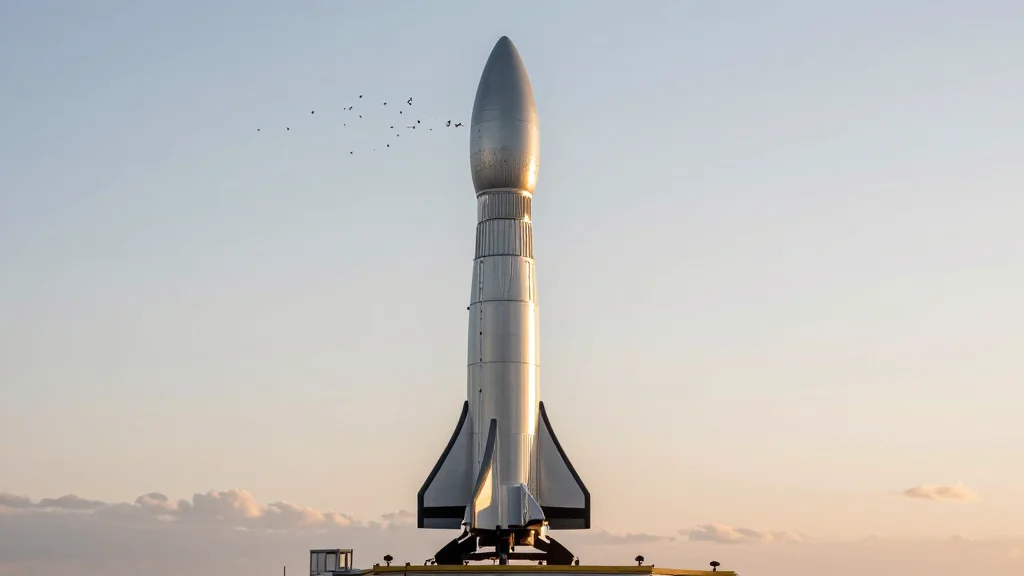
- •Company aims to increase launch cadence and bring the Neutron vehicle to market
- •Backlog composition now leans more heavily toward space‑systems than pure launch services
Pulse Analysis
Rocket Lab's backlog surge is more than a balance‑sheet footnote; it reflects a strategic pivot toward a vertically integrated space offering. Historically, the company built its reputation on low‑cost, high‑frequency launches for CubeSats and small payloads. By layering spacecraft design, integration, and even defense‑grade satellite production onto that foundation, Rocket Lab is attempting to capture higher‑margin revenue streams that are less sensitive to launch‑slot competition.
The market has rewarded this shift with a dramatic stock rally, but the valuation premium also embeds expectations of sustained growth. The $1.85 billion backlog provides a runway, yet the conversion rate—how quickly orders become billings—will be the true test. Rocket Lab must navigate a crowded launch market, where SpaceX's rideshare pricing and Blue Origin's heavy‑lift capabilities could undercut its launch pricing power. Its answer lies in differentiation: rapid turnaround for small missions, dedicated launch windows, and the ability to deliver complete satellite solutions for defense customers.
From a broader industry perspective, Rocket Lab's trajectory illustrates the maturation of the SpaceTech ecosystem. Investors are no longer betting solely on launch frequency; they are valuing end‑to‑end capabilities that include on‑orbit services, satellite constellations, and defense contracts. If Rocket Lab can execute, it may set a precedent for other small‑launch firms to broaden their service portfolios, accelerating the shift from a launch‑centric market to a full‑stack space services market. Failure, however, could reinforce the dominance of the few large launch providers and dampen enthusiasm for hybrid business models.
Rocket Lab's backlog climbs to $1.85 billion, sharpening revenue outlook
Comments
Want to join the conversation?
Loading comments...