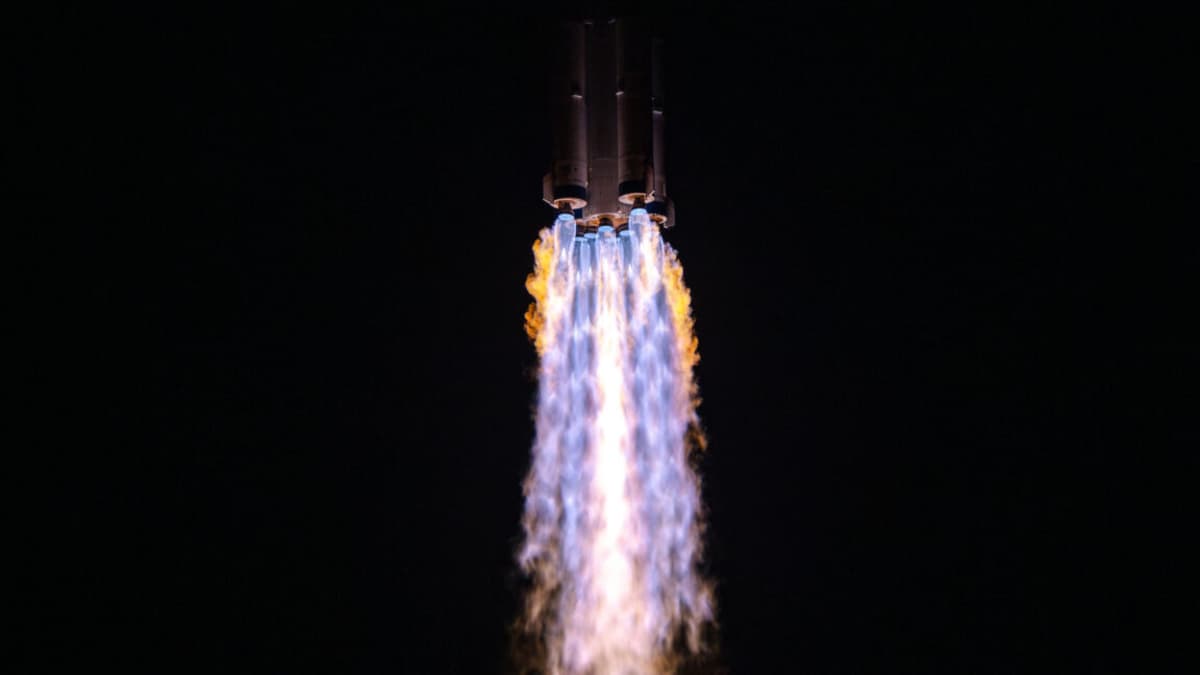
Rocket Report: A Dark Day for Blue Origin; Pentagon Eyes New Launch Site
Why It Matters
Blue Origin’s failure threatens commercial competition and NASA’s Moon timetable, while a new military launch complex is essential to sustain the accelerating U.S. launch cadence and national‑security needs.
Key Takeaways
- •Blue Origin's New Glenn exploded during a static‑fire test in Florida
- •Pentagon urges new heavy‑launch site to relieve Cape Canaveral bottleneck
- •DARPA grants Voyager $16.5 M for thrust‑controllable solid rocket motors
- •Chinese upper‑stage mass in orbit rose to 252 metric tons in five years
- •Virgin Galactic glides Unity for pilot training ahead of Delta‑class debut
Pulse Analysis
Blue Origin’s New Glenn catastrophe underscores the technical risk inherent in developing a methane‑fuelled super‑heavy lift vehicle. The explosion, captured live, not only set back Jeff Bezos’ timeline for lunar payload delivery but also heightened NASA’s reliance on SpaceX for crew and cargo missions. Industry analysts see the incident as a catalyst for tighter oversight and a reminder that commercial partners must meet rigorous reliability standards before being entrusted with Artemis objectives.
Meanwhile, the U.S. Department of Defense is confronting a looming launch‑pad bottleneck as the cadence of military, civil, and commercial missions swells. In testimony before the House Armed Services Committee, Air Force Secretary Troy Meink highlighted the strategic vulnerability of concentrating heavy‑launch capability at Cape Canaveral and Vandenberg. A new, geographically diverse military spaceport would mitigate risk, support rapid deployment of national‑security payloads, and accommodate the projected surge in heavy‑lift demand from both government and private sectors.
Beyond the headline events, several trends are reshaping the space ecosystem. DARPA’s $16.5 million contract with Voyager Technologies aims to make solid‑rocket motors throttable, potentially revolutionising missile flexibility and low‑cost launch options. China’s rapid increase in upper‑stage debris—now over 250 metric tons—raises concerns about orbital congestion as it rolls out megaconstellations. Virgin Galactic’s Unity glide flights provide real‑world training for its upcoming Delta‑class suborbital ship, while NASA’s decision to add six more Crew‑Dragon missions safeguards ISS crew transport amid Starliner delays. Finally, rideshare operators SEOPS and Exolaunch securing dedicated Falcon 9 launches signal a maturing market for time‑critical small‑sat deployments, and SpaceX’s latest Starship test, despite minor engine anomalies, continues to validate its heat‑shield technology for future orbital flights.
Rocket Report: A dark day for Blue Origin; Pentagon eyes new launch site
Comments
Want to join the conversation?
Loading comments...