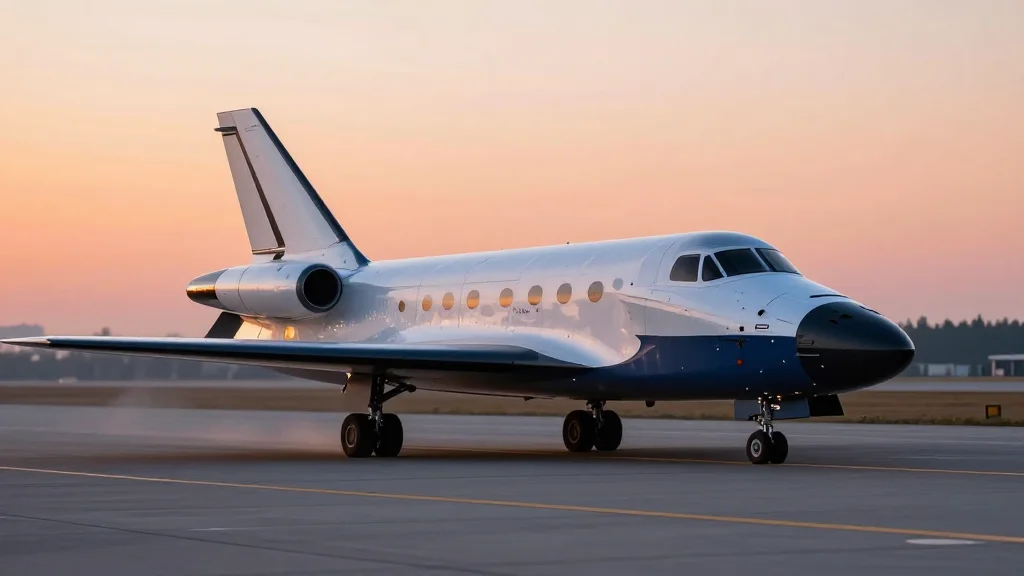
Runway-to-Space Challenge Uses Aurora Spaceplane to Speed Up Microgravity Flights

Companies Mentioned
Why It Matters
Rapid‑turnaround sub‑orbital flights could dramatically lower the barrier to entry for space research, enabling more universities, small firms, and government labs to validate technologies before committing to costly orbital launches. By fostering a cycle of frequent testing, the Runway-to-Space Challenge may accelerate the pipeline of innovations that feed into larger launch systems, satellite constellations, and deep‑space missions. Moreover, the competition reinforces U.S. leadership in reusable spaceflight, a domain where commercial aviation practices are being adapted to the space environment. If the model proves scalable, it could inspire similar programs in other states or at the federal level, creating a network of runway‑based spaceports that collectively increase national launch capacity while reducing reliance on traditional rockets. This shift could also influence policy, prompting regulators to streamline certification for reusable sub‑orbital vehicles.
Key Takeaways
- •Oklahoma Space Industry Development Authority launches Runway-to-Space Challenge using Dawn Aerospace’s Aurora spaceplane.
- •Aurora has completed over 60 missions, reaches 62 miles altitude at Mach 3.5, and provides a two‑minute microgravity window.
- •CEO Stefan Powell says Aurora offers a fast, lower‑cost path to microgravity, enabling iteration within months.
- •Former NASA head Jim Bridenstine highlights the competition’s role in strengthening U.S. space leadership.
- •Infinity One Oklahoma Spaceport undergoing upgrades to support rapid‑turnaround spaceplane operations.
Pulse Analysis
The Runway-to-Space Challenge represents a strategic pivot from the traditional, high‑cost, single‑use launch model toward an aviation‑style approach to sub‑orbital access. Historically, the United States has relied on expendable rockets for most microgravity research, a method that limits experiment frequency and inflates budgets. By leveraging a reusable platform that can be turned around in days rather than months, the challenge could compress development cycles and lower the total cost of entry for early‑stage space technologies.
From a market perspective, the competition may catalyze a new niche for companies that specialize in rapid‑turnaround payload integration, ground support equipment, and data services tailored to short‑duration flights. Investors are likely to watch the outcomes closely; a successful demonstration could unlock a wave of venture capital directed at sub‑orbital service providers, similar to the boom that followed the success of reusable orbital rockets.
Looking ahead, the real test will be whether the runway‑based model can scale beyond a handful of flights per year to a cadence that truly rivals commercial aviation. If the Oklahoma Spaceport can sustain high‑frequency operations without compromising safety, it could set a template for a national network of sub‑orbital hubs, reshaping the economics of space research and potentially feeding innovations into larger orbital launch systems.
Runway-to-Space Challenge Uses Aurora Spaceplane to Speed Up Microgravity Flights
Comments
Want to join the conversation?
Loading comments...