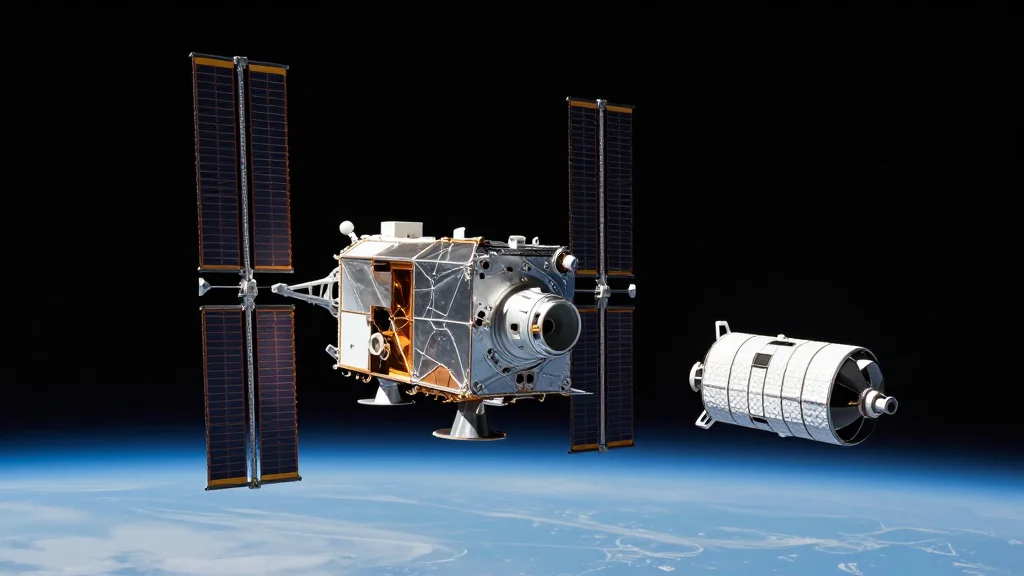
Rush Rescue Mission for NASA's $500M Space Telescope Passes Key Milestone

Companies Mentioned
Why It Matters
Extending Swift’s life avoids the $500 million loss of a unique astrophysics platform and showcases a cheaper alternative to building new missions, accelerating the adoption of commercial on‑orbit servicing across the industry.
Key Takeaways
- •Katalyst's Link completed environmental testing at NASA Goddard
- •Swift's orbit decay could cause re‑entry later this year
- •Pegasus XL will launch the rescue mission in June
- •Service mission costs less than building a new telescope
- •Success expands satellite servicing to older, low‑orbit assets
Pulse Analysis
The Neil Gehrels Swift Observatory, launched in 2004, has been a workhorse for gamma‑ray burst detection and multi‑wavelength follow‑up. After more than two decades in a 20.6‑degree inclined orbit, atmospheric drag is pulling the spacecraft down, and without intervention it will re‑enter and burn up later this year. Preserving Swift is not just about salvaging a $500 million investment; it safeguards a unique data set that continues to inform astrophysics research and supports ongoing international collaborations.
Katalyst Space Technologies' rescue vehicle, dubbed Link, has just cleared a full suite of environmental tests at NASA’s Goddard facility, clearing the path for a June launch aboard Northrop Grumman’s Pegasus XL air‑launch system. The air‑launch approach offers rapid, flexible access to low‑inclination orbits, reducing schedule risk compared with traditional ground‑based rockets. By leveraging commercial off‑the‑shelf components and a modest budget, the mission demonstrates that extending the life of legacy satellites can be more cost‑effective than commissioning brand‑new platforms, a model that could reshape satellite economics.
The Swift rescue effort signals a broader shift in how NASA and the commercial sector view orbital stewardship. Successful on‑orbit servicing of an aging scientific platform validates the business case for retrofitting or boosting other defunct satellites, potentially unlocking additional revenue streams for launch providers and servicers. Moreover, the mission reinforces policy discussions around debris mitigation, as extending a spacecraft’s operational life reduces the likelihood of uncontrolled re‑entries. If Link’s boost succeeds, it could pave the way for similar interventions on Earth‑observation and communications assets, expanding the market for satellite life‑extension services.
Rush Rescue Mission for NASA's $500M Space Telescope Passes Key Milestone
Comments
Want to join the conversation?
Loading comments...