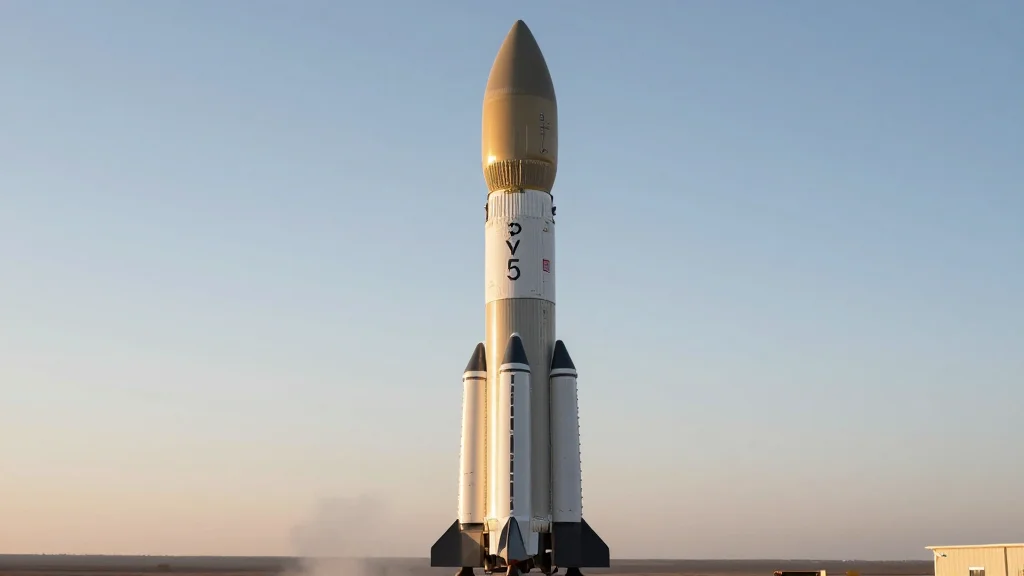
Russia Completes 1st Test, Suborbital, of Its New Soyuz-5 Rocket
Companies Mentioned
Why It Matters
Soyuz‑5 could reshape Russia’s commercial launch pricing, but its non‑reusable architecture may hinder competitiveness against emerging reusable launchers worldwide.
Key Takeaways
- •Soyuz-5 completed first suborbital flight on April 28, 2026.
- •Rocket can deliver ~17 t to low‑Earth orbit, surpassing Soyuz‑2.
- •Features world’s most powerful liquid‑fuel engine, boosting thrust.
- •Stages and fairings fell in Russia; second stage recovered in Pacific.
- •Non‑reusable design may limit cost competitiveness versus Western reusable launchers.
Pulse Analysis
The Soyuz‑5 marks Russia’s most ambitious launch‑vehicle upgrade in a decade, marrying a new high‑thrust liquid‑fuel engine with a payload capacity of about 17 tonnes to low‑Earth orbit. The suborbital test, conducted from the historic Baikonur Cosmodrome, demonstrated the vehicle’s core systems and verified the performance envelope that positions it between the workhorse Soyuz‑2 and the heavy‑lift Proton. While the first stage and fairings were lost on Russian territory, the successful recovery of the second stage in the Pacific provides valuable data for future flight safety and debris mitigation.
Economically, Russian officials tout Soyuz‑5 as a cost‑saver, citing a lower unit price per kilogram of payload compared with older rockets. However, the lack of reusability—a hallmark of new entrants like SpaceX’s Falcon 9 and Blue Origin’s New Glenn—means the cost advantage hinges on manufacturing efficiencies and higher launch cadence. In a market increasingly driven by rapid, low‑cost access to orbit, Soyuz‑5’s pricing model will be tested against reusable competitors that can amortize hardware over multiple flights.
Strategically, the Soyuz‑5 is intended to sustain Russia’s independent access to space and support future missions ranging from satellite constellations to potential crewed platforms. Its development reflects a broader push to modernize legacy infrastructure while navigating sanctions that limit technology imports. The test’s outcome will influence Russia’s ability to attract international customers and maintain a foothold in the competitive launch services arena, especially as geopolitical tensions shape the global space supply chain.
Russia completes 1st test, suborbital, of its new Soyuz-5 rocket
Comments
Want to join the conversation?
Loading comments...