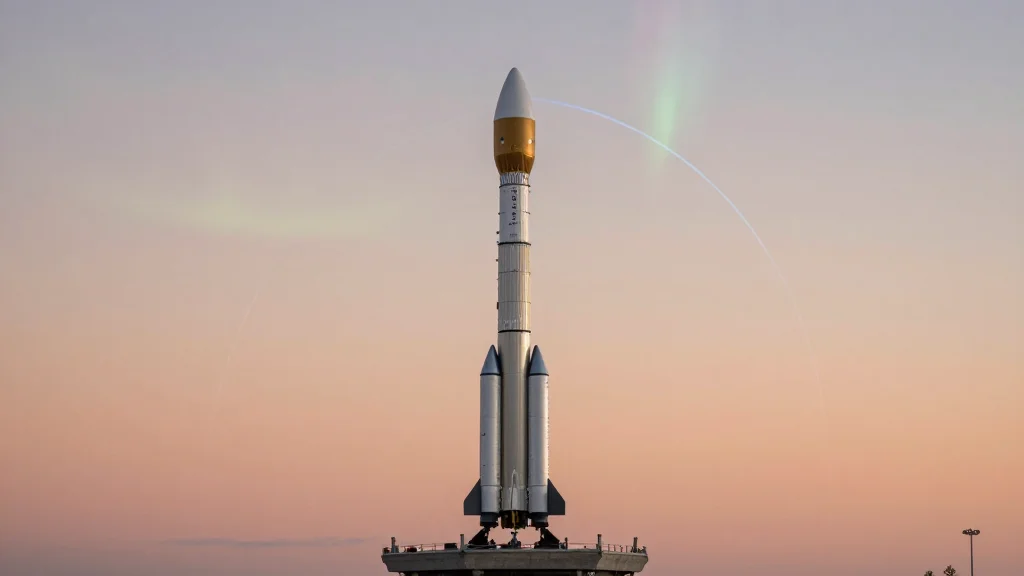
Russia Launches Soyuz‑2.1b with Defense Ministry Spacecraft From Plesetsk

Companies Mentioned
Why It Matters
The launch demonstrates Russia's commitment to maintaining an independent, militarized space capability, a critical factor in the broader space‑defence competition. By using the proven Soyuz‑2.1b platform, Moscow signals that it can field new satellites without relying on external partners, a strategic advantage amid sanctions and supply chain constraints. The incident also highlights the emerging security threat to launch sites themselves. Ukrainian drone attempts to disrupt Plesetsk operations illustrate how ground‑based conflict can spill over into the space domain, potentially prompting Russia to harden its launch infrastructure or relocate assets, which would have ripple effects on global launch market dynamics.
Key Takeaways
- •Soyuz‑2.1b launched from Plesetsk on April 17, 2026, carrying a defence ministry spacecraft.
- •Roscosmos confirmed the launch proceeded in normal mode via a Telegram statement.
- •Third Russian defence satellite launch from Plesetsk in 2026, indicating a steady cadence.
- •Roscosmos head Dmitry Bakanov warned of Ukrainian drone attempts on the cosmodrome.
- •The mission underscores Russia's reliance on indigenous launch capability amid sanctions.
Pulse Analysis
Russia's decision to field a military payload on a Soyuz‑2.1b underscores a broader trend: the re‑militarisation of legacy launch systems. The Soyuz family, once the backbone of Soviet and early Russian space exploration, now serves as a strategic asset for national security. This dual‑use approach reduces procurement costs and shortens development timelines, but it also blurs the line between civilian and military space activities, complicating arms‑control dialogues.
From a market perspective, the launch sends a clear message to Western launch providers that Russia remains a self‑sufficient competitor in the low‑Earth‑orbit segment. While commercial launch demand in the West is shifting toward reusable vehicles, Russia's emphasis on reliability and rapid turnaround for defence missions could preserve a niche market for government‑only payloads. However, the reported drone threats to Plesetsk may force Russia to invest in hardened launch infrastructure or diversify to more secure sites, potentially opening opportunities for private contractors specializing in launch‑site security.
Looking forward, the trajectory of Russia's space‑defence program will hinge on two variables: the resilience of its northern launch complexes and the evolution of its satellite constellation architecture. If drone incursions intensify, we may see a strategic pivot toward the Baikonur or Vostochny sites, altering the logistical calculus for future missions. Conversely, a successful series of launches could embolden Moscow to expand its constellation, prompting NATO to reassess space‑based threat assessments and possibly accelerate its own counter‑space initiatives.
Russia launches Soyuz‑2.1b with defense ministry spacecraft from Plesetsk
Comments
Want to join the conversation?
Loading comments...