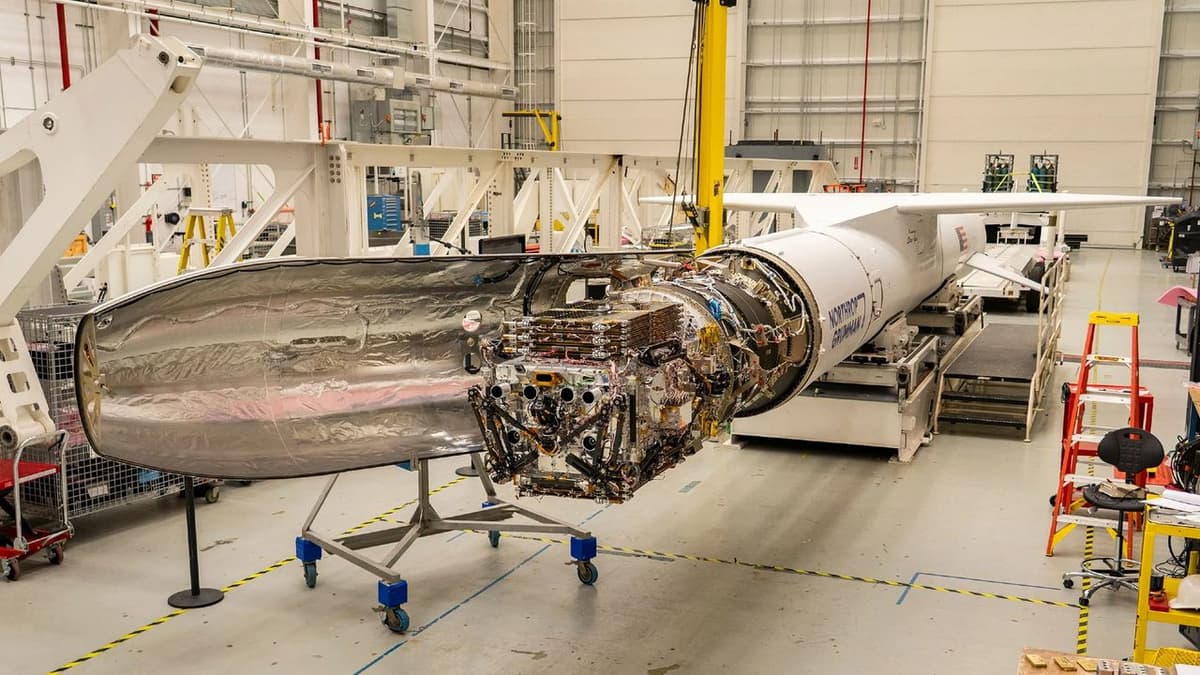
Satellite-Boosting Spacecraft Inside Air-Launched Rocket | Space Photo of the Day for June 12, 2026
Companies Mentioned
Why It Matters
Extending Swift’s orbit preserves a critical astrophysics platform and validates on‑orbit servicing, a capability that could protect other costly satellites from premature decay. The mission also demonstrates the commercial viability of air‑launch systems for rapid, low‑cost deployments.
Key Takeaways
- •LINK aims to raise Swift’s orbit from 400 km to 600 km
- •Pegasus XL launches from 12 km altitude via Stargazer aircraft
- •Mission tests on‑orbit servicing for aging NASA science assets
- •Swift, a $500 M gamma‑ray observatory, faces re‑entry risk
- •Success could extend Swift’s lifespan by several years
Pulse Analysis
On‑orbit servicing has moved from concept to reality, and NASA’s Swift rescue marks a watershed moment. The Swift Observatory, launched in 2004, has been a workhorse for gamma‑ray burst detection, but atmospheric drag has pulled it into a low‑Earth orbit where re‑entry is imminent. By attaching a dedicated boost module, the agency hopes to avoid the costly replacement of a $500 million asset, showcasing how robotic servicers can extend the life of high‑value science satellites.
The Pegasus XL air‑launch system offers unique advantages for time‑sensitive missions like this. Carried to 12 km by the Stargazer Lockheed L‑1011, the rocket avoids the weather and logistical constraints of ground‑based launches, reducing lead time and cost. Katalyst Space’s LINK satellite is equipped with autonomous navigation, proximity‑sensing, and a propulsion module designed to dock with Swift and deliver a velocity increment. This combination of air‑launch flexibility and robotic precision underscores a growing trend toward modular, on‑demand access to space.
If LINK successfully re‑boosts Swift, the implications ripple across the commercial and governmental sectors. Satellite operators could adopt similar servicing contracts to rejuvenate aging constellations, deferring expensive replacements and mitigating space debris. Moreover, the mission validates a business case for private firms to develop servicing platforms that integrate with existing launch providers. Policymakers may also see a clearer path for regulatory frameworks that support on‑orbit refueling, repair, and de‑orbiting, accelerating the transition to a sustainable, service‑oriented space economy.
Satellite-boosting spacecraft inside air-launched rocket | Space photo of the day for June 12, 2026
Comments
Want to join the conversation?
Loading comments...