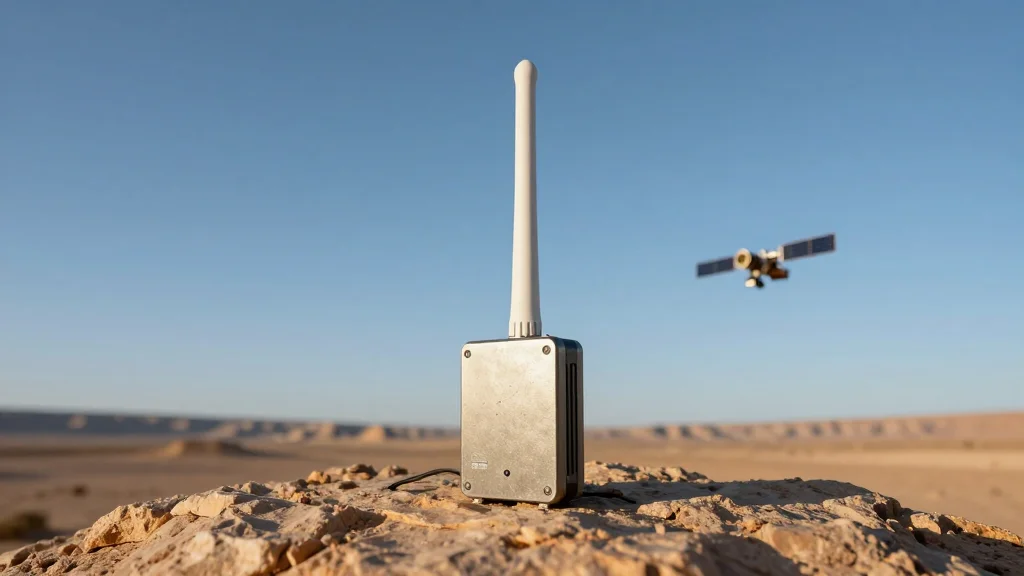
Satellite IoT Is Becoming Essential Infrastructure as NTN and Cellular IoT Services Converge
Companies Mentioned
Why It Matters
Enterprise operations now treat connectivity lapses as direct sources of downtime, safety risk and regulatory exposure, so guaranteeing continuous data flow is a competitive advantage. The transition redefines satellite IoT from a supplemental link to a strategic asset that underpins operational resilience.
Key Takeaways
- •GSMA estimates 2‑3 billion NTN‑IoT devices addressable
- •One in five enterprises report disruptions from delayed or missing data
- •eSIM SGP.32/.31 standards enable seamless multi‑operator IoT switching
- •Layered connectivity combines satellite, cellular and LoRaWAN for reliability
- •Providers will compete on uptime SLAs and continuity services
Pulse Analysis
The surge in non‑terrestrial network (NTN) IoT reflects a broader digital transformation where sensors and machines drive real‑time decision making. As enterprises digitize assets across sprawling geographies, the cost barrier for satellite modules has collapsed and 3GPP standards now guarantee interoperability with terrestrial networks. This convergence expands the addressable market to billions of devices, turning satellite connectivity from a niche fallback into a mainstream option for remote monitoring, logistics tracking and energy grid management.
Technical progress underpins this shift. The latest GSMA eSIM specifications (SGP.32/.31) give operators the flexibility to swap carriers and network layers without physical re‑provisioning, simplifying multi‑operator deployments. Simultaneously, LoRaWAN continues to serve low‑power, low‑data use cases, often back‑hauled via satellite to bridge coverage gaps. Enterprises are therefore adopting layered architectures—satellite for reach, cellular for bandwidth, LoRaWAN for localized sensing—to achieve redundancy and meet strict uptime SLAs. This multi‑technology stack reduces single‑point failures and aligns connectivity with business‑critical outcomes rather than raw throughput.
For satellite providers, the competitive arena is evolving from coverage maps to continuity guarantees. Customers now demand predictable performance, transparent fail‑over mechanisms and pricing tied to business‑continuity outcomes. Providers that can abstract the complexity of hybrid networks and deliver "connectivity‑as‑a‑service" will capture a growing slice of enterprise spend. As the IoT device base expands, the industry will likely see standardized service‑level contracts, tighter integration with cloud edge platforms, and a redefinition of satellite IoT as essential infrastructure rather than an optional add‑on.
Satellite IoT is Becoming Essential Infrastructure as NTN and Cellular IoT Services Converge
Comments
Want to join the conversation?
Loading comments...