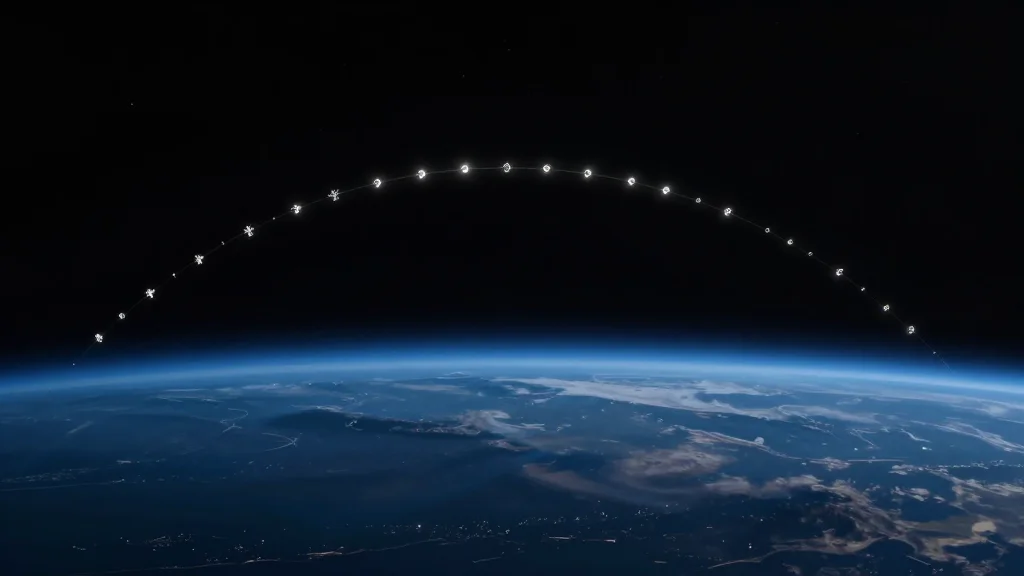
Satellite Surge Threatens Night Sky and Future Access to Space

Companies Mentioned
Why It Matters
The proliferation of mega‑constellations reshapes the economics of global connectivity, but it also threatens the long‑term sustainability of the orbital environment that underpins satellite services, scientific research and future exploration. If debris reaches a tipping point, the resulting Kessler cascade could cripple not only commercial ventures but also critical services such as weather forecasting, navigation and defense. Beyond the technical risks, the loss of a dark night sky erodes a cultural and scientific heritage that has inspired humanity for millennia. Preserving access to pristine celestial views is essential for education, tourism and the public’s connection to space, making the debate about orbital congestion a broader societal issue.
Key Takeaways
- •Projected 500,000 active LEO satellites by 2040, up from ~15,000 today
- •Starlink accounts for ~66% of current LEO satellites
- •Rwanda applied for 337,320 satellite slots
- •Hanno Rein warns debris could "limit our access to space forever"
- •Potential Kessler syndrome could render large orbital bands unusable
Pulse Analysis
The satellite boom reflects a shift from government‑led exploration to a market‑driven model where connectivity is the primary value proposition. While the commercial upside is undeniable—bringing broadband to remote regions and creating new revenue streams—the externalities have been largely externalized. Historically, space traffic management was a low‑priority concern; today, the sheer scale forces a re‑evaluation of governance.
Regulatory frameworks lag behind. The Outer Space Treaty provides a legal baseline but lacks enforcement mechanisms for debris mitigation. Emerging proposals, such as mandatory end‑of‑life deorbiting and shared debris‑removal services, could align incentives, but they require multinational consensus. The United States, Europe and emerging space nations must balance national security interests with collective stewardship.
In the near term, the industry’s response will likely involve incremental technical fixes—better shielding, autonomous collision avoidance and on‑orbit servicing—while policymakers debate more radical measures like orbital slot fees or a global debris tax. The outcome will determine whether the night sky remains a shared public good or becomes a crowded, polluted highway, shaping the trajectory of space commerce for decades.
Satellite Surge Threatens Night Sky and Future Access to Space
Comments
Want to join the conversation?
Loading comments...