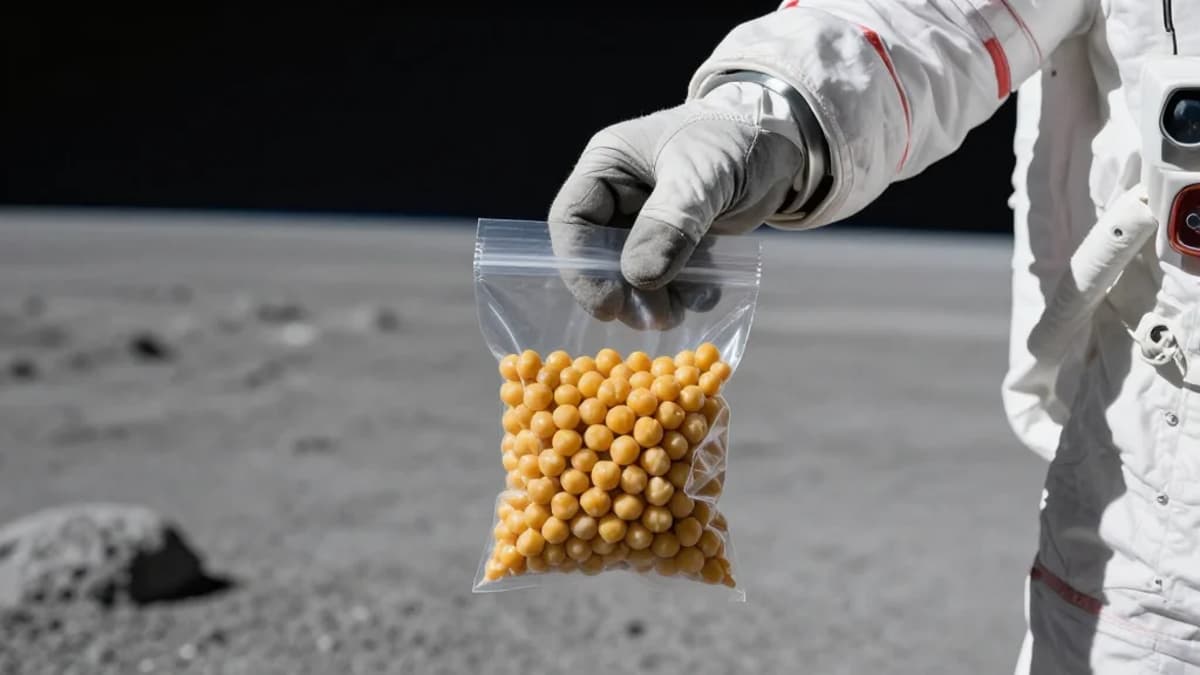
Scientists Successfully Harvest Chickpeas From 'Moon Dirt'
•March 5, 2026
0
Why It Matters
The breakthrough tackles a core life‑support hurdle for sustained lunar habitats, cutting dependence on Earth resupply and advancing bioregenerative agriculture for Artemis and beyond. It also proves that microbial symbioses can neutralize lunar soil toxicity, expanding the toolkit for off‑world farming.
Key Takeaways
- •Chickpeas grown in up to 75% lunar regolith simulant.
- •Vermicompost and mycorrhizal fungi enabled plant survival.
- •Cotton-wick irrigation delivered water directly to roots.
- •Findings support food production for Artemis missions.
- •Nutritional safety and taste of chickpeas remain untested.
Pulse Analysis
Lunar exploration is shifting from short‑term visits to long‑duration stays, and a reliable food source is a linchpin of that transition. Traditional supply chains from Earth are costly and vulnerable, prompting researchers to explore in‑situ resource utilization (ISRU). Growing crops on the Moon not only provides nutrition but also recycles water and carbon dioxide, creating a closed‑loop environment essential for habitats that may operate for years. The chickpea study builds on earlier experiments with lettuce and potatoes, moving the field forward by demonstrating legume viability, which offers higher protein content and nitrogen‑fixing benefits.
The UT‑Austin and Texas A&M team tackled the harshness of lunar regolith by mixing it with vermicompost, a nutrient‑rich by‑product of earthworms that introduces organic matter and a diverse microbiome. Coating the seeds with arbuscular mycorrhizal fungi created a symbiotic partnership that helped the plants absorb essential minerals while limiting heavy‑metal uptake. A novel cotton‑wick irrigation system delivered moisture directly to the root zone, compensating for the simulant’s low water‑holding capacity. Results showed healthy chickpea pods at 75% regolith content, with fungal‑inoculated plants outperforming controls, indicating that a single fungal introduction could sustain future crops.
Commercial and governmental stakeholders see immediate implications. Space agencies can integrate these bioregenerative techniques into Artemis habitat designs, reducing launch mass and resupply frequency. Private firms developing lunar infrastructure may adopt the vermicompost‑fungi model to create modular, scalable farms for habitats, research stations, or even lunar mining camps. Ongoing research will need to verify nutritional profiles, taste, and long‑term safety, but the proof‑of‑concept positions chickpeas as a cornerstone of off‑world agriculture, potentially spurring a new market for extraterrestrial food production technologies.
Scientists successfully harvest chickpeas from 'moon dirt'
0
Comments
Want to join the conversation?
Loading comments...