Scientists Want to Send a Roly-Poly Robot Filled with 'Dandelion Drones' To Investigate Hidden Tunnels on Mars
Why It Matters
Understanding the hidden tunnel system could unlock safer landing sites and resources for human settlement, while also providing clues about past or present Martian life. The technology pushes the limits of autonomous, micro‑scale exploration in extreme environments.
Key Takeaways
- •Roly‑poly robot can roll into lava‑tube openings and release thousands of drones
- •Dandelion drones rely on Martian winds or onboard fans for propulsion
- •Piezoelectric polymer powers drones where solar panels cannot operate
- •Mapping lava tubes could reveal stable habitats for future human missions
Pulse Analysis
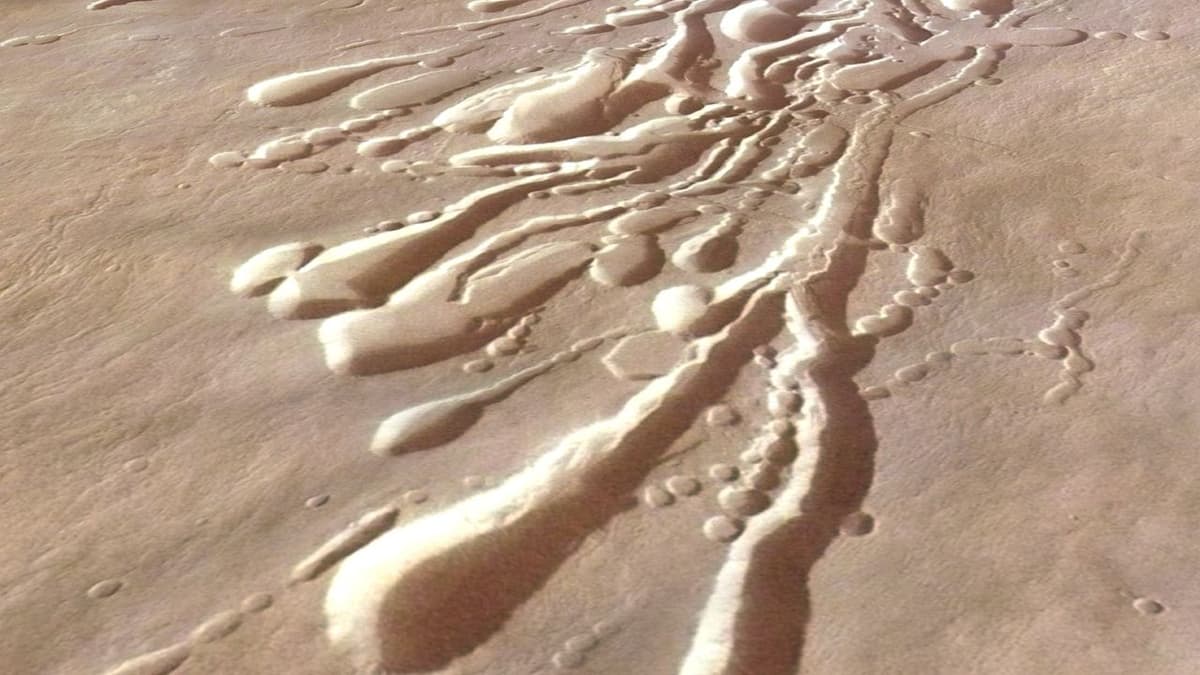
Mars’ volcanic past left a labyrinth of lava tubes that dwarf Earth’s largest caves, extending more than 1,200 kilometers across the planet’s surface. These subterranean corridors are shielded from harsh radiation and temperature swings, making them prime candidates for future habitats and scientific study. Yet traditional rovers, the size of school buses, cannot navigate the narrow skylights that open into these tunnels, prompting engineers to rethink how to reach the unknown depths.
Enter the roly‑poly robot, a biomimetic device modeled after a pillbug that can curl into a sphere and be dropped through a ceiling opening. Once inside, the robot unfurls a parachute and releases thousands of dandelion‑style micro‑drones. Each drone is lightweight, white‑painted to reflect sunlight, and powered by a flexible piezoelectric polymer that generates electricity from mechanical stress—crucial where solar panels are ineffective. Propulsion relies on ambient Martian winds, which can exceed 97 km/h, or a compact high‑powered fan if airflow wanes. The drones transmit humidity, temperature, and positional data, stitching together a real‑time blueprint of the tunnel network.
The implications extend beyond cartography. Detailed maps of lava tubes could identify thermally stable zones that protect future crews from radiation and extreme surface temperatures, reducing life‑support demands. Moreover, the sealed environments might have preserved biosignatures, offering a new avenue in the search for extant or extinct Martian life. As NASA eyes Arsia Mons and other Tharsis skylights, and European teams test similar concepts on Earth, the roly‑poly and dandelion drone approach could become a cornerstone of the next generation of planetary exploration, bridging the gap between surface scouting and human habitation.
Scientists want to send a roly-poly robot filled with 'dandelion drones' to investigate hidden tunnels on Mars
Comments
Want to join the conversation?
Loading comments...