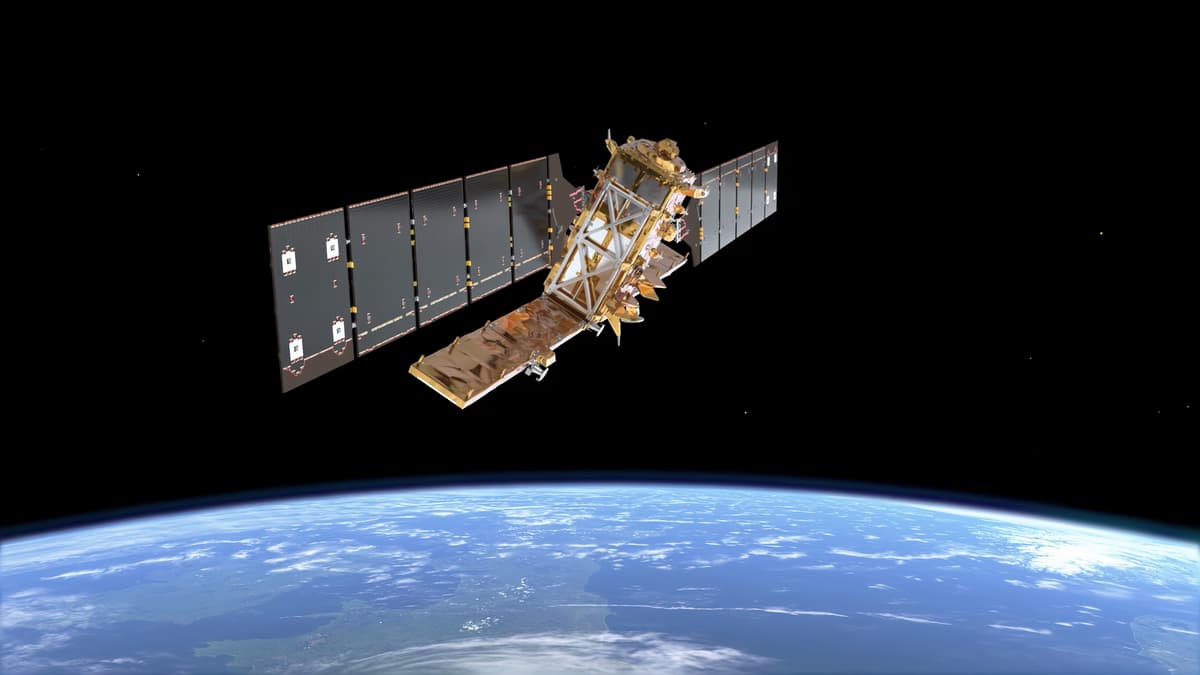
Sentinel-1D Goes Live: A Milestone for Europe’s Radar Mission
Why It Matters
Full constellation coverage improves disaster response, climate monitoring and commercial analytics, while the debris‑mitigation technology strengthens Europe’s leadership in sustainable space operations.
Key Takeaways
- •Sentinel‑1D joins three satellites, completing first‑generation radar constellation
- •All‑weather SAR data now available from four platforms for two‑decade record
- •New separation mechanism reduces space‑debris risk, advancing clean‑space standards
- •Sentinel‑1 Next Generation planned for mid‑2030s to extend continuity
- •Data support disaster response, climate monitoring, and policy decisions worldwide
Pulse Analysis
The Copernicus Sentinel‑1 radar constellation reached a pivotal moment on 1 May 2026 when Sentinel‑1D completed its in‑orbit commissioning and entered full operations. Launched aboard Ariane 6 in November 2025, the satellite joins Sentinel‑1A (2014), Sentinel‑1C (2024) and the restored Sentinel‑1B replacement to form a four‑satellite first‑generation fleet. This completes the original design of two identical platforms spaced 180 degrees apart, delivering uninterrupted synthetic‑aperture radar (SAR) coverage across the globe. Europe’s ability to field a reliable, all‑weather imaging system now spans more than a decade.
The operational constellation provides high‑resolution SAR imagery regardless of cloud cover or daylight, a capability that underpins a broad spectrum of Copernicus services. Emergency managers rely on near‑real‑time flood and landslide maps, while climate scientists track sea‑ice extent, land‑surface deformation, and deforestation trends. With four satellites the revisit time has halved, enhancing temporal resolution and supporting continuous two‑decade data records that are essential for long‑term climate modelling and policy‑making. The consistent data stream also fuels commercial value chains in insurance, agriculture and maritime logistics.
Looking ahead, ESA and the European Commission are already developing Sentinel‑1 Next Generation, slated for launch in the mid‑2030s to extend the radar legacy beyond the current fleet’s lifespan. The new satellites will incorporate advanced SAR modes, higher bandwidth and the same debris‑mitigation separation mechanism pioneered on Sentinel‑1C and D, reinforcing Europe’s leadership in sustainable space operations. This forward‑looking roadmap secures continuity for critical Earth‑observation services, strengthens the EU’s strategic autonomy, and opens fresh market opportunities for downstream data analytics and value‑added applications.
Sentinel-1D goes live: a milestone for Europe’s radar mission
Comments
Want to join the conversation?
Loading comments...