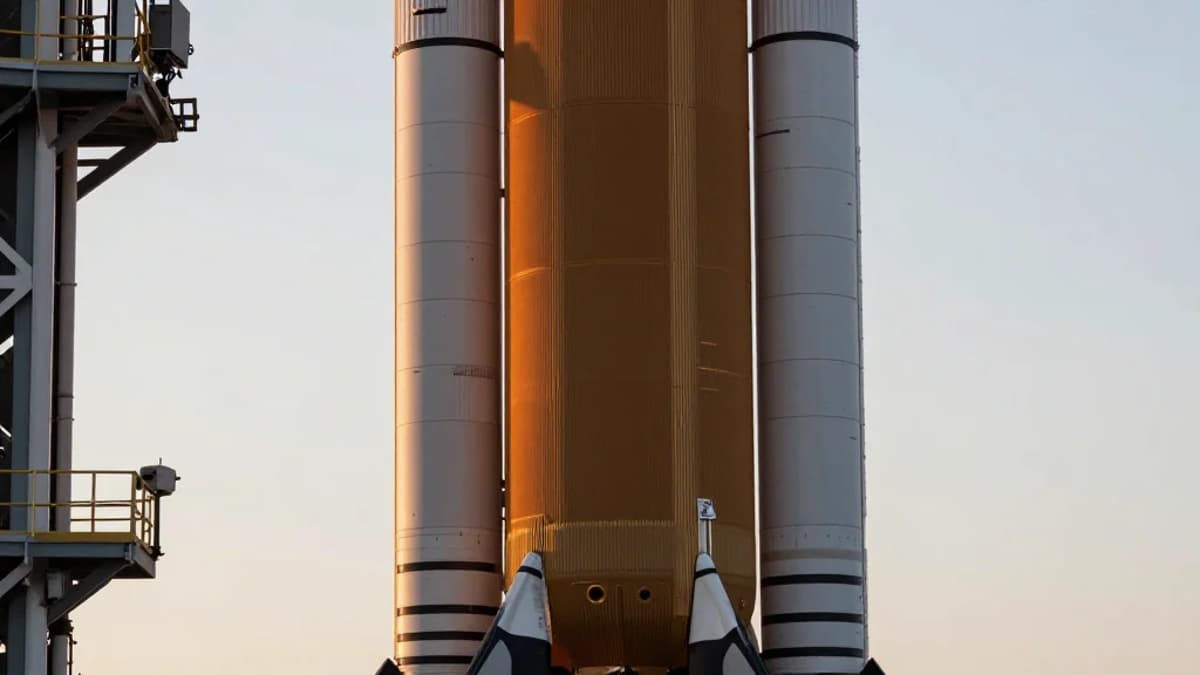
Slow Launch Tempo Clouds Long-Term Role of Space Launch System
Why It Matters
The SLS’s cost and slow tempo threaten NASA’s ability to meet lunar and Mars objectives on schedule, while diverting funds from emerging commercial launch ecosystems. A shift away from SLS could accelerate deep‑space exploration and reduce taxpayer burden.
Key Takeaways
- •SLS program cost exceeds $30 billion.
- •Launch cadence remains below one flight per year.
- •Heavy‑lift capability limited by high per‑launch price.
- •Artemis delays tied to SLS schedule.
- •Commercial rockets challenge SLS market relevance.
Pulse Analysis
The Space Launch System was conceived as NASA’s flagship heavy‑lift vehicle for Artemis and future Mars missions, yet its development timeline has stretched into a decade‑and‑a‑half with a price tag surpassing $30 billion. Compared with commercial alternatives such as SpaceX’s Starship and Blue Origin’s New Glenn, the SLS’s unit cost remains several times higher, reflecting its complex cryogenic infrastructure and legacy design choices. This fiscal reality has sparked intense scrutiny from both Congress and industry analysts, who question whether the program delivers proportional value to its massive budget.
Beyond cost, the SLS’s launch cadence has become a strategic bottleneck. Since its inaugural flight, the system has averaged fewer than one launch per year, far slower than the weekly cadence achievable by private launch providers. The sluggish tempo directly impacts Artemis mission planning, forcing NASA to delay crewed lunar landings and re‑evaluate surface‑operations timelines. Moreover, each postponed flight translates into opportunity costs: scientific payloads, commercial contracts, and international partnerships are deferred, eroding confidence in the program’s ability to sustain a robust deep‑space pipeline.
Looking forward, the aerospace community is weighing a potential pivot toward commercial heavy‑lift services. Companies are rapidly maturing reusable launch architectures that promise lower per‑kilogram costs and higher launch frequencies, attributes essential for sustained lunar infrastructure and Mars transit. Policy makers may consider restructuring NASA’s procurement strategy to blend SLS capabilities with commercial options, preserving critical national security and exploration objectives while unlocking cost efficiencies. Such a hybrid approach could keep the United States at the forefront of space exploration without the financial strain of a single, monolithic launch system.
Slow Launch Tempo Clouds Long-Term Role of Space Launch System


Comments
Want to join the conversation?
Loading comments...