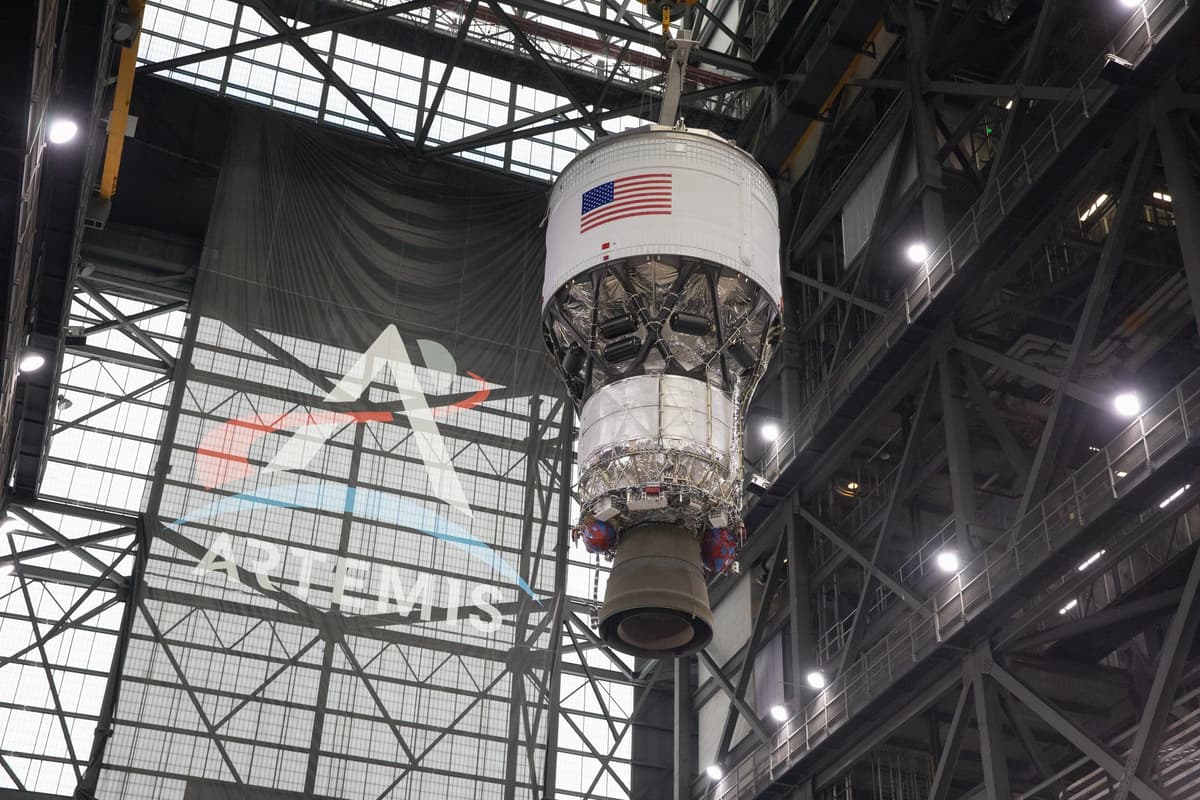
SLS to Launch without Upper Stage for Artemis 3
Companies Mentioned

Why It Matters
The change trims costs and buys time to mature new upper‑stage technology, while still delivering a critical test of multi‑vehicle operations that underpins the Artemis lunar landing schedule.
Key Takeaways
- •SLS will launch Artemis 3 with a dummy spacer instead of ICPS.
- •Mission shifts to low‑Earth‑orbit test of docking with Blue Moon and Starship.
- •Final ICPS reserved for Artemis 4, pushing crewed lunar landing to 2028.
- •NASA skips Block 1B, plans to adopt Centaur upper stage for Artemis 5.
- •Orion will use its own propulsion to circularize 463 km, 33° inclination orbit.
Pulse Analysis
The Artemis program has entered a pivotal redesign phase as NASA opts to fly Artemis 3 on the Space Launch System without the traditional upper stage. By inserting a non‑propulsive spacer that mimics the dimensions of the Interim Cryogenic Propulsion Stage, the agency sidesteps the need for a production‑line ICPS, which has been retired. This shortcut preserves the SLS’s core capabilities while reducing integration risk, allowing NASA to keep the 2027 launch window open despite broader schedule pressures.
Technically, the spacer forces Orion to perform its own orbit‑raising maneuvers, using its service module thrusters to achieve a 463‑kilometer, 33‑degree inclination orbit. The mission’s primary objective now centers on validating rendezvous and docking procedures with two commercial lunar lander prototypes—Blue Origin’s Blue Moon Mark 2 and SpaceX’s Starship. Coordinating three separate launches—SLS for Orion and two separate rockets for the landers—marks the first multi‑vehicle campaign of its kind for NASA, testing command‑and‑control, communications, and safety protocols essential for future crewed landings.
The broader industry impact is significant. By shelving the Block 1B configuration and targeting the Centaur upper stage for Artemis 5, NASA signals a shift toward leveraging existing commercial hardware rather than developing bespoke stages. This decision could accelerate cost recovery for ULA’s Vulcan program and deepen the partnership model that underpins the Artemis architecture. While Artemis 3’s launch may slip to late 2027, the re‑engineered approach aims to keep the overall lunar landing timeline intact, positioning the United States for a sustainable return to the Moon.
SLS to launch without upper stage for Artemis 3
Comments
Want to join the conversation?
Loading comments...