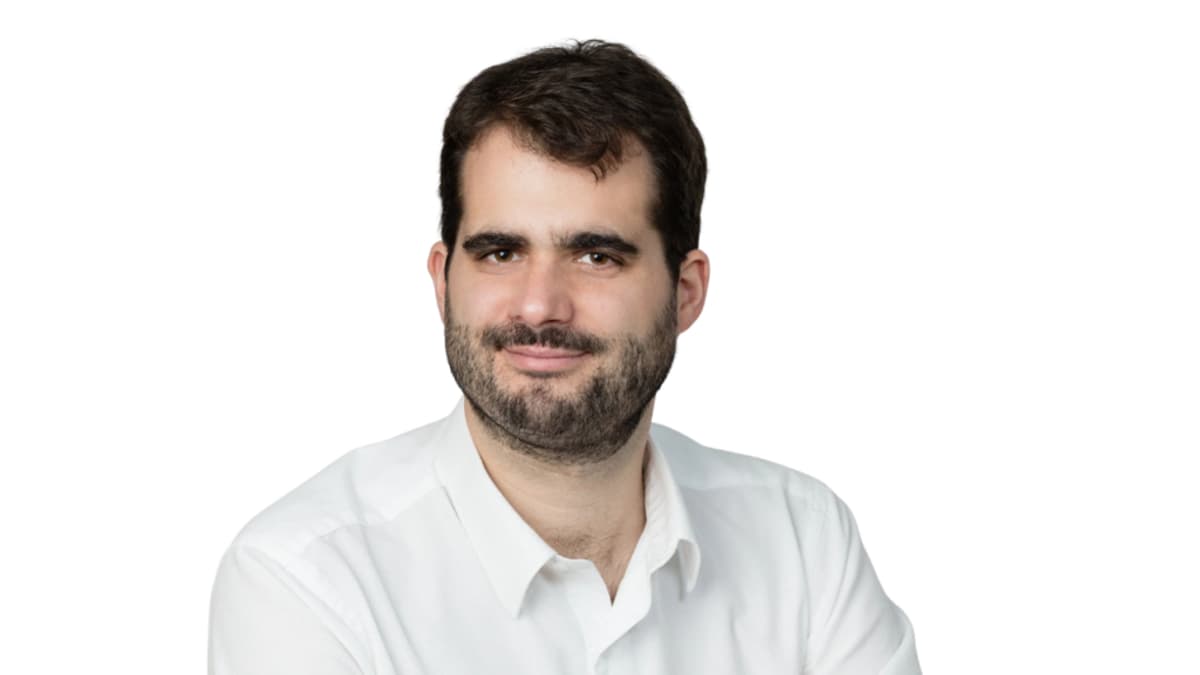
SmallSat Europe Speaker Focus: Jean-François Morizur, Cailabs
Why It Matters
Cailabs’ rapid scale‑up bridges a critical infrastructure shortfall, giving defense and commercial satellite operators a secure, high‑throughput alternative to RF. Its technology underpins emerging quantum‑ready constellations that can resist future cyber‑threats.
Key Takeaways
- •Global optical ground station gap estimated at 200‑500 sites
- •Cailabs' TILBA‑OGS L10 delivers >10 Gbps bidirectional links
- •€57 M (~$62 M) funding targets 50 stations annually by 2027
- •Partnerships with SES, DataPath, and CONTEC accelerate deployment
- •Future stations aim for >100 Gbps and support LEO, MEO, GEO
Pulse Analysis
The shortage of optical ground stations has become a bottleneck as satellite constellations multiply, especially for high‑capacity data relay and secure communications. Cailabs, leveraging Multi‑Plane Light Conversion technology invented by co‑founder Jean‑François Morizur, has delivered a turnkey solution that can transmit more than 10 gigabits per second between low‑Earth‑orbit satellites and the ground. By securing roughly $62 million in European‑backed financing, the company plans to produce 50 stations a year by 2027, a pace that could close a sizable portion of the 200‑to‑500‑station deficit identified by Pentagon analysts.
Defense agencies have been the primary customers, attracted by the inherent resistance of laser links to interception and jamming, as well as the bandwidth advantage that scales with larger constellations. Cailabs’ recent collaborations—SES testing the L10 model, DataPath’s transportable terminals for military use, and CONTEC’s deployment in South Korea—demonstrate a growing ecosystem that validates the technology across both strategic and commercial domains. The firm’s roadmap to exceed 100 Gbps and to support medium‑Earth‑orbit and geostationary satellites signals a shift toward universal optical back‑haul, potentially redefining how operators design network architectures.
Beyond raw speed, the panel at SmallSat Europe highlighted the convergence of optical communications with quantum key distribution (QKD) to create “unhackable” links. As quantum computers threaten traditional encryption, the ability to embed QKD into high‑capacity optical stations offers a compelling security proposition for future constellations. Cailabs’ progress positions it at the forefront of this quantum‑ready transition, giving investors and operators a clear path to future‑proof satellite networks.
SmallSat Europe Speaker Focus: Jean-François Morizur, Cailabs
Comments
Want to join the conversation?
Loading comments...