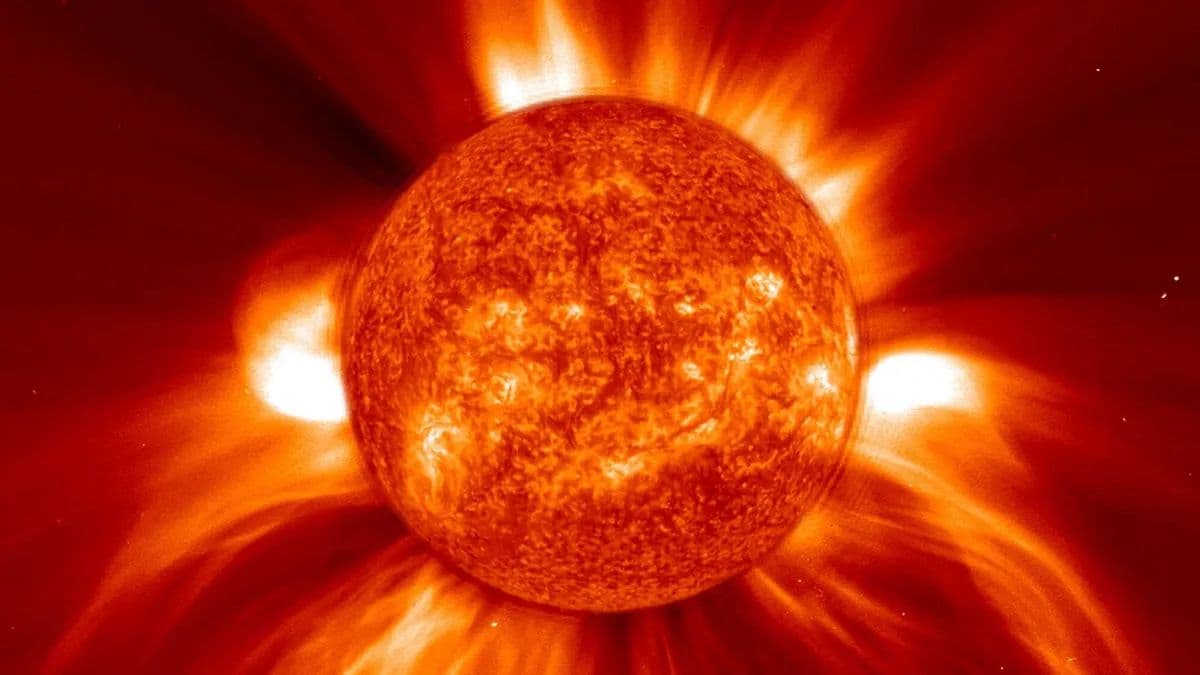
Solar Activity Makes Space Junk Crash to Earth Faster
Companies Mentioned

Why It Matters
Faster decay means higher fuel consumption for orbit maintenance and influences long‑term space‑traffic management, crucial for sustainable orbital operations.
Key Takeaways
- •Solar maxima increase atmospheric density, boosting drag on low‑Earth‑orbit debris
- •Study tracked 17 objects from 1960s over 36 years across solar cycles
- •Faster debris descent raises satellite reboost fuel requirements during solar peaks
- •Findings aid prediction models for collision avoidance and space‑sustainability planning
- •130 million junk pieces pose growing risk; solar activity now key variable
Pulse Analysis
Space debris has become a pressing concern for the aerospace industry, with roughly 130 million fragments—ranging from defunct satellites to tiny collision shards—crowding low Earth orbit. Each piece poses a collision risk that can cascade into further fragmentation, threatening both commercial and governmental missions. Understanding how these objects lose altitude is essential for designing mitigation strategies, yet traditional models have treated atmospheric drag as relatively static, overlooking the Sun’s dynamic influence on the upper atmosphere.
The recent study, led by Ayisha Ashruf at India’s Vikram Sarabhai Space Centre, examined the long‑term trajectories of 17 objects launched in the 1960s. By correlating their orbital decay with three full solar cycles—each about 11 years long—the researchers demonstrated that heightened solar activity inflates the thermosphere, substantially increasing drag on debris. This amplified drag shortens the time it takes for junk to re‑enter the atmosphere, a phenomenon previously quantified only in short‑term observations. The 36‑year dataset provides a rare empirical baseline that validates theoretical models of solar‑driven atmospheric expansion.
For satellite operators, the implications are immediate. During solar maxima, satellites will experience faster altitude loss, requiring more frequent propulsion burns to maintain operational orbits, which translates into higher fuel budgets and reduced mission lifespans. Integrating solar forecasts into mission planning can optimize reboost schedules and improve collision‑avoidance algorithms. Policymakers and space‑traffic managers can also leverage these insights to refine debris‑removal priorities, ensuring that the growing orbital population remains sustainable as humanity expands its presence in space.
Solar activity makes space junk crash to Earth faster
Comments
Want to join the conversation?
Loading comments...