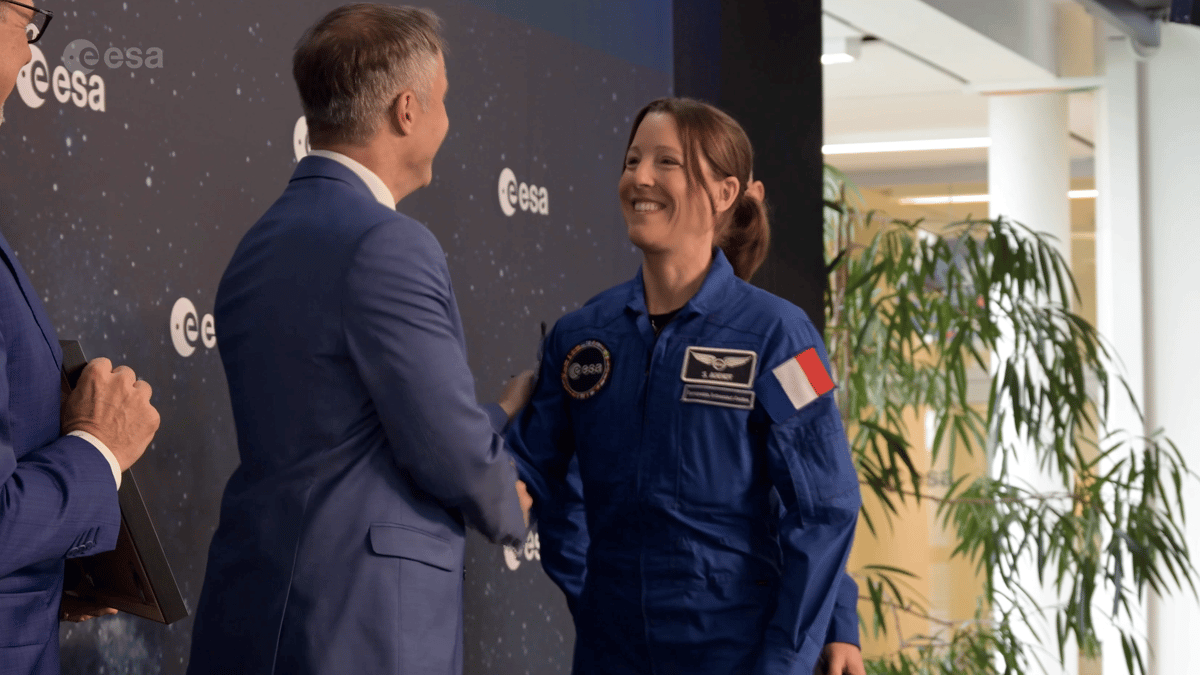
Sophie Adenot Ready for First Space Mission
•February 6, 2026
0
Why It Matters
Adenot’s flight strengthens Europe’s presence in low‑Earth orbit and showcases ESA’s growing capability to lead scientific research in space.
Key Takeaways
- •Sophie Adenot’s first ISS flight scheduled for early 2026
- •Mission εpsilon includes NASA, Roscosmos, and ESA crew members
- •European experiments will study microgravity effects on biology
- •Live launch broadcast available on ESA’s YouTube channel
- •Success boosts Europe’s role in future deep‑space missions
Pulse Analysis
The εpsilon mission marks a pivotal moment for the European Space Agency, highlighting its commitment to maintaining a robust human‑spaceflight program. Sophie Adenot, a veteran test pilot and ESA astronaut, will become the first French female to fly to the ISS, underscoring the agency’s focus on diversity and talent development. By partnering with NASA and Roscosmos, ESA reinforces the collaborative model that has defined International Space Station operations for decades, ensuring shared expertise and cost‑effective access to orbit.
Adenot’s itinerary on the ISS includes a series of European‑led experiments designed to exploit microgravity’s unique environment. Researchers will investigate cellular behavior, fluid dynamics, and material science, aiming to translate findings into medical advances and industrial innovations on Earth. French institutions are also contributing to life‑support and environmental monitoring studies, which could inform future habitats on the Moon or Mars. The mission’s scientific payload reflects ESA’s strategy to leverage space research for tangible societal benefits, reinforcing the agency’s reputation as a catalyst for cutting‑edge technology.
Beyond the immediate scientific returns, the launch carries strategic weight for Europe’s long‑term space ambitions. Successful execution of εpsilon bolsters confidence in ESA’s ability to coordinate complex, multinational missions, a prerequisite for upcoming Artemis collaborations and the planned Lunar Gateway. Public engagement through live streaming also amplifies outreach, inspiring the next generation of engineers and scientists. In sum, Adenot’s flight not only advances knowledge but also cements Europe’s role as a key player in the evolving landscape of deep‑space exploration.
Sophie Adenot ready for first space mission
0
Comments
Want to join the conversation?
Loading comments...