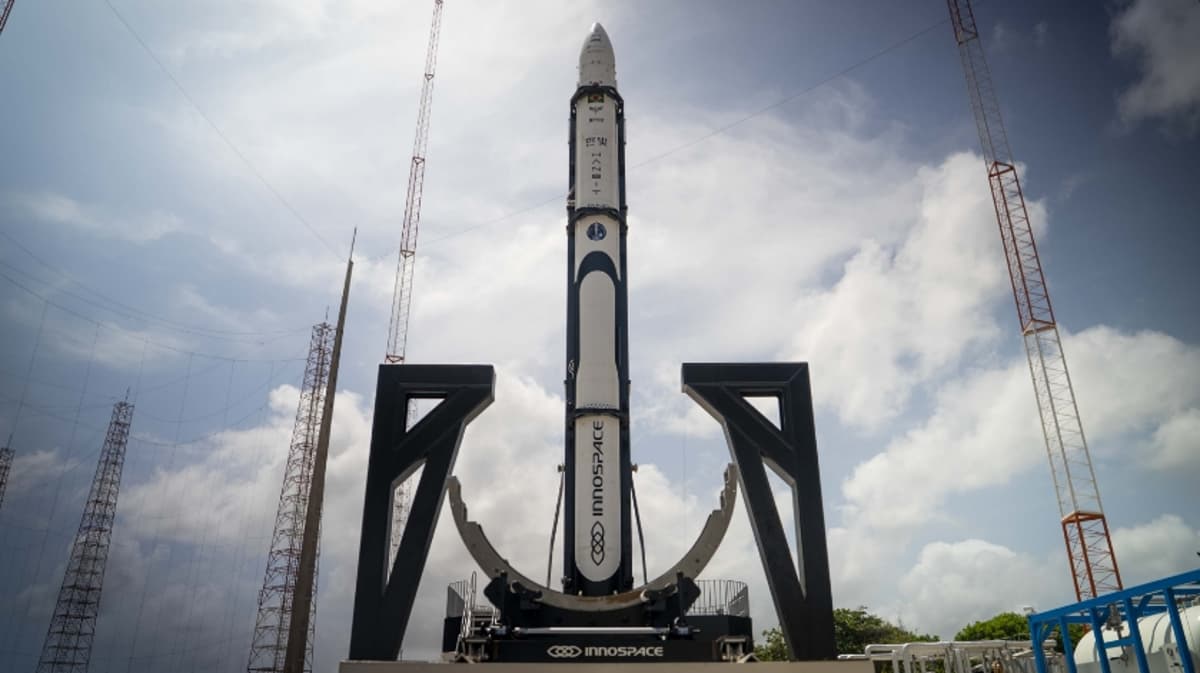
South Korean Launch Provider INNOSPACE Eyes Canadian Expansion via Spaceport Nova Scotia
•March 3, 2026
0
Companies Mentioned
Why It Matters
The deal unlocks North‑American launch capacity for INNOSPACE, enhancing its market reach, and bolsters Canada’s emerging spaceport ecosystem as a competitive launch hub.
Key Takeaways
- •INNOSPACE seeks North American launch site via MLS partnership
- •HANBIT hybrid rockets target cost‑effective small‑sat missions
- •Naro constraints limit South Korean launch trajectories and slots
- •Spaceport Nova Scotia offers polar and sun‑synchronous orbits
- •Definitive agreement due by Dec 31 2026
Pulse Analysis
INNOSPACE’s push for overseas launch sites reflects a broader industry trend where commercial providers sidestep government‑run complexes that prioritize national programs. At Naro, the Korean Aerospace Administration’s Nuri vehicle monopolizes launch windows, and geopolitical constraints force southward trajectories, limiting access to higher‑inclination orbits essential for many small‑sat customers. By leveraging a hybrid propulsion architecture across its Nano, Micro and Mini variants, INNOSPACE can promise lower per‑kilogram costs and safer ground operations, making its service attractive to commercial and governmental payload owners.
Spaceport Nova Scotia, developed by Maritime Launch Services, is strategically positioned on the Atlantic coast, enabling launches into a wide range of orbital inclinations, including polar and sun‑synchronous paths favored by Earth‑observation constellations. The facility’s dual‑use, responsive design incorporates licensed launch infrastructure, range coordination and scalable multi‑pad capabilities, aligning with the rapid‑turnaround demands of the small‑sat sector. Proximity to the United States—home to the world’s largest small‑sat market—offers INNOSPACE a logistical advantage, reducing transit time and regulatory friction for North‑American customers.
The partnership underscores Canada’s ambition to become a pivotal node in the global launch landscape, competing with established sites in Brazil, Norway and Australia. As demand for dedicated small‑sat launches accelerates, flexible, cost‑effective providers like INNOSPACE will seek diversified launch pads to guarantee slot availability and optimal orbital access. If the LOI matures into a binding contract by the end of 2026, Spaceport Nova Scotia could emerge as a key gateway for Asian launch firms entering the North American market, reshaping competitive dynamics and fostering cross‑border aerospace collaboration.
South Korean launch provider INNOSPACE eyes Canadian expansion via Spaceport Nova Scotia
0
Comments
Want to join the conversation?
Loading comments...