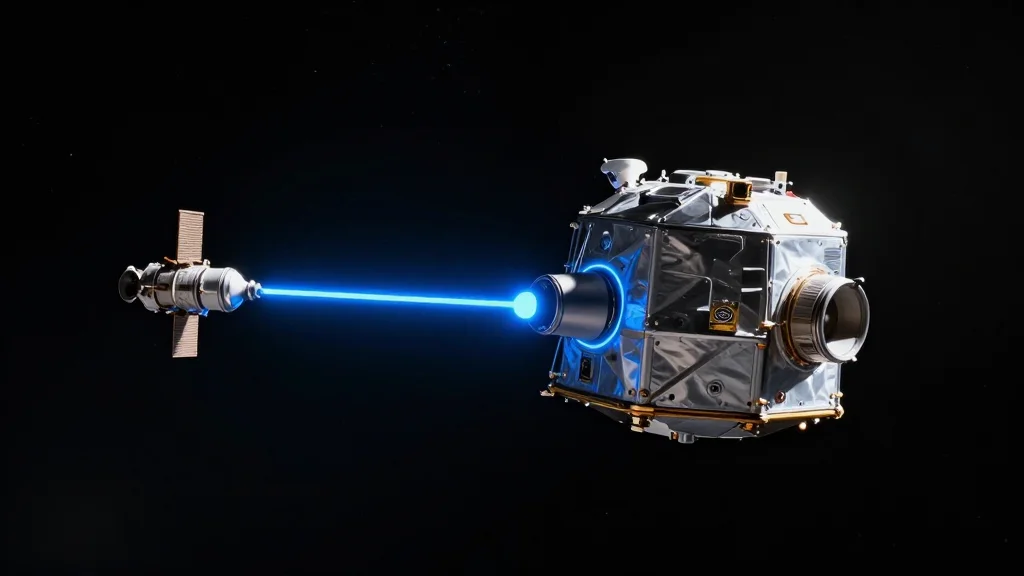
Space Force Allocates $20 Million to Orbital Logistics Challenge

Companies Mentioned
Why It Matters
The Orbital Logistics Challenge marks the first time the Space Force has earmarked a dedicated budget to crowdsource commercial solutions for on‑orbit servicing, a capability that could extend satellite lifespans and reduce launch costs. By aligning defense priorities with private‑sector innovation, the challenge could accelerate the maturation of technologies such as autonomous refueling and orbital warehousing, which are critical for the sustainability of mega‑constellations and national security assets. If successful, the challenge could also set a precedent for other government agencies to use prize‑based mechanisms to de‑risk emerging space technologies. A vibrant commercial logistics ecosystem would lower barriers for new entrants, diversify the supply chain, and ultimately enhance the United States’ strategic advantage in space.
Key Takeaways
- •SSC and SpaceWERX launch a $20 million Orbital Logistics Challenge to fund on‑orbit logistics technologies.
- •Col. Scott Carstetter highlighted the challenge as a step toward extending ground‑based logistics to space.
- •The challenge involves the Air Force Research Lab, DIU, Combat Forces Command, USSPACECOM, DLA and TRANSCOM.
- •Recent contracts include $61 million to Astroscale for GEO refueling and $54.5 million to Starfish Space for maneuver demos.
- •Congress has appropriated $29 million for OOSML in FY2025‑2026, with no request for FY2027.
Pulse Analysis
The $20 million Orbital Logistics Challenge is more than a funding announcement; it is a strategic lever to align defense logistics with commercial market forces. Historically, on‑orbit servicing has been a niche capability, largely driven by a handful of government contracts. By creating a competitive prize, SSC is leveraging the same model that propelled the commercial launch sector in the early 2000s, where NASA’s Commercial Orbital Transportation Services (COTS) program unlocked private investment. The challenge’s focus on modular logistics—warehousing, propellant distribution, and precision metering—addresses the most pressing pain points for both defense and commercial operators, namely the high cost of satellite replacement and the limited flexibility of current constellations.
From a market perspective, the challenge could accelerate the consolidation of a nascent supply chain. Companies that demonstrate viable refueling or transfer capabilities will likely become preferred vendors for future defense contracts, creating a virtuous cycle of investment and capability growth. This is especially relevant as the U.S. military plans to field larger constellations for missile warning, communications and ISR, all of which will benefit from in‑orbit sustainment. The modest congressional appropriation—$29 million over two years—underscores the challenge’s role as a catalyst rather than a long‑term funding source; successful demos could justify a substantial increase in FY2028 budgeting.
Looking forward, the challenge’s outcomes will shape the Space Force’s force design and may influence policy discussions about the militarization of space logistics. If private firms can reliably deliver autonomous refueling and maneuver services, the service could shift from a maintenance‑heavy model to one that emphasizes rapid reconfiguration and resilience. This transition would not only reduce lifecycle costs but also enhance the United States’ ability to maintain a persistent, survivable presence in contested orbital environments.
Space Force Allocates $20 Million to Orbital Logistics Challenge
Comments
Want to join the conversation?
Loading comments...