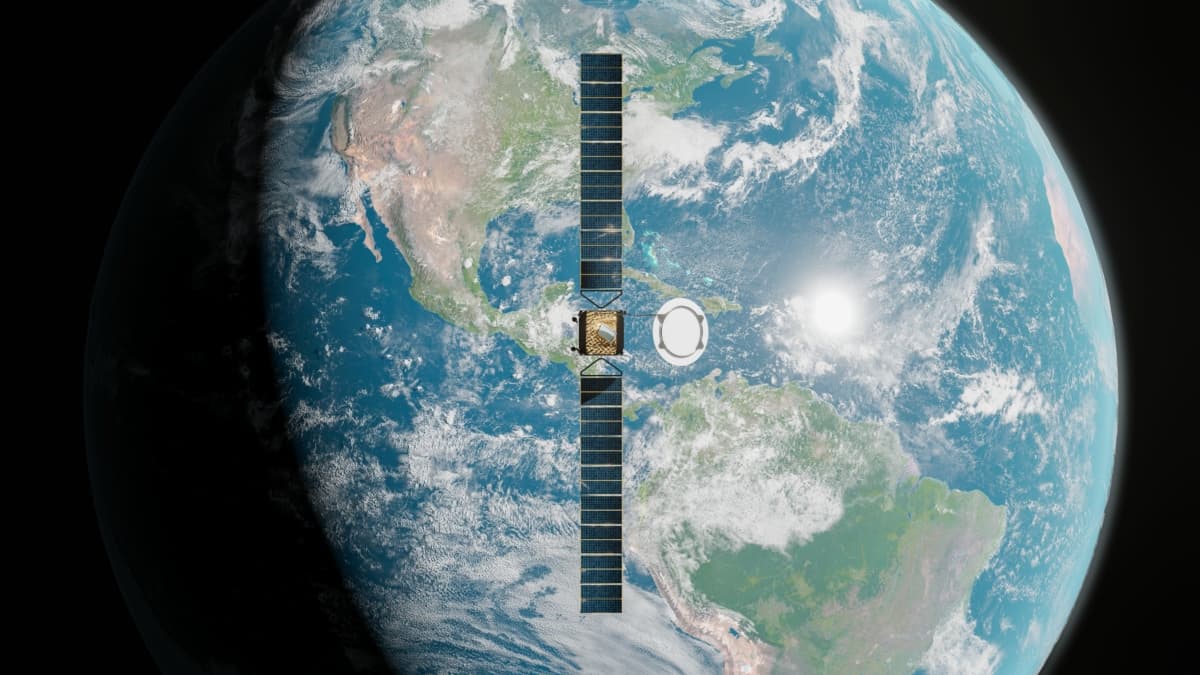
Space Force Awards Viasat, SES $437 Million for Military Satellite Network
Companies Mentioned
Why It Matters
The contracts boost U.S. military communications resilience and signal a shift toward commercial‑grade, swarm‑based satellite networks, reducing vulnerability to hostile interference. This investment also positions Viasat and SES as key defense partners in a rapidly evolving space security market.
Key Takeaways
- •Space Force awards Viasat, SES $437.6M for PTS‑G satellites
- •First “Swarm 1” batch: four satellites, two per contractor, due 2029
- •Swarm architecture enhances resilience against jamming and cyber attacks
- •Second procurement of four satellites planned for 2028, deployment 2031
Pulse Analysis
The Pentagon’s latest award to Viasat and SES underscores a strategic pivot in U.S. defense space policy toward smaller, more agile satellite constellations. Under the Protected Tactical Satcom‑Global (PTS‑G) program, the Space Force is procuring a fleet of geostationary satellites that can operate in a coordinated “swarm,” a concept designed to mitigate the single‑point‑failure risk inherent in traditional large‑bus platforms. By allocating $437.6 million for the first four spacecraft, the service aims to field a resilient communications layer capable of withstanding both kinetic and electronic threats, reinforcing command‑and‑control networks across contested environments.
PTS‑G satellites will carry dual‑band payloads supporting X‑band and military Ka‑band frequencies, the two spectra most commonly used for secure tactical data and voice transmission. Leveraging technology derived from Viasat’s commercial Viasat‑3 broadband constellation, the satellites are smaller, cheaper to produce, and easier to replace than legacy systems. The swarm architecture distributes capacity across multiple nodes, so the loss or jamming of a single satellite does not cripple the network. This distributed approach also simplifies orbital slot management and enables rapid reconfiguration in response to emerging threats.
The contracts position Viasat and SES at the forefront of the burgeoning defense‑satellite market, where commercial expertise is increasingly valued for cost‑efficiency and rapid development cycles. With a second procurement round slated for 2028 and a total of eight satellites expected by 2031, the program signals sustained funding for resilient space communications. Competitors such as Boeing, Northrop Grumman and Astranis will likely vie for future phases, intensifying innovation pressure across the industry. For policymakers, the move illustrates how public‑private partnerships can accelerate the deployment of next‑generation, jam‑proof satellite capabilities.
Space Force awards Viasat, SES $437 million for military satellite network
Comments
Want to join the conversation?
Loading comments...