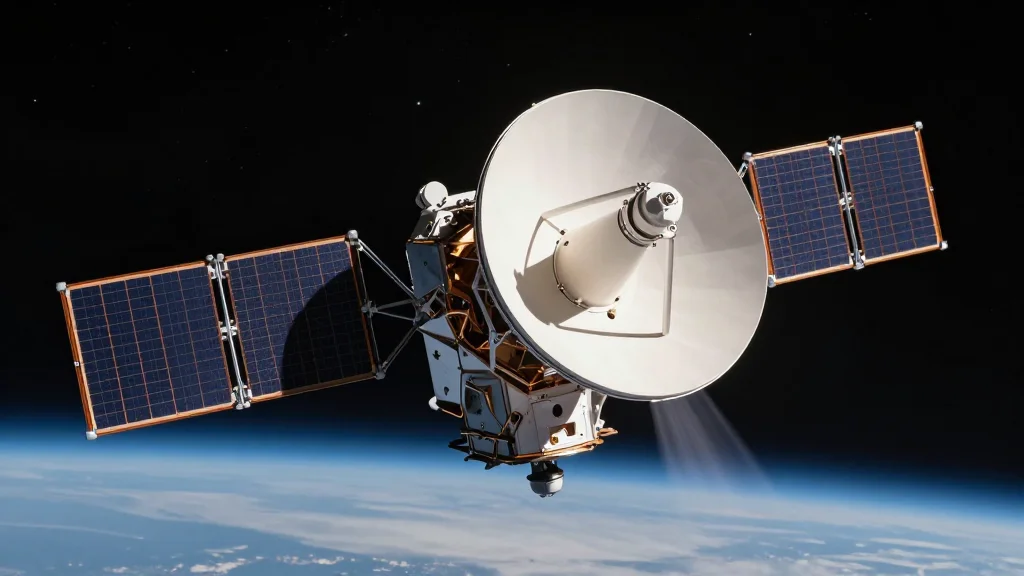
Space Force Grants Northrop Grumman $398 Million for Protected Tactical Satellite Prototype

Companies Mentioned
Why It Matters
Resilient satellite communications are a cornerstone of modern military operations, especially as peer competitors develop sophisticated electronic‑attack capabilities. The Enhanced PTS‑P contract signals a strategic pivot toward modular, test‑driven development, allowing the Space Force to field proven anti‑jamming technologies faster and at lower cost. Success could restore confidence in the U.S. ability to maintain secure, uninterrupted links for ground forces, aircraft, and naval vessels in high‑intensity conflicts. Beyond immediate defense needs, the program may influence commercial satellite operators seeking similar protection for critical infrastructure. Demonstrated anti‑jamming techniques could spill over into civilian markets, enhancing the robustness of global communications, navigation, and Earth‑observation services against hostile interference.
Key Takeaways
- •U.S. Space Force awards Northrop Grumman a $398 million contract for a prototype protected tactical satellite.
- •The satellite will test the Protected Tactical Waveform (PTW), featuring rapid frequency hopping and advanced encryption.
- •Launch is scheduled for no earlier than 2030, using Northrop Grumman's ESPAStar‑HP bus.
- •The contract follows the cancellation of a $2.4 billion follow‑on procurement, shifting focus to lower‑cost demonstrators.
- •Boeing is pursuing a parallel hosted‑payload approach on WGS satellites, highlighting competition in protected communications.
Pulse Analysis
The Space Force’s decision to fund a $398 million prototype rather than a full constellation reflects a broader acquisition trend toward incremental risk reduction. By validating anti‑jamming waveforms in orbit before scaling, the service can avoid the costly missteps that plagued earlier large‑scale satellite programs. This approach also aligns with the Department of Defense’s push for rapid prototyping and fielding, a doctrine that gained traction after the 2022‑2023 supply‑chain disruptions.
Historically, protected tactical communications have been a niche capability, limited to a handful of legacy systems. The Enhanced PTS‑P effort could democratize that capability across the joint force, especially if PTW proves effective against next‑generation electronic attacks. Competitors like Russia and China have invested heavily in space‑based jamming, making the U.S. need to stay ahead technologically. The contract’s timing—just months after the 2025 cancellation of a $2.4 billion program—suggests the Space Force is recalibrating its roadmap to prioritize agility over sheer volume.
Looking ahead, the outcome of the PTW demonstrations will likely dictate the next procurement cycle. A successful test could trigger a new, perhaps smaller, protected satellite constellation, while a failure may push the service toward alternative architectures such as low‑Earth‑orbit (LEO) mesh networks. Stakeholders should watch the upcoming 2030 launch window closely; it will be the first real‑world proof point for a generation of hardened space communications that could redefine how the U.S. fights—and wins—in contested domains.
Space Force Grants Northrop Grumman $398 Million for Protected Tactical Satellite Prototype
Comments
Want to join the conversation?
Loading comments...