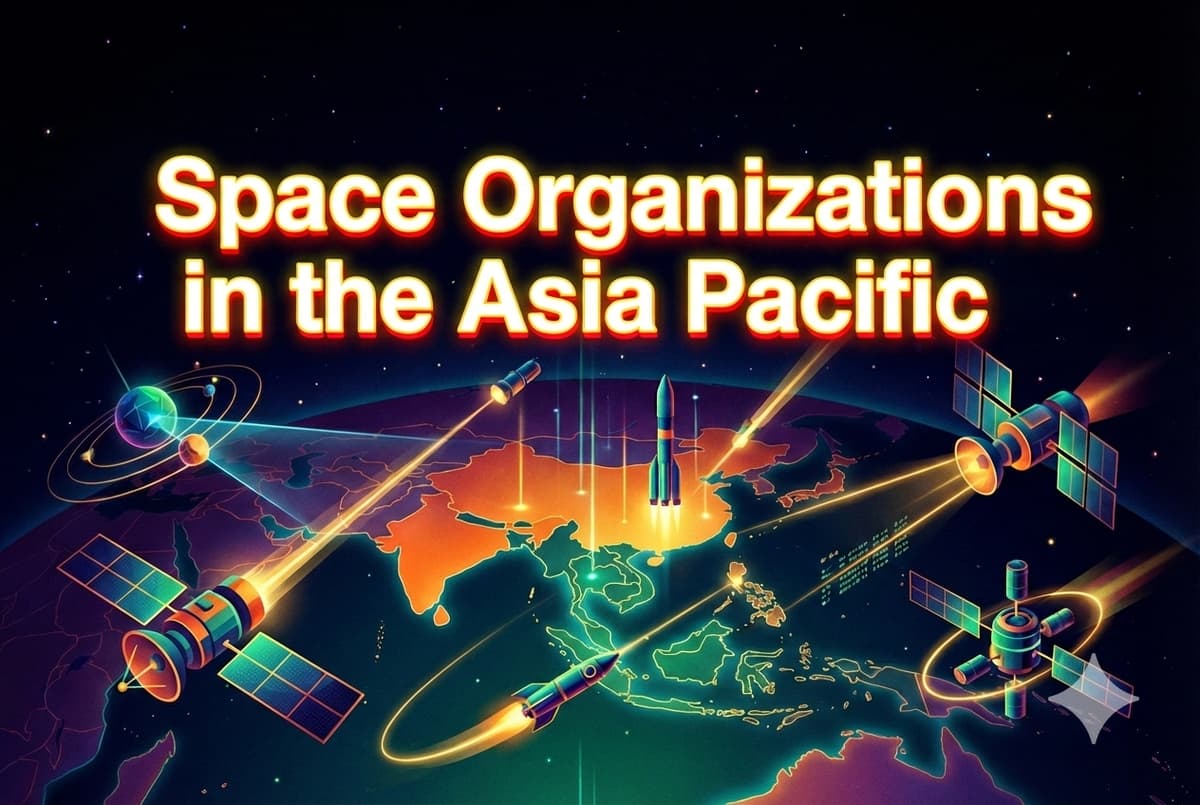
Space Organizations in the Asia Pacific
•February 21, 2026
0
Companies Mentioned


Why It Matters
The surge in regional space activity strengthens economic resilience, improves disaster response, and positions the Asia‑Pacific as a key driver of future lunar and deep‑space missions. It also creates new markets for high‑tech industries and talent pipelines across the region.
Key Takeaways
- •Asia‑Pacific hosts fastest‑growing space agencies.
- •Regional cooperation shares satellite data for disaster response.
- •Private firms accelerate launch and satellite tech innovation.
- •Nations invest in lunar and Mars missions.
- •Education programs build next‑generation space talent.
Pulse Analysis
The Asia‑Pacific has become a hotbed of space investment, driven by national ambition and the lure of commercial returns. Countries such as China, India, and Japan continue to fund large‑scale lunar and Mars programs, while smaller states leverage regional partnerships to punch above their weight. This blend of high‑profile missions and cost‑effective satellite constellations is reshaping the global launch market, attracting venture capital and prompting governments to streamline regulatory frameworks.
Data sharing lies at the heart of the region’s strategic advantage. Platforms like the Asia‑Pacific Space Cooperation Organization and the Regional Space Agency Forum enable member states to pool Earth‑observation imagery, improving early‑warning systems for typhoons, floods, and earthquakes. The resulting synergy not only saves lives but also supports climate‑adaptation policies, agricultural planning, and resource management across diverse economies. By standardising protocols and fostering joint research, these bodies accelerate technological diffusion and reduce duplication of effort.
Private industry is increasingly the catalyst for innovation, with startups and established firms in Singapore, Australia, and New Zealand delivering small‑sat launch services, laser‑communication payloads, and AI‑driven analytics. Government‑industry collaborations allow agencies to focus on scientific objectives while leveraging commercial agility to lower costs and speed up deployment. Coupled with robust education initiatives—scholarships, university labs, and public outreach—the region is cultivating a skilled workforce ready to sustain its expanding space ecosystem for decades to come.
Space Organizations in the Asia Pacific
0
Comments
Want to join the conversation?
Loading comments...