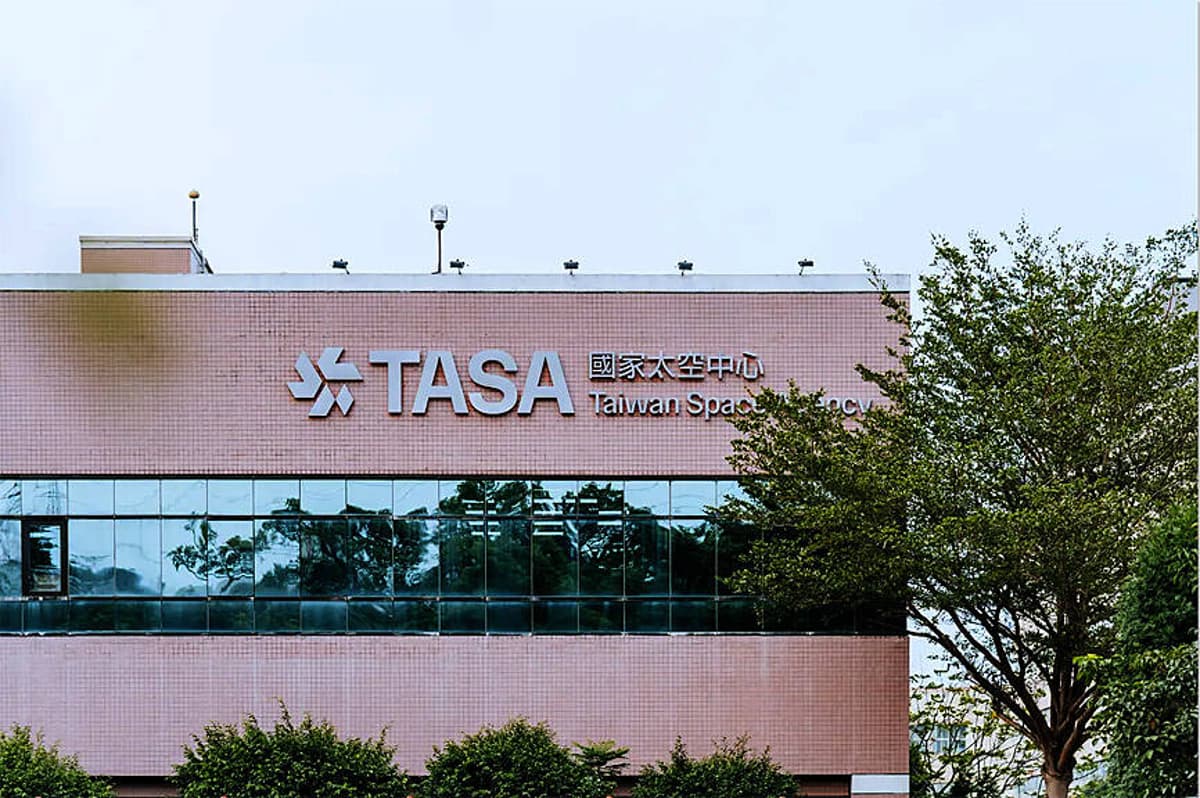
Space Startup Hub Set to Open in Q3
Companies Mentioned
Why It Matters
The hub gives Taiwan a strategic foothold in the fast‑growing commercial space market, creating high‑value jobs and attracting foreign investment. It also positions the island as a credible supplier and innovator in satellite manufacturing and data services.
Key Takeaways
- •iSPARK hub opens Q3 2026 at Yangming Chiao Tung University, Hsinchu.
- •Over 20 startups vetted for satellite, communications, AI, and semiconductor projects.
- •Hub targets three pillars: manufacturing supply chain, system integration, data/AI services.
- •Aims to link Taiwan with NASA, ESA, JAXA incubators and Silicon Valley.
- •NCU's Pearl‑1 CubeSats will demonstrate Ka‑band inter‑satellite broadband via SpaceX launch.
Pulse Analysis
Taiwan’s decision to establish iSPARK marks a decisive shift toward a full‑stack space ecosystem, echoing successful models in the United States, Europe and Japan. By situating the hub adjacent to the Hsinchu Science Park and TASA facilities, the agency taps into a dense talent pool of semiconductor engineers, ICT specialists, and aerospace researchers. This geographic synergy reduces entry barriers for fledgling companies and accelerates technology transfer from lab to orbit, a critical advantage as the global satellite market is projected to exceed $600 billion by 2030.
The iSPARK strategy zeroes in on three interrelated domains: a domestic satellite‑manufacturing supply chain, end‑to‑end system integration, and data‑driven AI services. Start‑ups will gain access to shared prototyping labs, validation testbeds, and seed funding, mirroring NASA’s SBIR pipeline and ESA’s Business Incubation Centers. Early‑stage ventures can thus move from concept to commercial payloads faster, positioning Taiwan as a reliable tier‑2 supplier for larger prime contractors in the United States, Europe and Japan. Partnerships with Silicon Valley accelerators and the UK’s Satellite Applications Catapult further broaden market reach, promising cross‑border investment and joint‑development opportunities.
The concurrent Pearl‑1 CubeSat mission underscores Taiwan’s growing competence in niche space technologies. By launching a Ka‑band inter‑satellite broadband link via SpaceX, the project validates both domestic hardware and software platforms, offering a testbed for future low‑earth‑orbit communication constellations. Successful in‑orbit demonstrations will likely spur additional university‑industry collaborations, feeding a pipeline of talent into iSPARK’s incubator. Collectively, these initiatives could catalyze the emergence of Taiwan’s first space unicorn and cement the island’s role as a competitive player in the global aerospace arena.
Space startup hub set to open in Q3
Comments
Want to join the conversation?
Loading comments...