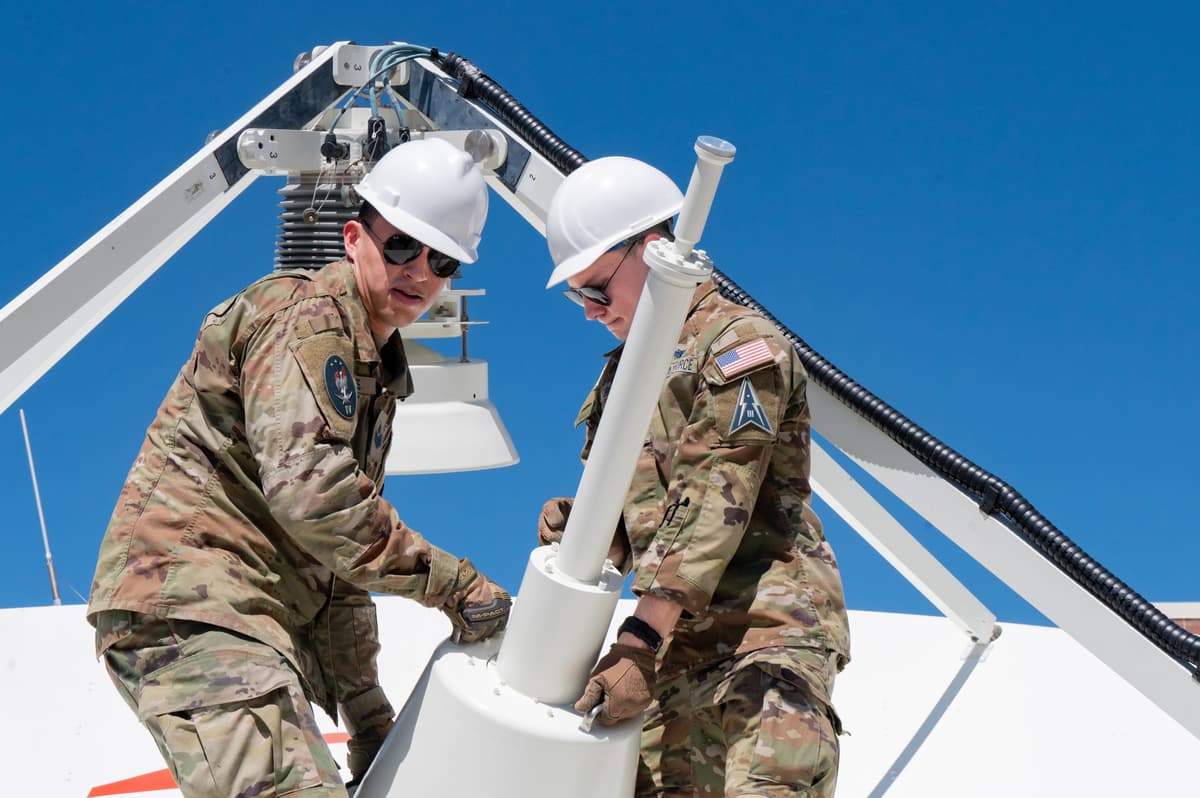
Space Warfare in 2026: A Pivotal Year for US Readiness
•January 5, 2026
0
Why It Matters
Space dominance underpins U.S. military advantage across all domains; losing it would erode deterrence and operational effectiveness.
Key Takeaways
- •China’s satellite fleet exceeds 1,060 operational units
- •US Space Force targets battle‑ready architecture by 2026
- •Golden Dome boost‑phase interceptors awarded November 2025
- •Commercial Augmentation Space Reserve to secure 20 contracts
Pulse Analysis
The strategic landscape of space in 2026 reflects a decisive pivot toward contested warfighting. While the United States has traditionally treated space as a supportive arena, the release of "Space Warfighting: A Framework for Planners" and Gen. Saltzman's public commitments signal an institutional shift. This evolution is driven by China’s rapid satellite expansion and Russia’s disruptive capabilities, compelling the Space Force to embed offensive and defensive counter‑space operations into its core doctrine. The move aligns with broader joint force concepts that tie space superiority directly to land, air, sea, and cyber dominance.
Readiness hinges on resilience, prompting a multi‑pronged investment strategy. The "Race to Resilience" program funds next‑generation infrared sensors, a $3.5 billion Tranche 3 tracking layer, and hardened communication constellations like AEHF and anti‑jam GPS M‑code. Simultaneously, prototype boost‑phase interceptors under the Golden Dome initiative and kinetic mid‑course interceptors slated for early 2026 aim to neutralize missile threats before they mature. On‑orbit servicing demonstrations will extend satellite lifespans, while the Commercial Augmentation Space Reserve integrates private satcom networks, ensuring continuity of command and control even under contested conditions.
These developments reshape the defense industrial base and market dynamics. Contractors specializing in directed‑energy, cyber‑hardening, and autonomous servicing stand to gain substantial contracts, while the $40 billion FY‑2026 budget underscores a long‑term commitment to hybrid military‑commercial architectures. For policymakers and industry leaders, the 2026 timeline offers a clear signal: investment in space resilience is not optional but essential to maintaining U.S. strategic advantage in an increasingly contested orbital environment.
Space warfare in 2026: A pivotal year for US readiness
0
Comments
Want to join the conversation?
Loading comments...