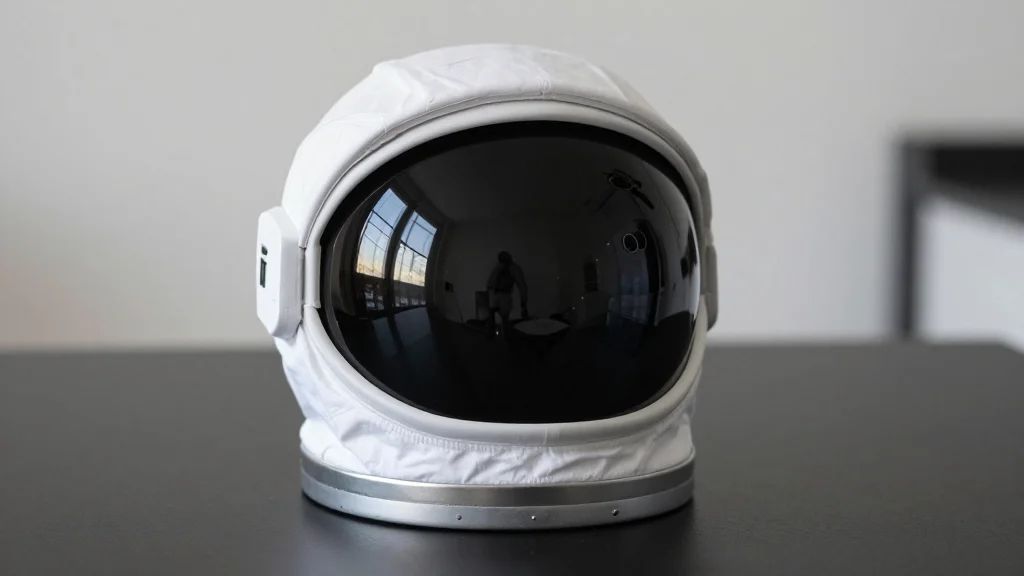
SpaceCamp Celebrates 40 Years of Training Future Space Professionals

Companies Mentioned

Why It Matters
SpaceCamp’s four‑decade legacy demonstrates how sustained, experiential education can feed the talent pipeline essential for a burgeoning SpaceTech economy. By exposing thousands of young people to authentic mission scenarios, the camp has helped demystify spaceflight and cultivated a cohort of professionals who now occupy key positions at NASA and private launch companies. The new Innovation Lab signals a strategic shift toward integrating emerging technologies—such as AI and on‑orbit servicing—into early education, ensuring that future graduates are equipped for the complex challenges of lunar and Martian missions. Furthermore, the camp’s public‑outreach model sustains popular support for space initiatives, a factor that influences policy decisions and funding allocations. As governments and investors weigh the merits of large‑scale projects like the Artemis program or commercial lunar landers, a well‑informed public can tip the balance toward continued investment, making SpaceCamp’s outreach a subtle yet powerful driver of industry growth.
Key Takeaways
- •SpaceCamp celebrated its 40th anniversary, marking four decades of astronaut training and STEM outreach.
- •More than 200,000 participants from 150 countries have attended, with 12% becoming NASA astronauts or commercial pilots.
- •The program’s curriculum mirrors real‑world launch procedures, including simulated FRFs and EVA drills.
- •Recent scholarship initiatives aim to increase access for under‑represented groups.
- •A new SpaceTech Innovation Lab, launching in 2027, will focus on satellite design, on‑orbit servicing and AI‑driven mission planning.
Pulse Analysis
SpaceCamp’s anniversary underscores a broader trend: the professionalization of space education. Early on, the camp filled a niche by offering civilian youth a taste of astronaut life, but today its alumni are integral to the workforce that powers commercial launch providers and government agencies. This evolution mirrors the shift from a government‑dominated space sector to a hybrid model where private firms compete for talent. The camp’s ability to adapt—updating simulators for new launch vehicles and launching an Innovation Lab—shows a keen awareness of industry needs.
Historically, the pipeline for aerospace talent relied heavily on university programs and military training. SpaceCamp introduced a complementary pathway that emphasizes teamwork, rapid problem‑solving and hands‑on experience, qualities that are increasingly prized in the fast‑paced environment of reusable launch systems and on‑orbit manufacturing. As the sector moves toward more complex missions—lunar habitats, asteroid mining, and deep‑space exploration—the demand for engineers who can operate across disciplines will only grow. The camp’s focus on interdisciplinary projects in its upcoming lab could become a template for other educational institutions seeking to stay relevant.
Looking forward, the camp’s partnership model—leveraging funding from aerospace firms while maintaining educational independence—could inspire similar collaborations. If the Innovation Lab successfully integrates industry‑grade hardware and data into its curriculum, it may produce a new generation of engineers who are job‑ready from day one, reducing onboarding costs for companies. In a market where talent scarcity can delay mission timelines, such an ecosystem advantage could translate into measurable competitive gains for firms that tap into SpaceCamp’s talent pool.
SpaceCamp Celebrates 40 Years of Training Future Space Professionals
Comments
Want to join the conversation?
Loading comments...